


MACRS + Bonus Depreciation Stacking with the 48E ITC in 2026
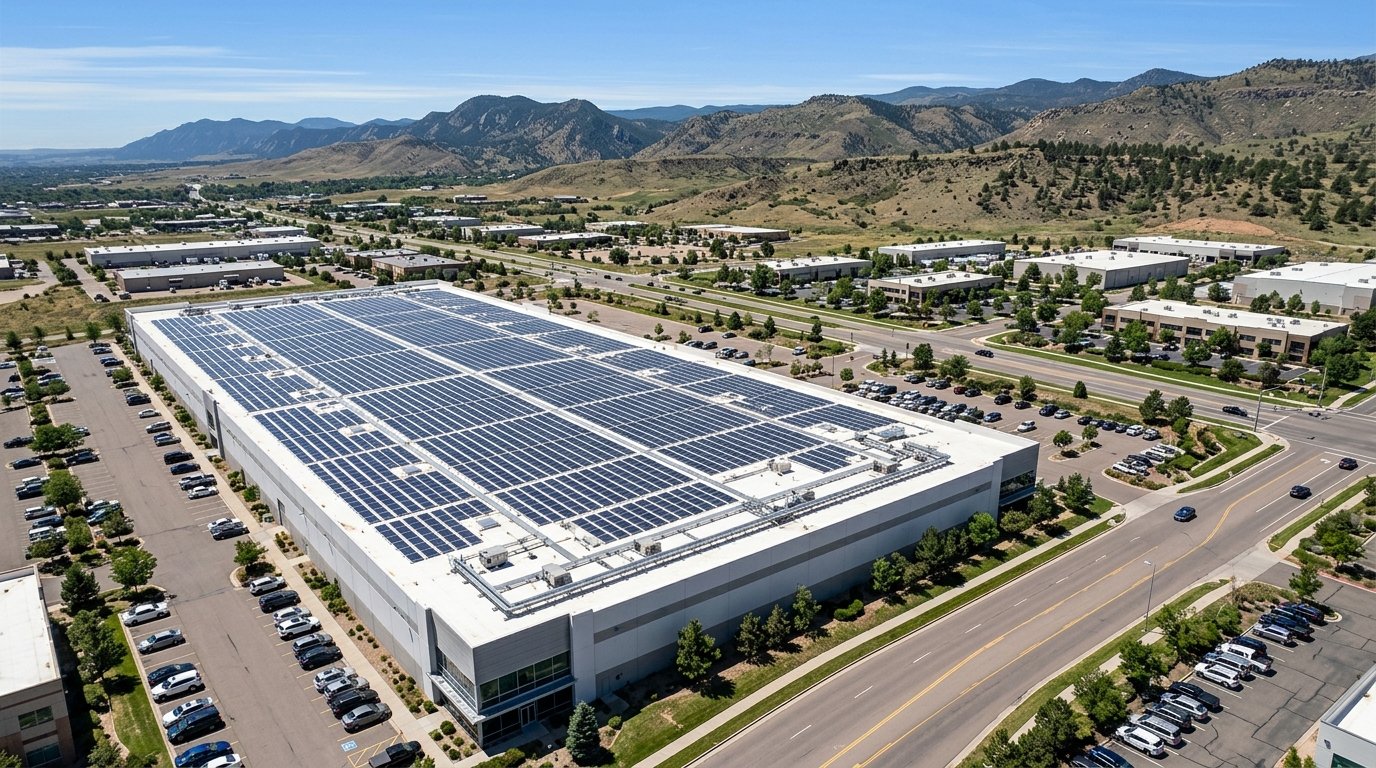
For a Colorado business buying solar in 2026, the headline answer is simple: you can pair the federal 48E investment tax credit with two separate depreciation benefits, MACRS and bonus depreciation, and 2026 is an unusually favorable year to do it. MACRS bonus depreciation solar 2026 planning matters because the One Big Beautiful Bill Act (OBBBA) made 100% bonus depreciation permanent for qualifying property placed in service after January 19, 2025. That means a commercial solar system installed this year can be expensed aggressively while also earning a 30% credit, which together recover a large share of the project cost through the tax code.
At ProGreen Solar we design and build commercial solar across the Front Range and the Western Slope, and the depreciation conversation is where many owners realize the after tax cost is far lower than the sticker price. Below we break down how the pieces fit, why the order of operations matters, and the one adjustment, basis reduction, that trips up almost everyone.
The three federal benefits that stack on commercial solar
Commercial solar in the United States is supported by three distinct federal mechanisms. They are separate rules with separate math, and understanding them as three buckets keeps the planning clean.
- The 48E investment tax credit (ITC). A dollar for dollar credit against federal income tax, with a base of 30% when prevailing wage and apprenticeship requirements are met, plus stackable bonus adders. We cover the credit itself in depth in our guide to the Section 48E tax credit for commercial solar.
- MACRS depreciation. Solar generating equipment is classified as 5 year MACRS property, so its cost is recovered over a short accelerated schedule rather than the long lives that apply to most building improvements.
- Bonus depreciation. A first year deduction that, under OBBBA, sits at 100% for property placed in service after January 19, 2025, letting you front load most of the depreciable basis into year one.
The ITC reduces your tax. Depreciation reduces your taxable income. Because they work on different lines of the return, a business with sufficient tax appetite can use all three on the same system.
Why 100% bonus depreciation makes 2026 different
Bonus depreciation has bounced around for years. It was scheduled to phase down step by step, which made every year a little worse than the last. OBBBA changed that by making 100% bonus depreciation permanent for qualifying property placed in service after January 19, 2025. For a 2026 commercial solar project, that removes the timing pressure that used to push owners to rush an install before a year end phase down.
In practical terms, 100% bonus depreciation means the depreciable basis of your solar system can be deducted in the first year it is placed in service, rather than spread across the 5 year MACRS schedule. The MACRS classification still matters, because it defines what counts as depreciable solar property and sets the recovery period if you elect out of bonus or if future rules change. But while 100% bonus is in effect, most owners simply take the full first year deduction.
MACRS is the framework, bonus is the accelerator
Think of MACRS as the rulebook that says solar is 5 year property, and bonus depreciation as the switch that lets you pull that whole 5 year schedule forward into year one. If you ever elected out of bonus depreciation, you would fall back to the standard 5 year MACRS schedule, which front loads deductions across roughly six tax years under the half year convention. Either way, the property class is the same. For the foundational mechanics of the schedule itself, see our deeper reference on MACRS depreciation for commercial solar.
The basis reduction rule: the half the credit adjustment
Here is the detail that surprises most first time commercial buyers. When you claim the ITC, you cannot also depreciate the full original cost of the system. The tax code requires you to reduce your depreciable basis by 50% of the ITC.
Walk through the logic in percentage terms, which keeps the idea clear regardless of project size:
- Start with the full cost basis of the solar equipment, which we will treat as 100%.
- Claim the 30% ITC against that basis. (Bonus adders such as domestic content or energy community raise the credit but follow the same basis reduction principle.)
- Reduce your depreciable basis by half of the credit. With a 30% credit, half is 15%, so your depreciable basis drops from 100% to 85% of the original cost.
- Apply MACRS and bonus depreciation to that 85% depreciable basis, not to the full 100%.
So the depreciation does not disappear, it is simply calculated on a slightly reduced number. You still keep the full 30% credit and you still depreciate the large majority of the system cost. The basis reduction is the price of stacking the two, and even with it the combined benefit is substantial. This is the single most common error we see in do it yourself proposals, where the depreciation is calculated on 100% of cost and the projected after tax savings come out too high.
How the bonus adders change the picture
The 48E credit can climb above 30% when a project qualifies for bonus adders. Two of the most common are the domestic content bonus and the energy community bonus, each adding to the credit. We cover the sourcing rules in detail in our guide to the domestic content bonus for solar.
The key planning point: a larger ITC means a larger basis reduction, because the reduction is always 50% of whatever credit you claim. A bigger credit is still a net positive, since you only give up half of the increment in depreciable basis while gaining the full increment in credit. But your depreciation projection has to use the higher credit amount when computing the reduced basis, or the numbers will not reconcile.
What if your business cannot use the deductions this year?
Stacking MACRS, bonus depreciation, and the ITC assumes you have enough taxable income and tax liability to absorb them. Not every business does, especially newer companies, real estate entities with passive activity limits, or organizations with uneven income. A few realities to plan around:
- Tax appetite drives the value. Depreciation only helps if you have income to offset, and the ITC only helps if you have liability to reduce. Unused amounts may carry, but the time value erodes the benefit.
- Passive activity and at risk rules can limit how much an individual owner of a pass through entity may use in a given year. This is a conversation for your CPA, not a one size fits all answer.
- The credit itself can be monetized. If your business cannot use the full ITC, you may be able to sell it. We explain that path in our guide to solar tax credit transferability, which lets eligible owners convert the credit to cash even when their own tax position is thin.
Depreciation generally cannot be transferred the way the credit can, so the depreciation analysis is fundamentally about your own entity and its income. That is exactly why we recommend modeling the project with your tax advisor before committing to an ownership structure.
A simple order of operations for 2026 projects
When ProGreen builds a commercial solar financial model for a Colorado business, the federal tax sequence follows a consistent order. Walking it in the right order prevents double counting and produces a defensible after tax cost.
- Establish the eligible cost basis of the solar generating equipment.
- Determine the ITC rate, including any bonus adders the project qualifies for.
- Compute the credit as that rate times the eligible basis.
- Reduce the depreciable basis by 50% of the credit.
- Apply 100% bonus depreciation to the reduced basis for property placed in service after January 19, 2025, or fall back to the 5 year MACRS schedule if you elect out.
- Layer in state treatment and any local incentives with your CPA to reach a full after tax number.
Following that sequence keeps the credit and the depreciation from overlapping and gives you a number you can take to a lender or a board with confidence.
Placed in service timing is the trigger that matters
Both bonus depreciation and the ITC hinge on the same milestone: the date the system is placed in service. Placed in service generally means the equipment is installed, energized, and ready and available for its intended use, which for solar typically aligns with utility permission to operate. Two practical consequences follow from that.
- The deduction lands in the placed in service tax year. A project that energizes in 2026 takes its first year bonus depreciation on the 2026 return. If a project slips into the next calendar year, the deduction shifts with it, which can matter a great deal for a business managing income across years.
- Construction progress alone does not start depreciation. You can pre buy or safe harbor equipment to lock in credit eligibility, but you do not begin depreciating the system until it is actually placed in service. Those are two separate clocks, and confusing them leads to overstated first year deductions.
Because the placed in service date drives the entire schedule, we build interconnection and inspection timelines into the financial conversation from the start, so the tax outcome you model is the tax outcome you get.
Watch the recapture rules in the first five years
The ITC carries a recapture risk if the solar property is sold, removed, or otherwise ceases to qualify within five years of being placed in service. The credit vests at 20% per year, so disposing of the system early can claw back a portion of the credit you already claimed. For a stable, owner occupied commercial building, this rarely becomes an issue. But if a sale, major renovation, or change of use is on the horizon, factor the five year recapture window into the decision. Depreciation has its own recapture mechanics on sale as well, treated as ordinary income to the extent of prior deductions. These are exactly the kinds of details your CPA should review against your plans for the property.
What this looks like for a Colorado business
Colorado businesses have a few local realities that interact with the federal depreciation stack. High Front Range and Western Slope solar resource means strong production per installed watt, which improves the underlying project economics that the tax benefits then amplify. Commercial buildings here, from Longmont warehouses to Grand Junction industrial sites, often have large flat roofs or open land that support sizable arrays, and a larger eligible basis means a larger depreciation deduction in absolute terms.
State and local treatment of the project sits on top of the federal analysis rather than replacing it. Your CPA will layer Colorado income tax treatment, any applicable local incentives, and sales and property tax considerations onto the federal MACRS and bonus depreciation result to reach a complete after tax picture. The federal stack described here is usually the largest single driver, but it is not the whole story, and a good model accounts for every layer.
Why work with a Colorado commercial solar builder
The depreciation rules are federal, but the install is local. As a licensed Colorado electrical contractor (EC.0101788), ProGreen Solar handles the engineering, interconnection, and code compliance that turn a tax model into a working, energized asset on a Front Range or Western Slope rooftop, carport, or ground mount. We coordinate the placed in service timing that the depreciation rules hinge on, and we provide the documentation your accountant needs to substantiate basis. We do not give tax advice, and we always recommend your CPA confirm how MACRS, bonus depreciation, and the basis reduction apply to your specific entity.
If you are weighing a commercial solar project this year, the combination of a 30% credit, 5 year MACRS, and permanent 100% bonus depreciation makes 2026 a strong moment to move. Reach out through our commercial solar team and we will put together a system design and a clear, honest after tax model so you can see exactly what the depreciation stack does for your numbers.
Frequently Asked Questions
What is the bonus depreciation rate for commercial solar in 2026?
Under the One Big Beautiful Bill Act, 100% bonus depreciation is permanent for qualifying property placed in service after January 19, 2025. That means a 2026 commercial solar system can have its depreciable basis deducted in the first year rather than spread across the 5 year MACRS schedule.
Is solar 5 year or 7 year property for MACRS?
Solar generating equipment is classified as 5 year MACRS property. That short accelerated recovery period is the framework, and 100% bonus depreciation lets you pull that schedule forward into the first year while it is in effect.
How does the ITC basis reduction work?
When you claim the 48E investment tax credit, you must reduce your depreciable basis by 50% of the credit. With a 30% credit, you reduce basis by 15%, so you depreciate 85% of the original cost. You keep the full credit, you simply calculate depreciation on the reduced basis.
Can I use both the ITC and depreciation on the same solar system?
Yes. The investment tax credit reduces your tax dollar for dollar, while MACRS and bonus depreciation reduce your taxable income. They work on different parts of the return, so a business with enough tax appetite can use all three on one system, subject to the basis reduction.
What happens if my business cannot use all the depreciation this year?
Depreciation only helps if you have taxable income to offset, and passive activity and at risk rules can limit individual owners. Unused amounts may carry, but the time value erodes the benefit. The credit itself can often be sold for cash through transferability, even though depreciation generally cannot be transferred. Confirm your situation with your CPA.
Does ProGreen Solar provide tax advice on depreciation?
No. ProGreen Solar designs and installs commercial solar and provides the documentation your accountant needs to substantiate basis and placed in service timing. The MACRS, bonus depreciation, and basis reduction rules should always be confirmed by your own CPA for your specific entity.
Disclaimer: This article is general information, not tax or legal advice. Tax credits, deadlines, and IRS guidance change frequently and depend on your specific situation. Consult a qualified tax advisor or attorney before acting. Accurate as of June 24, 2026.
Ready to Go Solar?
Get a free personalized quote from ProGreen Solar, Colorado's most trusted installer.
Get a Free Quote