


Section 48E Investment Tax Credit Explained for Commercial Solar
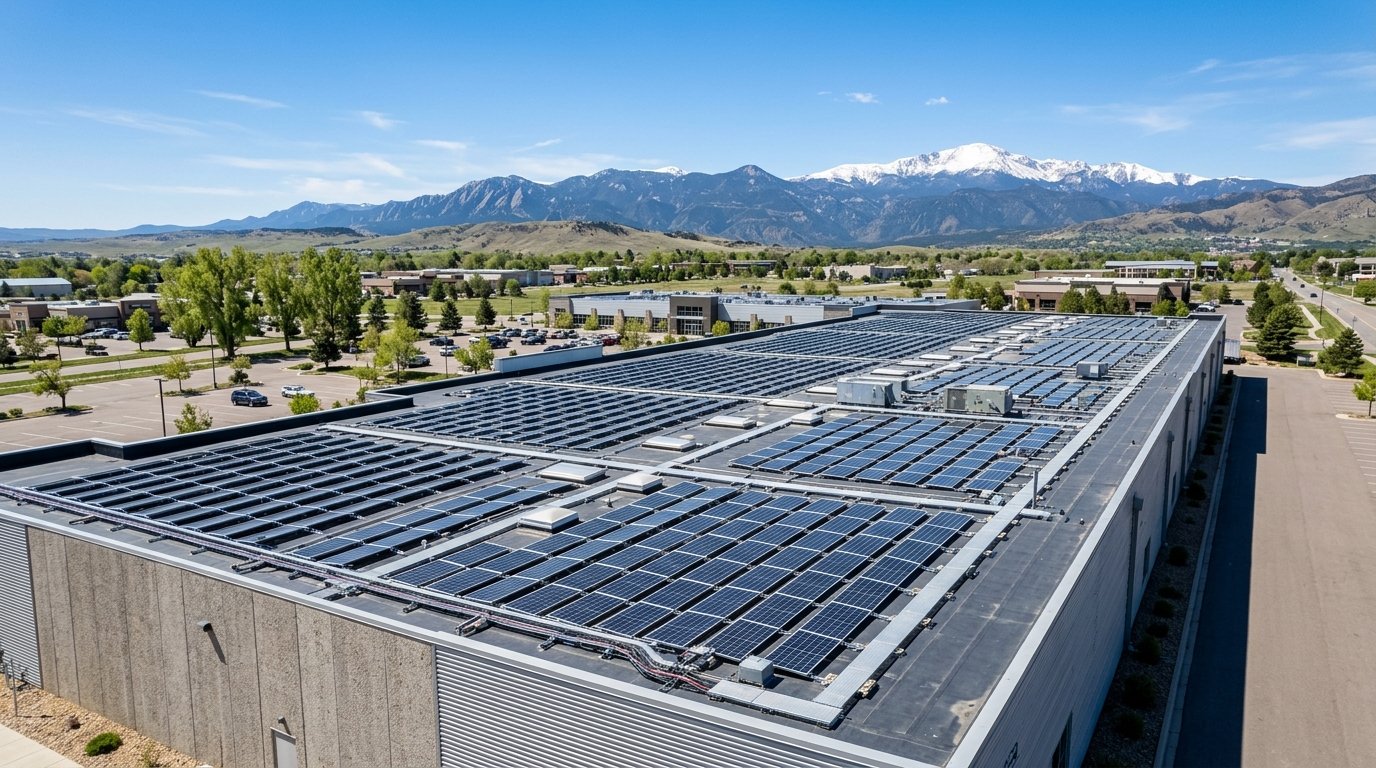
Short answer: The Section 48E tax credit is the federal Clean Electricity Investment Credit that now powers commercial solar. It replaced the old Section 48 Investment Tax Credit for projects placed in service after December 31, 2024. The base credit is 30 percent of eligible project cost when prevailing wage and apprenticeship rules are met, and it can climb to 50 percent with two stackable bonuses. For a Colorado business weighing solar in 2026, understanding 48E is the difference between guessing at the numbers and knowing exactly what the federal government will fund.
If you own a warehouse, dealership, farm, office, or any commercial building from the Front Range to the Western Slope, the Section 48E tax credit is the single largest incentive on the table. This guide explains what it is, how it differs from the credit it replaced, how the bonuses stack, and the 2026 deadline that now governs it.
What is the Section 48E tax credit?
Section 48E, formally the Clean Electricity Investment Credit, is a technology neutral federal tax credit for building facilities that generate clean electricity. Solar is a core qualifying technology, and so is standalone battery storage. It was created by the Inflation Reduction Act and took effect for property placed in service after December 31, 2024, replacing the legacy Section 48 Investment Tax Credit that energy projects had relied on for decades. For the broader policy backdrop, see our overview of the Inflation Reduction Act and solar.
The credit is claimed by the owner of the system in the year the project is placed in service. It directly reduces federal income tax owed, dollar for dollar, rather than acting as a deduction against income. On a commercial solar project, that makes it the centerpiece of the financial model.
48E vs 48: what actually changed
If you have read older solar financing material, you have seen references to the Section 48 ITC. Here is how the new 48E credit compares.
- Technology neutral. The old Section 48 listed specific eligible technologies. Section 48E instead qualifies any facility with net zero greenhouse gas emissions, which keeps solar, wind, and storage eligible without Congress relisting them.
- Same headline rate. Both credits center on a 30 percent base for projects that meet labor standards, so the core math feels familiar.
- Same bonus structure. The domestic content and energy community adders carried over, so a well sited, well sourced project can still reach 50 percent.
- A firmer end date. This is the biggest practical change. Legislation in 2025 set a hard begin construction deadline and a placed in service backstop for solar and wind, which we cover below.
For most business owners, the takeaway is reassuring. The 30 percent commercial ITC did not disappear. It changed statutory homes, from Section 48 to Section 48E, and picked up a tighter timeline.
How the 30 percent base credit works
The Section 48E credit is built on a two tier structure.
- Base rate of 6 percent applies if a project does not meet federal labor standards.
- Full rate of 30 percent applies when the project satisfies prevailing wage and apprenticeship requirements during construction and, for a period, during repairs and alterations.
The prevailing wage and apprenticeship rules are waived entirely for smaller projects under 1 megawatt of AC capacity, which means most rooftop commercial systems automatically qualify for the full 30 percent. Larger ground mounts and carport arrays need to plan for compliant labor to capture the full credit. A qualified installer and tax advisor should confirm which tier your specific project falls into before you build.
The stackable bonuses: reaching 40 or 50 percent
The 30 percent base is only the floor. Two bonus credits can stack on top of it, each worth an additional 10 percentage points.
Domestic content bonus (+10 percent)
A project earns the domestic content bonus when a required share of its steel, iron, and manufactured products, such as modules and inverters, is produced in the United States. Treasury publishes cost based tables and safe harbor methods that installers use to certify compliance. The required threshold has been rising over time, so the sourcing decisions you make on a 2026 project matter for whether this 10 percent is in reach.
Energy community bonus (+10 percent)
A project earns the energy community bonus when it sits in a qualifying location, which includes coal closure census tracts, brownfield sites, and statistical areas with historic fossil fuel employment. Colorado has several qualifying coal closure areas, including tracts near Craig, Hayden, and Pueblo. The IRS refreshes the eligible location list periodically, so a site that qualifies one year should be re-confirmed against the current list.
Stack both bonuses on the 30 percent base and an eligible Colorado project can reach a 50 percent federal credit. Even capturing one bonus brings you to 40 percent. These are not hypothetical: a commercial project in the right location, built with the right equipment, genuinely recovers half its cost from the federal credit alone.
Depreciation stacks on top of the credit
The Section 48E credit is not the only federal benefit. Commercial solar is also five year MACRS property, and bonus depreciation lets a business write off a large share of the system cost in the first year. The one nuance to know is the basis reduction: when you claim the ITC, you reduce the depreciable basis by half the credit amount. We walk through the full interaction in our guide to MACRS depreciation for commercial solar, but the headline is that the credit and depreciation together can recover well over half of a project's cost for a business with tax appetite.
The 2026 deadline that governs 48E
Here is the part every Colorado business needs to internalize. The 2025 budget legislation, the One Big Beautiful Bill Act, set a firm timeline for solar and wind under Section 48E. A project keeps the credit if it meets one of two timing tests:
- Begin construction on or before July 4, 2026. This is the safer route, because it preserves a multi year runway to design, permit, finance, and build.
- Be placed in service by December 31, 2027. This backstop catches projects that did not begin construction in time, but it leaves no margin for permitting or supply delays.
Because the begin construction date arrives first and protects the most flexibility, it is the deadline that actually drives decisions in 2026. We cover the mechanics, the two ways to prove you began construction, and the steps to take right now in our companion guide to the July 4, 2026 solar safe harbor deadline.
One caution: the rules for proving begin construction were unsettled through the first half of 2026, with IRS guidance challenged in court and an appellate timeline that may run past the deadline itself. The defensible response is to begin construction early and document it thoroughly rather than relying on any single interpretation that could shift. Treat this article as general information and confirm your approach with a qualified tax advisor.
What if your organization does not owe federal tax?
A tax credit is only directly useful if you owe tax. Section 48E addresses this in two ways for entities that otherwise could not use it.
- Elective pay (direct pay). Nonprofits, schools, churches, towns, and other tax exempt entities can receive the credit as a cash payment from the IRS instead of a tax offset.
- Transferability. A taxable business with limited tax appetite can sell its 48E credit to an unrelated buyer for cash, typically at a modest discount to face value.
Both paths require pre filing registration with the IRS before the credit is claimed. They are what make the 30 percent commercial credit accessible to organizations far beyond traditional taxpaying companies.
How this fits a Colorado solar project
Section 48E is a federal credit, but it lands on top of Colorado specific advantages. The state exempts most solar equipment from sales tax and exempts the added value from property tax, and individual utilities across the Front Range and Western Slope offer their own incentives. The federal credit is the largest single lever, but a complete commercial project layers state and utility benefits on top of it.
At ProGreen Solar, we scope, document, and build commercial solar across Colorado with these federal timing and bonus rules built into the plan from day one. The goal is not just to install panels, but to structure the project so it captures every credit it is entitled to. Learn more about commercial solar for Colorado businesses, or see the bigger picture in our overview of the federal solar tax credit.
The bottom line
The Section 48E tax credit is the modern engine of commercial solar economics: a 30 percent base that stacks to 40 or 50 percent with domestic content and energy community bonuses, paired with accelerated depreciation, and accessible even to tax exempt organizations through elective pay and transferability. It carries forward almost everything the old Section 48 ITC offered, with one critical addition, a firm 2026 timeline. For a Colorado business, the credit is still here and still generous in 2026, but capturing it means moving while the begin construction window is open.
Frequently Asked Questions
What is the Section 48E tax credit?
Section 48E is the federal Clean Electricity Investment Credit, a technology neutral tax credit that covers commercial solar and standalone battery storage. It replaced the legacy Section 48 Investment Tax Credit for projects placed in service after December 31, 2024, and provides a 30 percent base credit when labor standards are met.
What is the difference between Section 48E and Section 48?
Section 48E is technology neutral and qualifies any net zero emissions facility, while the old Section 48 listed specific technologies. Both center on a 30 percent base credit with domestic content and energy community bonuses. The biggest practical change is that 48E carries a firm begin construction deadline of July 4, 2026 for solar and wind, with a placed in service backstop of December 31, 2027.
How high can the 48E credit go?
The base credit is 30 percent when prevailing wage and apprenticeship requirements are met. A domestic content bonus adds 10 percentage points and an energy community bonus adds another 10, so an eligible project can reach a 50 percent federal credit. Capturing one of the two bonuses brings a project to 40 percent.
Does my commercial project need to meet prevailing wage rules to get 30 percent?
Projects under 1 megawatt of AC capacity are exempt from prevailing wage and apprenticeship requirements and automatically qualify for the full 30 percent, which covers most rooftop commercial systems. Larger projects must meet those labor standards to claim 30 percent instead of the 6 percent base rate.
Can a nonprofit or school claim the Section 48E credit?
Yes. Through elective pay, also called direct pay, tax exempt entities such as nonprofits, schools, churches, and local governments can receive the 48E credit as a cash payment from the IRS rather than a tax offset. It requires pre filing registration with the IRS before the credit is claimed.
Is there a deadline for the 48E commercial solar credit?
Yes. To keep the credit, a solar project generally must begin construction on or before July 4, 2026, or be placed in service by December 31, 2027. The begin construction route is safer because it preserves a multi year runway to build. Confirm your specific situation with a qualified tax advisor.
Disclaimer: This article is general information, not tax or legal advice. Tax credits, deadlines, and IRS guidance change frequently and depend on your specific situation. Consult a qualified tax advisor or attorney before acting. Accurate as of June 24, 2026.
Ready to Go Solar?
Get a free personalized quote from ProGreen Solar, Colorado's most trusted installer.
Get a Free Quote