


La Plata Electric Association Solar Guide: Net Metering and $150 Interconnection
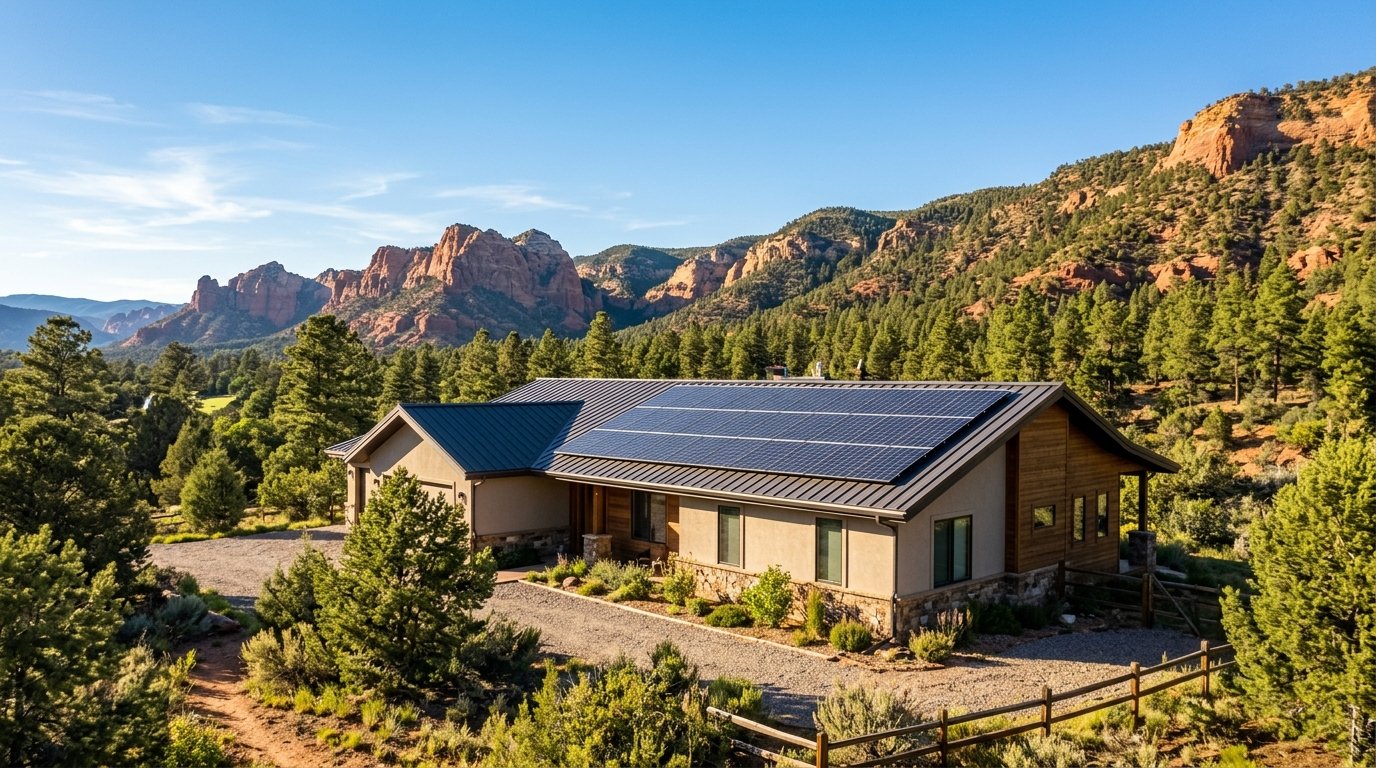
If you live in Durango or anywhere across southwest Colorado, your solar economics run through LPEA solar net metering. La Plata Electric Association (LPEA) credits the energy your panels send to the grid at the full retail rate on a one-to-one basis, settles any excess once a year in April at avoided cost, charges a one-time $150 interconnection fee, and allows residential systems up to 25 kW. That combination of full retail crediting and a generous size cap makes LPEA territory one of the friendlier places in Colorado to go solar. This guide walks through how it works so you can size and plan a system with confidence.
ProGreen Solar installs and services systems on both the Front Range and the Western Slope, so we work inside LPEA rules regularly. The figures below reflect what LPEA had in place as of mid 2026. Because co-op tariffs change, confirm the current terms directly with LPEA before you sign anything.
How LPEA Solar Net Metering Works
Net metering is the billing arrangement that makes residential solar pencil out. Your meter tracks energy flowing in both directions. When your panels produce more than your home is using, the surplus flows back onto the grid and earns you a credit. When your home needs more than the panels are making, such as at night or on a cloudy winter day, you pull from the grid as usual.
Under LPEA solar net metering, that export credit is granted at the full retail rate, kilowatt-hour for kilowatt-hour. In plain terms, a kilowatt-hour you send to the grid at noon offsets a kilowatt-hour you draw back at 9 PM, with no haircut on the value. This one-to-one retail structure is the most valuable form of net metering, and it is what we mean when we talk about the difference between true net metering and the avoided-cost arrangements some other co-ops use. If you want a deeper primer on the mechanics, see our guide to how net metering works.
The Annual April True-Up
Credits roll forward month to month, which smooths out the seasonal swing between your sunny summer surplus and your darker winter draw. Once a year, in April, LPEA trues up your account. Any net excess generation that remains after a full cycle is settled at avoided cost rather than the retail rate.
Avoided cost is the wholesale value of the power, which is meaningfully lower than retail. The practical takeaway is simple: you want to size your system to cover your own annual usage, not to bank a large surplus you will only be paid pennies for in the spring. A right-sized system captures the full retail value of nearly every kilowatt-hour you produce.
Interconnection Fee and Application
LPEA charges a one-time interconnection fee of $150, a figure that took effect April 1, 2025. Compared with several other Colorado co-ops that charge $250 or more, plus the higher application fees you see in some territories, $150 is on the affordable end. You pay it once as part of getting your system approved and connected; it is not a recurring monthly charge.
The interconnection process itself is routine for a qualified installer. We submit the application, single-line diagram, and equipment specifications to LPEA, coordinate the inspection and the meter swap, and obtain permission to operate before the system is energized. Handling this paperwork correctly is part of what you are paying a licensed contractor for, and it keeps your project moving without surprises.
The 25 kW Residential System Cap
LPEA allows residential solar systems up to 25 kW. That ceiling is generous. Many Colorado utilities and co-ops cap residential at 10 kW, which can force all-electric households to undersize. A typical Durango-area home needs something in the range of 6 to 10 kW, so 25 kW leaves plenty of headroom for larger or more energy-intensive homes.
That headroom matters most if you have, or plan to add, any of the following:
- An electric vehicle, or two, that you charge at home
- A heat pump for space heating and cooling
- A heat pump water heater
- A large second home or property in the mountains
- A shop, barn, or detached structure with its own load
Because southwest Colorado has so many mountain and second-home properties, the 25 kW cap is a real advantage for owners who want to electrify fully. If you are planning solar for a high-altitude or remote property in LPEA country, our guide to solar for mountain and high-altitude homes covers snow load, wind zones, and off-grid considerations that come into play at elevation.
Time-of-Use and the Peak Power Charge Rate
LPEA offers an optional time-of-use rate, sometimes referred to as a Peak Power Charge structure, alongside the standard residential rate. On a time-of-use plan, energy and demand cost more during defined peak hours and less off peak, which rewards members who can shift usage or store energy.
For a solar-only home, the standard rate paired with one-to-one net metering is usually the straightforward choice. A time-of-use rate becomes more interesting once you add a battery, because storage lets you avoid pulling expensive grid power during peak windows and discharge your own stored solar instead. Whether time-of-use beats the standard rate depends on your specific load shape and whether you have storage, so it is worth modeling both before you commit. We are happy to run that comparison as part of a proposal.
Is Solar Worth It in LPEA Territory?
Southwest Colorado has excellent solar resource. High altitude and a high number of clear days mean panels in the Durango area produce strongly, and LPEA solar net metering lets you capture that production at full retail value. Pair strong sunshine with a $150 interconnection fee, a one-to-one credit, and a 25 kW cap, and the fundamentals are favorable for most homeowners.
The biggest planning levers are getting the system size right against your annual usage so you minimize what spills into the April avoided-cost settlement, and deciding whether a battery and a time-of-use rate make sense for your home. Federal and state incentive rules continue to shift, so confirm what currently applies to your situation before you build your numbers.
If you are comparing co-ops because you own property in more than one service area, you may also find our guide to Empire Electric Association solar in Cortez and Montezuma County useful, since crediting rules differ from one southwest Colorado co-op to the next.
Next Steps
Going solar in LPEA territory starts with a clear look at your last twelve months of usage, your roof or ground-mount options, and your goals around electrification and backup power. From there we size a system to your actual consumption, handle the LPEA interconnection application, and manage permitting and inspection through to permission to operate. To get a proposal built around your home and your LPEA account, reach out through our contact page and we will take it from there.
Frequently Asked Questions
Does LPEA offer one-to-one net metering?
Yes. La Plata Electric Association credits the energy your solar system exports at the full retail rate on a one-to-one basis. Credits roll forward month to month, and any net excess is settled once a year in April at the lower avoided-cost rate.
How much is the LPEA solar interconnection fee?
LPEA charges a one-time interconnection fee of $150, which took effect April 1, 2025. It is paid once during the approval process and is not a recurring monthly charge. Confirm the current amount with LPEA before you sign.
What is the largest residential solar system LPEA allows?
LPEA permits residential systems up to 25 kW. That cap is generous compared with many Colorado utilities that limit residential systems to 10 kW, and it leaves room for homes with electric vehicles, heat pumps, or larger loads.
When does LPEA settle excess solar credits?
LPEA trues up net metering accounts annually in April. Credits accumulate through the year, and any remaining net excess generation at true-up is paid at avoided cost rather than the retail rate, so sizing your system to your own usage is important.
Should I choose the LPEA time-of-use rate with solar?
For a solar-only home, the standard rate with one-to-one net metering is usually the simpler choice. The optional time-of-use or Peak Power Charge rate tends to make more sense once you add a battery that can discharge during peak hours. Modeling both rates is worthwhile before deciding.
Is solar a good investment in the Durango area?
Southwest Colorado has strong solar resource thanks to high altitude and many clear days. Combined with LPEA full retail net metering, a low interconnection fee, and a 25 kW cap, the fundamentals are favorable for most homeowners. Confirm current incentives and rates before finalizing your numbers.
Disclaimer: Utility program details (incentives, caps, fees, and rates) change frequently by board or commission action. Verify current details directly with your utility before making decisions. Accurate as of June 24, 2026.
Ready to Go Solar?
Get a free personalized quote from ProGreen Solar, Colorado's most trusted installer.
Get a Free Quote