


Solar for Mountain and High-Altitude Homes: Snow Load, Wind Zones and Off-Grid Options
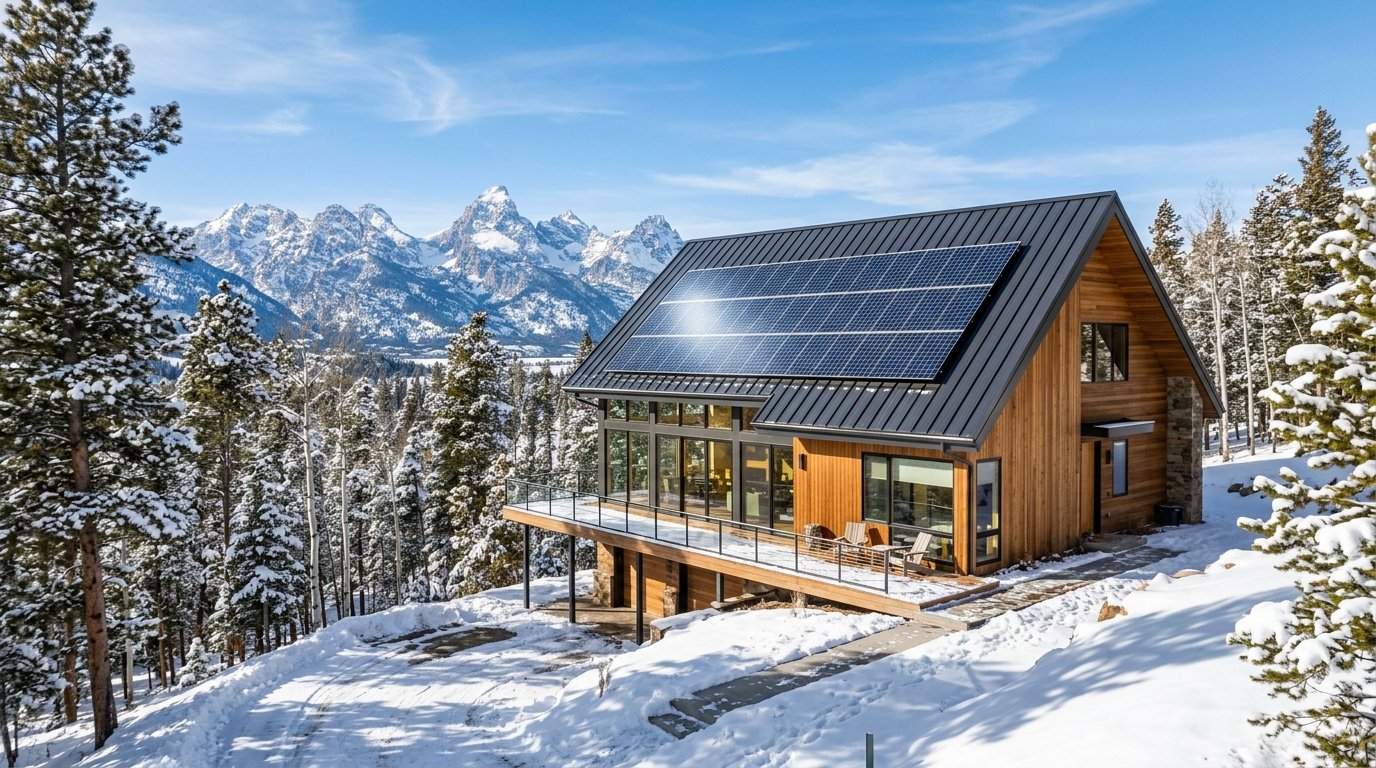
Mountain home solar in Colorado is a different engineering problem than a flat lot on the plains. At higher elevations you are designing around heavy snow loads, fierce wind zones, steep metal roofs, long distances from the nearest utility line, and the very real chance of multi-day outages. Done right, high-altitude solar performs beautifully and can even out-produce a comparable system at lower elevation. Done as a generic rooftop job, it can shed snow onto a deck, lift in a windstorm, or leave you dark when the grid drops. This guide walks through how we design solar for mountain and second homes, from racking and roof type to the off-grid versus grid-tied decision and battery backup for remote cabins.
ProGreen Solar installs across both the Front Range and the Western Slope, so we plan and permit for high-country conditions every season. Here is what actually matters when you put panels on a home above the foothills.
Why mountain home solar is its own design category
A solar array in the mountains has to survive conditions that a typical suburban roof never sees. The same elevation that makes the high country beautiful also drives four design pressures at once:
- Snow load: a roof at 9,000 feet can carry feet of dense, wet snow for months.
- Wind: exposed ridgelines and mountain passes sit in higher wind-speed zones than valley floors.
- Roof type and pitch: steep metal and standing-seam roofs are common, and each demands specific mounting hardware.
- Grid distance and reliability: remote homes may be far from the nearest line or on a circuit that goes down in storms.
The flip side is genuinely good news on production. Thinner, cleaner air and high reflectivity off snow can lift output, which is exactly the effect we cover in our piece on the Colorado altitude solar boost. High-altitude solar is not a compromise. It just has to be engineered for the place it lives.
Snow load and racking: keeping the array on the roof
Snow is the headline challenge for mountain home solar. Two things have to be true: the roof and racking have to carry the structural weight, and the system has to handle how snow moves once it starts to slide.
On the structural side, the racking and attachment plan is engineered to the local snow load for your elevation and county, which is often far higher than a stock design assumes. That can mean more roof attachment points, upgraded rails, and in some cases a structural review of the roof framing before anything goes up. We do not guess at this. The mounting layout is sized to the load.
On the behavior side, solar glass is slick, so panels can actually help snow shed. That is useful for winter production, but it also means a loaded array can release a sheet of snow all at once. Good mountain design accounts for where that snow lands:
- Keeping arrays away from doorways, walkways, decks, and gas meters in the shed path.
- Adding snow guards or retention where a controlled release is safer than a sudden slide.
- Setting panel tilt and placement so winter sun clears the array faster.
Trying to clear snow off panels yourself on a steep, icy mountain roof is dangerous and usually unnecessary. In most cases the array sheds or melts clear on its own once the sun hits it, and the lost winter production is a small share of the year.
Wind zones and high-country engineering
Mountain sites frequently fall into higher design wind speeds than valley or plains locations, and exposed ridgelines see strong, gusty conditions. That changes the attachment plan. Uplift from wind is one of the main forces the racking has to resist, so spacing, fastener type, and edge-zone reinforcement all get tightened for high-wind sites.
This is where working with an installer who engineers and permits to local code matters. ProGreen Solar is a licensed Colorado electrical contractor, and our mountain installations are designed to meet the wind and snow loads the building department actually requires for that address rather than a one-size template. The goal is simple: an array that stays put through a January windstorm and a heavy spring snow alike.
Roof type: steep pitches and metal roofs
Metal roofing is everywhere in the high country because it sheds snow and stands up to weather, and it is one of the best surfaces for solar when mounted correctly. Standing-seam metal roofs are ideal because clamps can attach directly to the seams with no roof penetrations at all, which preserves the roof's waterproofing and warranty.
Other common mountain roof situations and how we handle them:
- Standing-seam metal: clamp-on mounting, no penetrations, clean and durable.
- Exposed-fastener or corrugated metal: sealed, flashed attachments engineered for the profile.
- Steep pitches: mounting and access are planned for safety, and tilt is often already favorable for shedding snow.
- Asphalt shingle on a second home: standard flashed mounts, with attention to roof age so you are not installing over a roof that needs replacing.
Because hail comes with high-country weather too, panel durability matters. We cover impact ratings and what hail really does to modern modules in our guide on hail and solar panels in Colorado, which is worth a read before choosing equipment for an exposed mountain site.
Off-grid versus grid-tied for mountain and cabin homes
The biggest fork in the road for remote homes is whether to connect to the utility at all. The answer usually comes down to how far the nearest line is and how reliable it is.
Grid-tied with battery backup is the right call for most mountain homes that already have a utility connection. You stay connected for the economics of net metering or a utility credit, and the battery carries your essential loads through the outages that are common on mountain circuits. Many high-country cooperatives also offer storage incentives that improve the math. For example, homes in the Vail and Aspen region served by Holy Cross can stack solar and battery programs, which we break down in our Holy Cross Energy solar and battery guide.
Off-grid makes sense when extending utility service to a remote cabin would cost tens of thousands of dollars, or when there is simply no line to reach. An off-grid system is a complete power plant: a larger solar array, a substantial battery bank sized for several days of autonomy through cloudy stretches, and almost always a backup generator for deep winter and long storms. It is more equipment and more design work, but for a truly remote property it can be far cheaper than a utility line extension and gives you full independence.
A middle path that fits many second homes is a robust grid-tied system with enough battery to ride through multi-day outages, giving you off-grid-like resilience without the cost and complexity of going fully standalone.
Battery backup and second-home considerations
Mountain and second homes have a backup profile all their own. The house may sit empty for weeks, then need to protect a freezing-vulnerable plumbing system, keep a well pump running, or hold a comfortable temperature for a weekend arrival. Battery storage is what makes solar useful during the outages that matter most.
When we size storage for a mountain home, we focus on:
- Critical loads: heat or freeze protection, well pump, refrigeration, and key circuits, rather than trying to back up the entire house.
- Days of autonomy: enough capacity to cover the cloudy, snowy stretches when production dips.
- Cold performance: batteries and their enclosures specified for low temperatures and high elevation.
- Remote monitoring: so you can check on an unoccupied home from afar.
If you are weighing how much storage a high-country home really needs, our home battery storage guide walks through capacity, backup strategy, and the tradeoffs in plain terms.
Planning your mountain solar project
Every mountain address is different, which is why a generic quote rarely fits. Snow load, wind zone, roof type, your utility or co-op, and how often you are actually at the home all shape the right design. The best first step is a site-specific plan built around your elevation and your goals, whether that is lower bills, true energy independence, or simply keeping the pipes from freezing when a winter storm takes the grid down.
As a Colorado installer working the Front Range and Western Slope, ProGreen Solar engineers high-altitude systems to local snow and wind codes and helps you choose between grid-tied, battery-backed, and off-grid approaches. If you have a mountain or second home you want to power with the sun, start a conversation through our residential solar page and we will design something that fits your site and your winters.
Frequently Asked Questions
Can solar panels handle the snow load at high elevation in Colorado?
Yes, when the racking and roof are engineered for it. The mounting system is designed to the local snow load for your elevation and county, which often means more attachment points and upgraded rails than a standard design. In some cases the roof framing is reviewed before installation.
Do I have to shovel snow off my mountain solar panels?
Usually not. Solar glass is slick and tilted, so panels tend to shed or melt clear on their own once the sun hits them. Climbing onto a steep, icy mountain roof to clear snow is dangerous and generally unnecessary, and the lost winter production is a small share of the year.
Is off-grid or grid-tied better for a remote mountain cabin?
It depends on the utility line. If a connection already exists, grid-tied solar with battery backup is usually best because you keep net metering or utility credits and ride through outages. Off-grid makes sense when extending a utility line would cost tens of thousands of dollars or no line is available, in which case a larger array, battery bank, and backup generator form a standalone power plant.
Does high altitude help or hurt solar production?
It generally helps. Thinner, cleaner air and reflection off snow can raise output compared with a similar system at lower elevation. The main design challenges at altitude are snow load, wind, and roof type rather than weak production.
Can solar go on a steep metal mountain roof?
Yes. Standing-seam metal roofs are ideal because clamps attach directly to the seams with no roof penetrations, which protects the roof warranty. Exposed-fastener and corrugated metal roofs use sealed, flashed attachments engineered for the profile, and steep pitches are mounted with safe access planned in advance.
Will solar keep my second home from freezing during an outage?
With battery storage, yes. Storage can back up critical loads like heat or freeze protection, a well pump, and refrigeration during the multi-day outages common on mountain circuits. Sizing focuses on those essential loads, several days of autonomy for cloudy stretches, cold-rated equipment, and remote monitoring so you can check on an empty home.
Ready to Go Solar?
Get a free personalized quote from ProGreen Solar, Colorado's most trusted installer.
Get a Free Quote