


Energy Community Bonus Credit: Is Your Colorado Site Eligible for an Extra 10%?
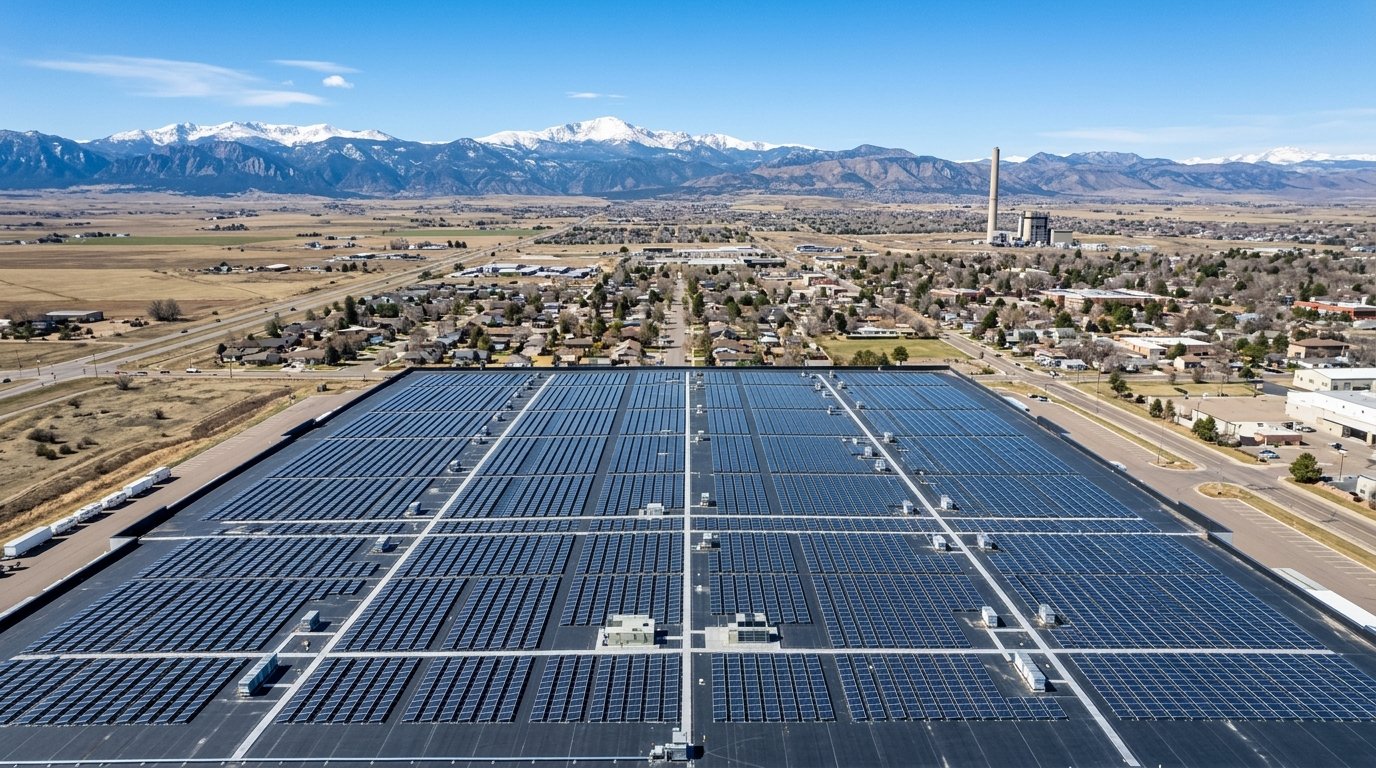
The energy community bonus credit in Colorado can add 10 percentage points to the Section 48E investment tax credit on a commercial solar project, lifting a base 30% credit to 40% of eligible costs. If your building or ground site sits in a qualifying coal closure census tract, on a brownfield, or inside a statistical area with high fossil fuel employment, that extra 10% is one of the most valuable and most overlooked adders in the entire federal solar incentive stack. The catch is that eligibility is tied to location lists the IRS refreshes every year, so the answer for your specific parcel depends on the current guidance and the date you begin construction.
As a Colorado solar contractor working the Front Range and the Western Slope, we run this check on every commercial proposal because the difference between a 30% and a 40% credit can change the entire return on a system. This guide explains how the bonus works, which Colorado locations tend to qualify, and how to confirm your site before you commit.
What the Energy Community Bonus Credit Is
The energy community bonus is a stackable adder on top of the base clean electricity investment credit. It rewards businesses for siting clean energy in communities that historically depended on fossil fuel jobs or that carry the environmental legacy of past industrial use. For a deeper walk through the underlying credit it attaches to, see our explainer on the Section 48E tax credit for commercial solar.
The mechanics are straightforward. A commercial solar project that meets prevailing wage and apprenticeship requirements earns a base 30% credit. The energy community bonus adds 10 percentage points to that, for 40%. It also stacks with the domestic content bonus, which adds another 10 points if you meet the sourcing thresholds. We cover that adder separately in our guide to the domestic content bonus for solar. A project that qualifies for both bonuses, and meets labor standards, can reach a 50% federal credit.
The bonus is the same 10% regardless of which of the three qualification categories your site falls under. You only need to meet one.
The Three Ways a Site Qualifies
The IRS recognizes three distinct categories of energy community. Understanding the differences matters because the data sources and the maps are different for each.
1. Coal Closure Census Tracts
This is the category that most often applies to Colorado solar sites. A census tract qualifies if a coal mine closed there after 1999, or a coal fired electric generating unit was retired there after 2009. Adjacent tracts that directly touch a qualifying tract also count. Because Colorado has a long mining and coal generation history, the coal closure map captures a meaningful share of the state.
2. Brownfield Sites
A brownfield is real property where redevelopment is complicated by the presence, or potential presence, of a hazardous substance, pollutant, or contaminant. Former gas stations, old industrial yards, capped landfills, and mine impacted parcels can all qualify. Brownfields are a strong fit for ground mount solar because the land is often otherwise hard to develop, and a solar array is a low impact reuse.
3. Statistical Areas With Fossil Fuel Employment
This category covers metropolitan and non metropolitan statistical areas that have, or recently had, significant employment or local tax revenue tied to the extraction, processing, transport, or storage of coal, oil, or natural gas, and that also carry an unemployment rate at or above the national average. The IRS publishes the list of qualifying statistical areas, and it updates as employment and unemployment data move.
Where Colorado Sites Tend to Qualify
Colorado is unusually well positioned for the energy community bonus because of where coal mining and coal fired generation have operated. The IRS refreshes the eligible location lists annually, and the most recent update is Notice 2026-39, released June 10, 2026. You should treat any specific location as confirmed only against that current guidance.
That said, several regions have historically contained qualifying coal closure tracts:
- Craig and Hayden in northwest Colorado, where coal fired generating units and associated mining have driven the local economy and are now transitioning.
- Pueblo and southern Colorado, with a deep history of coal generation, steel, and heavy industry that touches both the coal closure and the fossil fuel employment categories.
- Other former mining communities across the state where mine closures after 1999 placed tracts and their neighbors on the map.
These examples illustrate the pattern, not a guarantee. Tract boundaries are precise, and a parcel one street over from a qualifying tract may or may not be adjacent in the way the rule defines. The only reliable approach is to check the exact coordinates of your site against the current mapping tool.
Why This Bonus Is Time Sensitive
Two timing issues make the energy community bonus something to act on rather than file away.
First, the eligible location lists update annually. A tract that qualifies under this year's notice could change as the underlying coal, employment, and unemployment data are revised. The fossil fuel employment category in particular can shift year to year because it depends on unemployment rates that move with the broader economy. Coal closure tracts are generally more stable once a mine or unit closure is recorded, but you still want to confirm against the current notice rather than an older map.
Second, the underlying 48E credit itself is on a tight federal clock. Commercial solar projects generally need to begin construction on or before July 4, 2026, or be placed in service by the end of 2027, to keep the 30% base credit that the energy community bonus sits on top of. If the base credit is not preserved, there is no credit for the bonus to enhance. We walk through that deadline and the begin construction methods in our guide to the solar safe harbor deadline in 2026. The practical takeaway: confirming energy community status is part of the same urgent timeline as locking in the credit at all.
How to Confirm Your Site Is Eligible
Do not assume, and do not rely on a regional reputation. Follow a concrete process:
- Pin the exact location. Get the precise address or parcel coordinates for the array. Adjacency and tract boundaries are determined at a fine level of detail.
- Check the current IRS guidance. Eligibility is governed by the latest annual notice, currently Notice 2026-39 from June 10, 2026, and the accompanying appendices that list qualifying coal closure tracts and statistical areas.
- Use the official mapping tool. The interagency energy community mapping resource lets you enter a location and see which categories, if any, apply. Cross reference it against the current notice.
- Evaluate the brownfield path separately. If the coal and employment categories do not apply, ask whether the parcel has a documented history that makes it a brownfield. This category is parcel specific rather than tract specific.
- Document everything. Keep the mapping results, the notice citation, and any brownfield documentation in your project file. The bonus is claimed on your return, and clean records matter if the claim is ever examined.
Because the maps and notices change and the dollars are significant, this is one part of the proposal we always confirm before presenting numbers. A claimed 40% credit that turns out to be 30% is a costly surprise no business owner should absorb after the fact.
What the Extra 10% Actually Means for a Colorado Business
To make the value concrete, consider a commercial solar project with one million dollars in eligible costs. At a base 30% credit, the business earns a $300,000 federal tax credit. With the energy community bonus, that becomes 40%, or $400,000, an additional $100,000 of value for the same system, purely because of where it sits. Stack the domestic content bonus on top and a qualifying project can reach 50%, or $500,000 on that same example.
That added value flows straight to the project's payback. For a Colorado warehouse, manufacturing site, agricultural operation, or office building, an extra 10 points can shave years off the time to break even and meaningfully raise the lifetime return. It can also be the deciding factor that moves a marginal project into clearly worthwhile territory. The energy community bonus credit in Colorado is, in many cases, the single largest reason a commercial system pencils out as strongly as it does.
The bonus also pairs naturally with the rest of the commercial incentive picture, including accelerated depreciation and the credit monetization options available to businesses. We bring the full stack together in our overview of commercial solar in Colorado, which is the right next read if you are weighing a project.
How ProGreen Solar Helps
We design and install commercial solar across Colorado, from the Front Range to the Western Slope, and we treat the incentive analysis as a core part of the engineering, not an afterthought. For energy community questions we confirm your exact site against the current IRS guidance, map the coal closure, brownfield, and fossil fuel employment categories, and show you the credit impact in plain numbers before you commit a dollar. Because we hold a Colorado electrical contractor license, EC.0101788, we can also handle the technical and code side of the project under one roof.
If your facility sits in or near Craig, Hayden, Pueblo, or another community shaped by Colorado's coal and energy history, the energy community bonus is worth checking now, while the July 4, 2026 begin construction window is still open. The fastest way to get a clear answer for your specific parcel is to talk with our commercial solar team and let us run the eligibility check alongside a full proposal. The maps and notices will keep changing, but the value of getting this right does not.
Frequently Asked Questions
How much does the energy community bonus credit add to a commercial solar project?
It adds 10 percentage points to the Section 48E investment tax credit. A project that earns a base 30% credit reaches 40% if it qualifies as an energy community, and it can stack with the domestic content bonus for up to 50%.
What makes a Colorado site an energy community?
A site qualifies if it falls into any one of three categories: a coal closure census tract where a coal mine closed after 1999 or a coal fired unit retired after 2009, a brownfield with documented contamination concerns, or a statistical area with significant fossil fuel employment and an unemployment rate at or above the national average.
Which Colorado areas tend to qualify for the energy community bonus?
Regions with coal mining and coal generation history have historically contained qualifying tracts, including areas near Craig, Hayden, and Pueblo. Eligibility is decided at the exact parcel level, so a location must be confirmed against the current IRS guidance rather than assumed from the region.
Why is the energy community bonus considered time sensitive?
The IRS refreshes the eligible location lists every year, with the latest being Notice 2026-39 from June 10, 2026, so a tract that qualifies now can change. The bonus also sits on top of the base 48E credit, which generally requires beginning construction on or before July 4, 2026, or being placed in service by the end of 2027.
How do I confirm whether my exact site qualifies?
Pin the precise parcel coordinates, check the current IRS notice and its appendices, run the location through the official interagency energy community mapping tool, evaluate the brownfield path separately if needed, and keep documentation in your project file. ProGreen Solar performs this check as part of every commercial proposal.
Can the energy community bonus stack with other solar incentives?
Yes. It stacks with the domestic content bonus, which adds another 10 percentage points, and it works alongside accelerated depreciation and credit monetization options available to businesses. Stacking the labor standards base credit with both bonuses can bring the federal credit to 50% of eligible costs.
Disclaimer: This article is general information, not tax or legal advice. Tax credits, deadlines, and IRS guidance change frequently and depend on your specific situation. Consult a qualified tax advisor or attorney before acting. Accurate as of June 24, 2026.
Ready to Go Solar?
Get a free personalized quote from ProGreen Solar, Colorado's most trusted installer.
Get a Free Quote