


Commercial Solar PPAs vs. Direct Ownership: Which Wins After OBBBA?
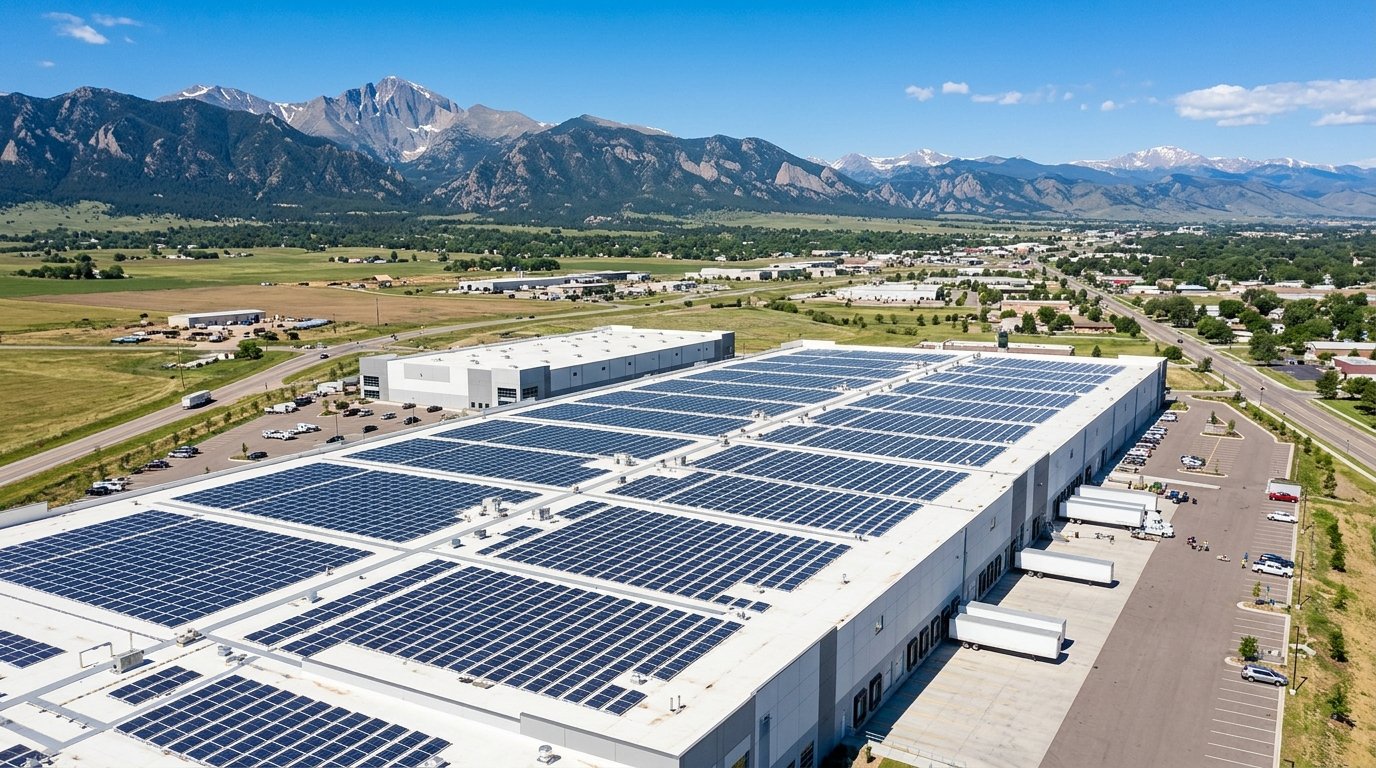
The commercial solar PPA vs ownership decision usually comes down to one question: does your business have the tax appetite to use the federal incentives directly? If you do, direct ownership almost always wins on lifetime economics. You capture the Investment Tax Credit and accelerated depreciation yourself, and you own a hard asset that keeps producing free power long after it is paid off. If you do not have meaningful tax liability, a power purchase agreement (PPA) lets a third party take the tax benefits and pass a portion of the savings to you with no money down. After the One Big Beautiful Bill Act (OBBBA), both paths still work, but the deadlines and the math have shifted, and Colorado businesses should understand the tradeoffs before signing anything.
At ProGreen Solar we build commercial systems across the Front Range and the Western Slope, and we have walked owners through every version of this choice. Below is a plain-spoken breakdown of how the two models actually differ, who each one fits, and how a financing tool like Colorado C-PACE can bridge the gap.
What direct ownership means for a commercial buyer
With direct ownership you (or your business entity) buy the system outright, finance it, or fund it through a property-assessed program. You own the panels, the inverters, and the racking, and you own every kilowatt-hour they produce for the next 25 to 30 years. More importantly, you own the federal tax incentives.
Ownership stacks two major benefits:
- The Investment Tax Credit (ITC). A commercial solar project that meets the requirements can earn a 30 percent credit against the cost of the system, plus potential bonus adders for domestic content and energy-community siting.
- Accelerated depreciation (MACRS). Solar is five-year MACRS property, and the depreciation deductions further reduce the effective net cost of the system. The depreciable basis is reduced by half the ITC, but the combined effect of the credit and depreciation can offset a large share of the project cost for a business that can use them.
The catch is capital and tax appetite. Ownership requires either upfront cash or financing, and the tax benefits are only valuable if your business actually owes enough federal tax to absorb them. A profitable Colorado company with real tax liability is the classic ownership candidate. For a deeper look at the depreciation side, see our guides to commercial solar in Colorado and the credit-monetization tools below.
There is also a qualitative side to ownership that the spreadsheets sometimes miss. When you own your generation, you are insulating part of your operating budget from utility rate increases for decades. Commercial electricity rates in Colorado have trended upward, and a system you own effectively locks in a large block of your energy cost at today's price. You also keep full control of the equipment, the monitoring data, and any future upgrades such as adding storage. For an owner-occupied building, that control and that long-term hedge are often worth as much as the headline tax savings.
What a PPA means for a commercial buyer
A solar power purchase agreement flips the model. A third-party developer or financier owns the system that sits on your roof or your land. They pay for it, they claim the ITC and depreciation, and they sell you the electricity it generates at a fixed, contracted rate, typically lower than your utility rate. You pay nothing upfront and you buy power, not panels.
The appeal of a PPA is simple:
- No capital outlay and no balance-sheet debt in most structures.
- The owner handles design, permitting, monitoring, and maintenance.
- You start saving on day one with a predictable per-kilowatt-hour price.
The tradeoff is that you do not own the asset and you do not capture the tax incentives. The PPA provider does, and they price the contract to keep a share of that value. Over a 20 to 25 year term, you pay for the electricity many times over, and at the end you typically have the option to buy the system, renew, or have it removed. A PPA trades long-term upside for short-term simplicity and zero cost of entry. For the closely related residential and lease structures, our overview of solar loans vs. leases vs. PPAs walks through the same family of third-party arrangements.
One detail that trips up commercial buyers is the escalator. Many PPAs include an annual price escalator, often in the range of 1 to 3 percent, so the rate you pay rises each year. A modest escalator can still keep you well below utility rates, but it erodes the savings over a long term, so read it carefully and model the full contract life, not just year one. You should also confirm who is responsible for repairs, monitoring, insurance, and removal at end of term, and what happens if you sell the building before the PPA expires. A clean PPA spells all of this out; a vague one can become a liability when it is time to refinance or sell the property.
How OBBBA changed the calculus
OBBBA reshaped the federal solar landscape, and it matters for both paths because the underlying credit is the same Section 48E Clean Electricity Investment Credit.
The headline change is timing. To preserve the 30 percent credit, a commercial project generally needs to begin construction on or before July 4, 2026, or be placed in service by the end of 2027. That deadline applies to whoever owns the system. If you own it directly, the clock is yours to manage. If you sign a PPA, the deadline belongs to the PPA provider, and you should confirm in writing that their project meets a qualifying begin-construction milestone so the savings they promised actually materialize.
The net effect: OBBBA did not pick a winner between PPA and ownership, but it did add urgency. A business that wants to own and use the ITC directly should be moving now, because the begin-construction window will not stay open indefinitely. The exact tax treatment of any project should always be confirmed with your own tax advisor, since these rules are detailed and continue to be interpreted.
So which one wins?
For most profitable businesses with real federal tax liability, direct ownership still wins on lifetime economics after OBBBA. The reason is straightforward: when you own the system, you keep the ITC, you keep the depreciation, and you keep every dollar of avoided electricity cost for the full life of the equipment. A PPA, by design, lets someone else keep the tax benefits and a margin on the power.
Here is a practical way to think about the decision:
- Strong tax appetite plus access to capital or financing. Direct ownership is usually the best long-term outcome. You front the cost, capture the incentives, and own a producing asset.
- Little or no federal tax liability, but you are a taxable entity. A PPA can make sense because it hands the unusable tax benefits to someone who can monetize them, and you still get cheaper power with no capital outlay.
- A tax-exempt organization (nonprofit, school, church, municipality, or tribe). You now have a third option that did not exist a few years ago. Elective pay (direct pay) lets many tax-exempt entities receive the credit as a cash payment from the IRS, which can make ownership viable even without tax liability. See our guide to elective pay solar for Colorado nonprofits.
One more wrinkle: even taxable businesses that cannot use the full credit are no longer stuck choosing a PPA by default. Under current rules, a business can sell its solar tax credit to an unrelated buyer for cash, which lets you own the system and still monetize the credit. Our explainer on solar tax credit transferability covers how that works and what buyers typically pay.
C-PACE: a financing bridge for ownership
The most common objection to ownership is the upfront capital. That is exactly the gap Colorado C-PACE is designed to close. Commercial Property Assessed Clean Energy financing provides long-term funding for a commercial solar project, repaid through a voluntary assessment on the property, and it can be structured to require little to nothing out of pocket at closing.
C-PACE lets a business own the system, and therefore capture the ITC and depreciation, without writing a large check up front. The financing is tied to the property rather than to the business, and in many cases the obligation transfers with the building if it is sold. That combination, ownership economics with PPA-like cash flow, is often the sweet spot for a Colorado company that wants the long-term value of owning but does not want to deploy capital today. We break the program down in detail in our Colorado C-PACE solar financing guide.
In short, C-PACE often reframes the entire debate. Instead of PPA vs. ownership, the real question becomes: own with C-PACE, or sign a PPA? For a tax-paying business, financed ownership frequently comes out ahead because you keep the incentives and the asset.
Questions to ask before you choose
Whether you lean toward a PPA or ownership, run through these before signing:
- Does our business have enough federal tax liability to use the ITC and MACRS, or should we plan to transfer the credit or use elective pay?
- What is our cost of capital, and can C-PACE or another loan make ownership cash-flow positive from year one?
- If we sign a PPA, has the provider documented that their project meets the begin-construction deadline that preserves the credit?
- What happens at the end of the PPA term, and what is the buyout price and the removal obligation?
- How long do we expect to hold this property, and does the financing or contract transfer cleanly on a sale?
These answers usually make the right path obvious. A profitable owner-occupied business on the Front Range with a long horizon almost always benefits from owning. A cash-constrained or tax-light organization may be better served by a well-structured PPA, or by C-PACE-financed ownership that delivers the best of both. The worst outcome is signing the first contract a salesperson puts in front of you without comparing it against the alternative, because the structures look similar on the surface but differ enormously over 25 years.
Where ProGreen fits in
We design and install commercial solar across Colorado, from warehouses and light-industrial buildings to multi-tenant and agricultural sites, and we model both ownership and PPA scenarios so you can see the real numbers side by side rather than a sales pitch for one structure. We will be honest about which path serves your business, even when that means a smaller project for us. If you are weighing commercial solar PPA vs ownership and want a straight comparison built on your actual tax position and energy load, talk to our commercial solar team and we will run the analysis with you. Always confirm the specific tax outcomes with your own CPA or tax counsel before you commit.
Frequently Asked Questions
What is the main difference between a commercial solar PPA and ownership?
With ownership you buy the system and keep the tax incentives, the electricity savings, and the asset itself. With a power purchase agreement, a third party owns the system, claims the tax benefits, and sells you the power it produces at a fixed rate with no upfront cost.
Does direct ownership or a PPA save more money over time?
For a business with real federal tax liability, direct ownership usually wins on lifetime economics because you capture the 30 percent Investment Tax Credit, accelerated depreciation, and decades of free power. A PPA lets someone else keep those benefits in exchange for no upfront cost, so it tends to fit businesses without tax appetite.
How did OBBBA change commercial solar financing?
OBBBA set timing requirements for the Section 48E credit. To keep the 30 percent credit, a commercial project generally must begin construction on or before July 4, 2026, or be placed in service by the end of 2027. That deadline applies to whoever owns the system, so it matters under both ownership and PPA structures.
Can a business own solar without paying everything upfront?
Yes. Colorado C-PACE provides long-term financing repaid through a voluntary property assessment, which lets a business own the system and capture the tax incentives without a large upfront payment. The obligation is tied to the property and often transfers with the building on a sale.
What if my organization is tax-exempt and cannot use the credit?
Tax-exempt entities such as nonprofits, schools, churches, municipalities, and tribes can often use elective pay, which delivers the credit as a cash payment from the IRS. Taxable businesses that cannot use the credit may instead sell it to an unrelated buyer for cash through credit transferability.
Should I confirm the tax details with my own advisor?
Yes. Tax outcomes depend on your specific situation, and the federal rules are detailed and evolving. Always confirm the ITC, depreciation, and any deadline implications with your own CPA or tax counsel before committing to ownership or a PPA.
Disclaimer: This article is general information, not tax or legal advice. Tax credits, deadlines, and IRS guidance change frequently and depend on your specific situation. Consult a qualified tax advisor or attorney before acting. Accurate as of June 24, 2026.
Ready to Go Solar?
Get a free personalized quote from ProGreen Solar, Colorado's most trusted installer.
Get a Free Quote