


Colorado C-PACE Financing for Commercial Solar: 100% Financing, $0 Down
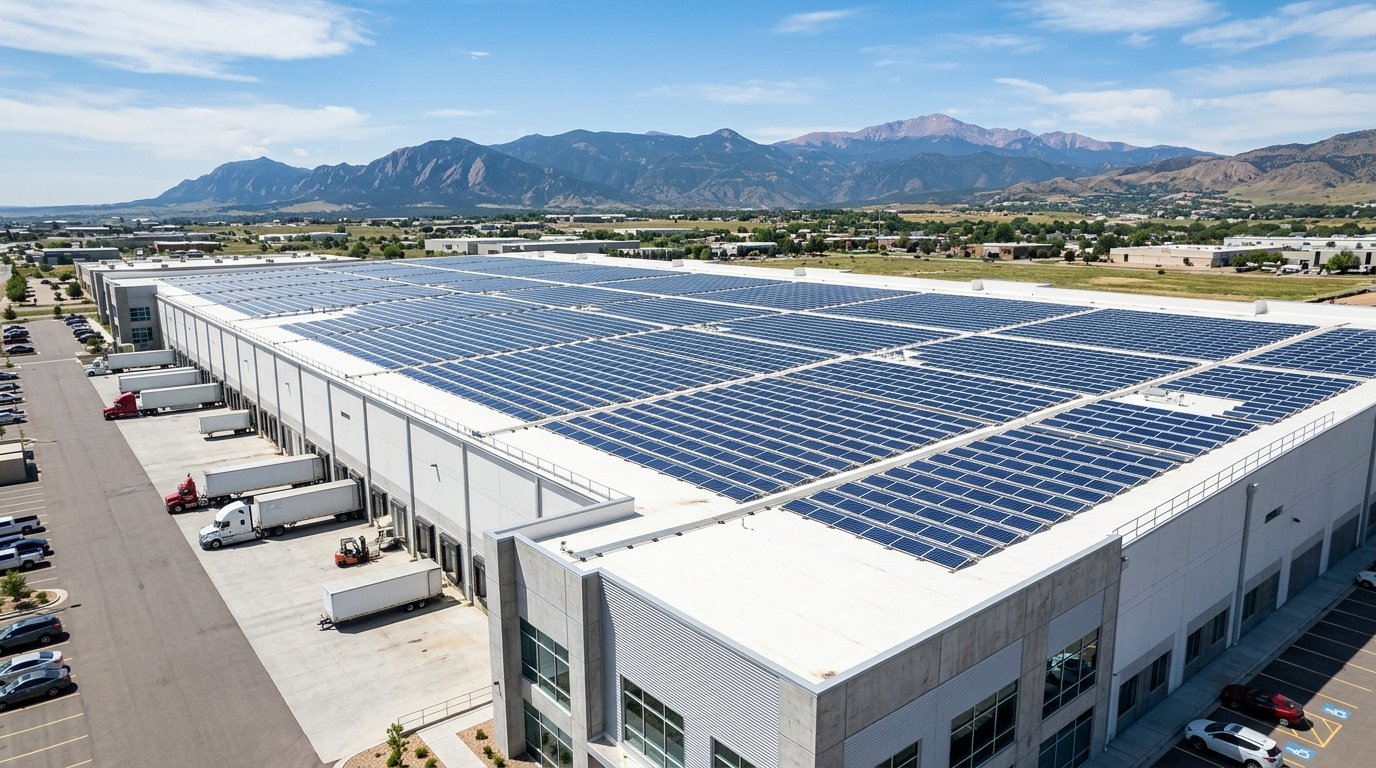
Short answer: Colorado C-PACE solar financing lets a commercial property owner pay for a solar system with little or no money out of pocket. The program provides up to 100 percent long term financing for the project, and you repay it over a long term, commonly up to 20 to 25 years, through a voluntary assessment added to your property tax bill. Because the obligation is tied to the building rather than to you personally, it transfers to the next owner if you sell. For a Colorado business that wants solar without a large upfront check, C-PACE is one of the cleanest ways to get there.
This guide explains how Colorado C-PACE works for commercial solar, what $0 down really means, how the assessment behaves when you sell, where the program is available, and how it stacks with federal tax benefits. ProGreen Solar designs and builds commercial systems across the Front Range and the Western Slope, and we regularly structure projects around C-PACE so the numbers work from day one.
What Colorado C-PACE solar financing is
C-PACE stands for Commercial Property Assessed Clean Energy. In Colorado it is delivered through the statewide Colorado C-PACE program, administered by the New Energy Improvement District. The idea is simple: a private capital provider funds the full cost of an eligible improvement, such as a commercial solar array, and that financing is repaid through a special assessment placed on the property, collected alongside your regular property taxes.
That assessment structure is what makes C-PACE different from a conventional loan. A bank loan is a personal or corporate obligation that sits on your balance sheet and usually requires a down payment. A C-PACE assessment is attached to the real estate. It is a senior, secured obligation tied to the property itself, which is why providers are comfortable offering long terms and covering the entire project cost.
How $0 down and 100% financing actually work
The headline feature of Colorado C-PACE solar is that it can finance up to 100 percent of a qualified project. In practice that means the hard and soft costs of the solar installation, including equipment, labor, engineering, and related work, can be rolled into the assessment so you are not writing a large check before the system produces a single kilowatt hour.
Here is the typical flow for a commercial solar project:
- The system is designed and priced, and the eligible project cost is established.
- A C-PACE capital provider agrees to fund up to the full amount.
- An assessment is recorded against the property for that amount.
- You repay the assessment over a long term, commonly up to 20 to 25 years, in installments collected with your property taxes.
Because the term is long, the annual repayment can be small enough that the energy savings from the solar system help offset it. Many owners structure projects so the combination of avoided utility charges and the financing payment is close to cash flow neutral, or better, over the life of the assessment. The exact outcome depends on your utility rates, system size, and the financing terms you are offered, so the right move is to model it against your actual electric bills.
The assessment transfers when you sell the building
One of the most useful features of C-PACE is that the assessment runs with the property, not with you. If you sell the building before the assessment is fully repaid, the remaining balance generally transfers to the new owner, who also inherits the solar system and its ongoing energy savings.
That alignment solves a problem that discourages a lot of commercial owners from going solar. With a traditional loan, an owner who expects to sell in five or seven years may be reluctant to take on a 20 year payback, because they will not be around long enough to capture all the benefit. With C-PACE, the owner who uses the energy pays for it, and a sale simply passes both the remaining obligation and the asset to the next owner. It is worth confirming the specific transfer terms and any lender consent requirements with your C-PACE provider and counsel before you sign, but the structure is built to move with the building.
Where Colorado C-PACE is available
C-PACE in Colorado is a county by county opt in program. A county must formally elect to participate before properties within it can use C-PACE financing. The number of participating counties has grown steadily, and the program now covers a large share of the state's commercial property, but availability is not universal.
Before counting on C-PACE for a specific building, confirm that the property's county participates and that the project meets current eligibility rules. Because participation and program details can change over time, verify the current list of participating counties and the latest terms directly with the Colorado C-PACE program. ProGreen can help you check eligibility for a specific address as part of scoping a project.
What kinds of projects qualify
C-PACE is intended for commercial and similar non residential property, including office, retail, industrial, warehouse, agricultural, multifamily of a qualifying size, and nonprofit owned buildings. Commercial solar is a core eligible measure, and C-PACE can often fund related improvements at the same time, such as energy efficiency upgrades or, in many cases, battery storage paired with the solar.
Because solar is frequently installed on a roof, condition matters. If the roof is near the end of its life, it usually makes sense to address that before or during the solar project so you are not paying to remove and reinstall panels a few years later. ProGreen's sister company, GreenPoint Roofing, lets us handle roof and solar as a single coordinated project, which keeps the scope and the financing clean.
How C-PACE stacks with federal tax benefits
C-PACE is a financing tool, not a tax incentive, which means it pairs with the federal benefits rather than competing with them. A commercial solar project can generally use C-PACE to cover the project cost while the business still claims the federal commercial Investment Tax Credit and depreciation on the system.
In broad terms, that means you can finance the system through the property assessment and still capture the credit and depreciation deductions that improve the project's economics. For the credit itself, see our overview of the Section 48E commercial solar tax credit, and for how depreciation accelerates your write off, see our guide to MACRS depreciation for commercial solar. Because federal clean energy rules and timing requirements have been evolving, confirm how the credit and depreciation apply to your specific project with a qualified tax advisor.
C-PACE versus a PPA or a conventional loan
C-PACE is one of several ways to pay for commercial solar, and the right choice depends on whether you want to own the system and whether you have the tax appetite to use the federal incentives.
- C-PACE: you own the system and capture the tax benefits, with up to 100 percent financing, long terms, and an obligation that transfers on sale. Best when you want ownership without a down payment.
- Conventional loan: you own the system but typically need a down payment and a shorter term, and the debt sits on your balance sheet as a personal or corporate obligation.
- Power purchase agreement: a third party owns the system and you buy the power, which removes the upfront cost but also means you do not own the asset or claim the credit yourself.
For a deeper comparison of owning versus letting a third party own the array, see our breakdown of commercial solar PPAs versus ownership. C-PACE often emerges as the preferred path for owners who want the benefits of ownership without tying up capital.
Is C-PACE right for your project?
Colorado C-PACE solar financing is a strong fit if you own commercial property in a participating county, you want to own the solar system and claim the federal incentives, and you would rather preserve cash than make a large down payment. The long term, the $0 down structure, and the assessment that transfers on sale together remove most of the friction that keeps commercial owners on the fence.
The next step is to model a system against your real utility bills and confirm county participation for your address. To scope a C-PACE financed project on the Front Range or the Western Slope, learn more about commercial solar in Colorado or reach out through ProGreen commercial solar and we will help you run the numbers.
Frequently Asked Questions
What is Colorado C-PACE solar financing?
C-PACE stands for Commercial Property Assessed Clean Energy. In Colorado it is a statewide program, administered by the New Energy Improvement District, that provides up to 100 percent long term financing for commercial solar and other eligible improvements. You repay it through a voluntary assessment added to your property tax bill, commonly over terms up to 20 to 25 years.
Does C-PACE really require no money down?
Yes. C-PACE can finance up to 100 percent of an eligible commercial solar project, including equipment and installation, so a property owner can move forward without a large upfront payment. The repayment is spread over a long term through the property assessment.
What happens to the C-PACE assessment if I sell the building?
The assessment is tied to the property rather than to you personally, so the remaining balance generally transfers to the new owner when you sell, along with the solar system and its energy savings. Confirm the specific transfer terms and any lender consent requirements with your C-PACE provider and counsel before signing.
Is C-PACE available everywhere in Colorado?
No. C-PACE is a county opt in program, so a county must elect to participate before properties within it can use it. Many counties participate and the list has grown over time, but you should verify that your property's county is participating with the Colorado C-PACE program before relying on it.
Can I use C-PACE and still claim the federal solar tax credit?
Generally yes. C-PACE is a financing tool, not a tax incentive, so it pairs with federal benefits. A commercial owner can finance the project through C-PACE while still claiming the federal commercial Investment Tax Credit and depreciation on the system. Confirm how these apply to your project with a qualified tax advisor.
How is C-PACE different from a solar PPA?
With C-PACE you own the solar system and claim the tax benefits, financing it through the property assessment with no down payment. With a power purchase agreement, a third party owns the system and you simply buy the power, so you do not own the asset or claim the credit yourself.
Ready to Go Solar?
Get a free personalized quote from ProGreen Solar, Colorado's most trusted installer.
Get a Free Quote