


Colorado Solar Permitting by County: Larimer, Weld, Jefferson and Garfield
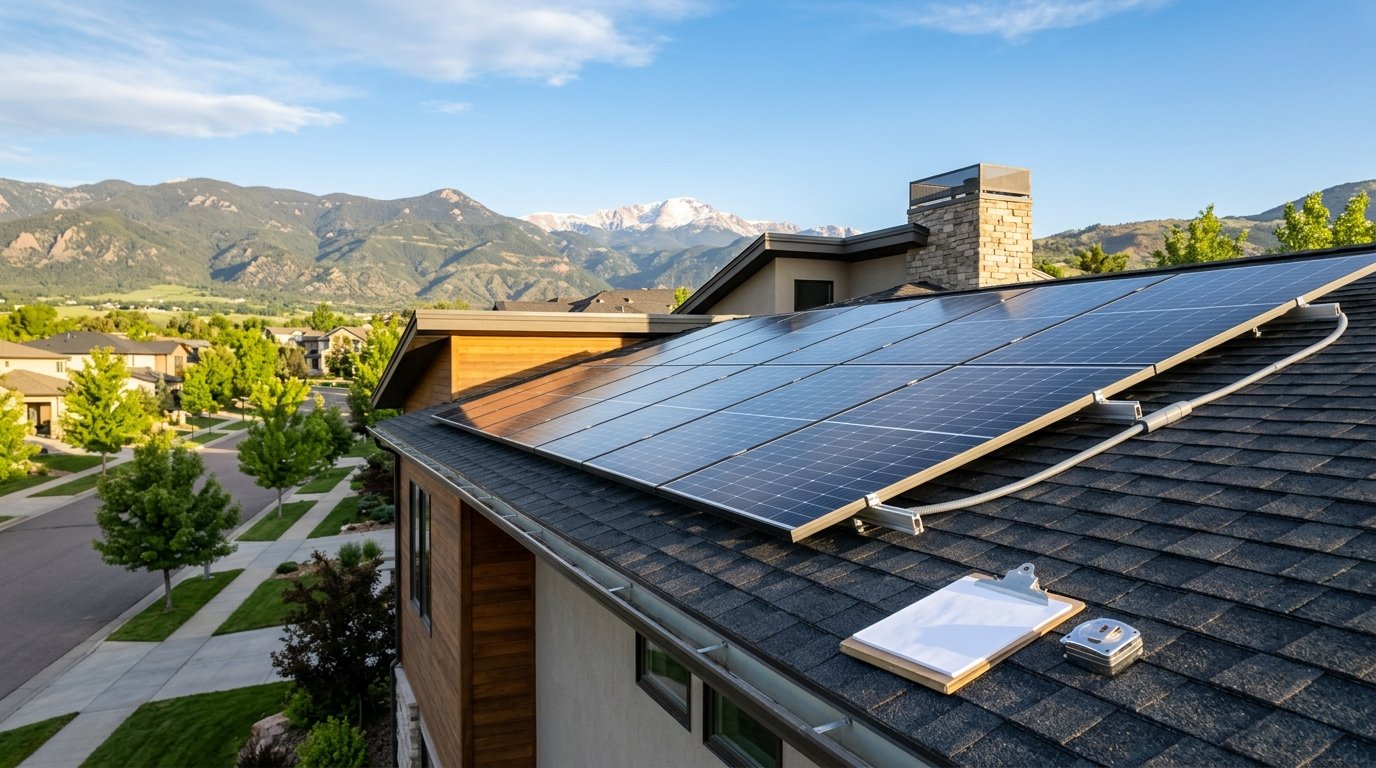
If you are planning a home solar project, the Colorado solar permit by county process is one of the few steps that can speed up or slow down your timeline before a single panel goes on the roof. Every system needs a building and electrical permit from the local authority having jurisdiction (the AHJ), and in Colorado that AHJ is usually your county or city. The good news: most Front Range and Western Slope counties now issue residential solar permits quickly, and a growing number use automated instant-permitting software. This guide compares how Larimer, Weld, Jefferson and Garfield counties handle solar permitting, including fees, plan review timelines, inspections and the HOA wrinkle, so you know what to expect.
One note up front: fees and timelines change, and city limits often have their own rules separate from the county. Confirm the current numbers with your specific jurisdiction before you sign anything. Below is the practical landscape as of mid 2026.
What a Colorado solar permit by county actually requires
No matter which county you live in, a residential solar permit application typically asks for the same core package. A reputable installer assembles all of it for you, so you rarely touch this paperwork yourself. The standard submittal includes:
- A site plan showing the home, the array location and setbacks.
- A roof plan with panel layout, module count and attachment spacing.
- A structural letter or engineering confirming the roof can carry the added load, including Colorado snow load.
- A single line electrical diagram showing the inverter, conductors, disconnects and the point of interconnection.
- Equipment spec sheets and listings (modules, inverters or microinverters, racking).
- Proof the design meets the adopted code, generally the 2020 or 2023 National Electrical Code plus the local building code amendments.
The permit is separate from your utility interconnection agreement. You need both: the county permit to legally build, and the utility approval to turn the system on. If you want the full sequence from contract to switch on, see our overview of the solar installation process.
SolarAPP+ and instant permits
Several Colorado jurisdictions have adopted SolarAPP+, the National Renewable Energy Laboratory tool that automatically reviews code compliant residential systems and issues a permit in minutes instead of days. When your AHJ uses SolarAPP+ and your design fits the standard parameters, plan review effectively disappears. You still need an inspection after the build, but the front end gets dramatically faster. Adoption varies county by county, so it is worth asking your installer whether your address qualifies.
Larimer County solar permits
Larimer County, which surrounds Fort Collins, Loveland, Berthoud and Estes Park, runs an established and relatively smooth residential solar permitting program. Applications are submitted online, and the county has worked to keep plan review turnaround short for standard rooftop systems. Expect a building and electrical permit with fees scaled to the system value or size, and plan for at least one final inspection, sometimes a separate rough electrical inspection depending on the scope.
Remember that if your home sits inside Fort Collins, Loveland or Estes Park city limits, the city handles your permit, not the county, and the rules and fees differ. Mountain properties near Estes Park often draw extra scrutiny on snow load and wind, which is normal for the elevation.
Weld County solar permits
Weld County covers Greeley, Windsor, Erie, Firestone, Frederick and a large stretch of the northern plains. It is a high growth area, and the county processes a steady volume of residential solar. Permits are submitted to the building department, with fees typically tied to valuation or system size, and the county requires a final electrical and building inspection before the system is approved for operation.
The Weld County subtlety is that incorporated towns within the county, places like Windsor, Erie and Frederick, run their own building departments. A home with a Greeley mailing address may actually fall under county jurisdiction or under a town, which changes the fee schedule and the inspection process. Confirming the correct AHJ early prevents a frustrating mid project surprise.
Jefferson County solar permits
Jefferson County, spanning Golden, Arvada, Lakewood, Wheat Ridge, Littleton and the foothills communities, is one of the larger residential markets on the Front Range. The county has invested in efficient online permitting and is among the Colorado jurisdictions moving toward automated instant permitting for qualifying residential solar, which can collapse the review window to same day for standard systems.
As with the others, city limits matter. Arvada, Lakewood, Golden and Wheat Ridge each operate their own building departments with their own portals and fees, while unincorporated Jeffco and foothills addresses go through the county. Foothills sites in the wildland urban interface can carry additional fire access or defensible space considerations that touch on equipment placement.
Garfield County solar permits
Garfield County on the Western Slope includes Glenwood Springs, Rifle, Silt, New Castle, Carbondale and Parachute. The county building department handles residential solar permits with the same core submittal package described above, and review timelines are generally reasonable, though a rural county with a smaller staff can see review take a little longer during busy stretches than a large automated Front Range department.
Mountain and valley terrain in Garfield County means engineers pay close attention to snow load, wind exposure and roof pitch, especially on metal roofs and steep slopes common to the region. Properties in Glenwood Springs, Carbondale, Rifle and other incorporated towns permit through the town rather than the county. Many Garfield County homes are served by Holy Cross Energy or other cooperatives rather than Xcel, which affects the interconnection side of the project even though it does not change the building permit.
Fees, timelines and inspections at a glance
Across all four counties the pattern is consistent even though the exact dollar figures differ:
- Fees are usually based on system size in kilowatts or on installed valuation, and cover the building plus electrical permit. Confirm the current schedule with the county or city, because these are updated periodically.
- Plan review ranges from instant (SolarAPP+ or automated review) to a few business days for manual review of a standard rooftop system. Custom designs, ground mounts and large arrays take longer.
- Inspections almost always include a final building and electrical inspection. Some jurisdictions add a rough or mid build inspection depending on scope and whether a main panel upgrade is involved.
While the permit fee is a hard cost, do not overlook the savings side: Colorado exempts solar equipment from state sales and use tax, which can offset a meaningful share of project cost. We break down what qualifies in our guide to the Colorado solar sales and use tax exemption.
HOA rules and solar access in Colorado
One thing that is not a county permit but trips up homeowners is the HOA. Colorado law protects solar access: a homeowners association cannot flatly prohibit rooftop solar, though it may impose reasonable aesthetic conditions that do not significantly raise cost or reduce production. If you are in an HOA, submit your architectural request in parallel with the permit so the two approvals run together rather than back to back. Boulder area homeowners can find more local detail in our Boulder solar permit guide, which covers the city solar access ordinance and sales tax rebate.
Let your installer carry the permit
The single biggest reason to work with an experienced local installer is that permitting is invisible to you when it is done right. A Colorado contractor who submits to Larimer, Weld, Jefferson, Garfield and dozens of other AHJs every week knows each portal, each plan reviewer preference and which jurisdictions run instant permits. ProGreen Solar builds across the Front Range and Western Slope and handles the full permit and inspection process so you do not have to chase paperwork. If you want to know how permitting will work at your specific address, reach out through our residential solar page and we will map out the AHJ, the fees and the timeline for your project.
Frequently Asked Questions
Do I need a permit to install solar panels in Colorado?
Yes. Every residential solar system in Colorado requires a building and electrical permit from the local authority having jurisdiction, which is usually your county or city. You also need a separate interconnection approval from your utility before the system can be switched on. A licensed installer normally pulls these permits for you.
How long does a Colorado solar permit take to get approved?
It varies by jurisdiction. Counties and cities that use SolarAPP+ or other automated review can issue a permit for a standard rooftop system in minutes to the same day. Manual plan review typically takes a few business days. Custom designs, ground mounts and larger systems take longer.
Who issues my solar permit, the county or the city?
It depends on whether your home is inside city limits. If you live in an incorporated city or town such as Fort Collins, Greeley, Arvada or Glenwood Springs, the city building department handles your permit. If you live in an unincorporated area, the county is the authority having jurisdiction. Confirming the correct office early avoids delays.
How much does a residential solar permit cost in Colorado?
Permit fees are usually based on system size in kilowatts or on installed valuation, and they cover the building plus electrical permit. The exact amount differs by county and city and is updated periodically, so confirm the current fee schedule with your specific jurisdiction before the project begins.
Can my HOA stop me from installing solar in Colorado?
No. Colorado law protects solar access, so a homeowners association cannot outright prohibit rooftop solar. An HOA may apply reasonable aesthetic conditions as long as they do not significantly increase cost or reduce energy production. Submit your HOA architectural request alongside your permit application so both approvals proceed together.
Will my solar installer handle the permits for me?
Yes. An experienced Colorado installer assembles the full permit package, submits it to the correct authority having jurisdiction, and manages the inspections. Because a local contractor permits with these counties regularly, they know which jurisdictions offer instant permitting and how to keep the process moving.
Ready to Go Solar?
Get a free personalized quote from ProGreen Solar, Colorado's most trusted installer.
Get a Free Quote