


Boulder County and City of Boulder Solar Permit Guide: Solar Access, Codes and Sales-Tax Rebate
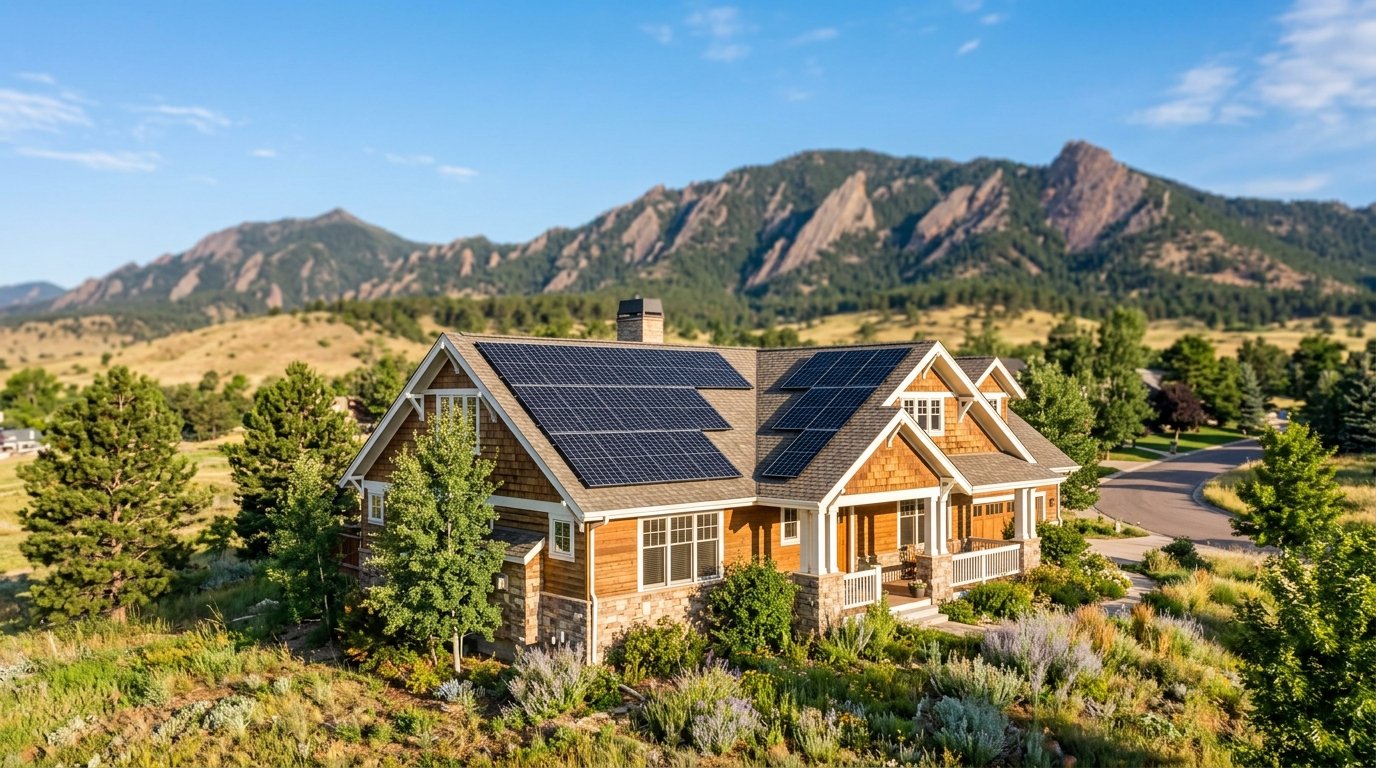
If you are going solar in Boulder, the permitting process is straightforward once you know who handles what. A Boulder solar permit involves your local building department (either the City of Boulder or Boulder County, depending on where you live), an electrical permit, and a final inspection before your system can be switched on. The single most distinctive thing to understand is money: rather than exempting solar equipment from sales tax at the register, the City of Boulder rebates the city sales and use tax you paid on that equipment. This guide walks through the permit path, the solar access protections, the code requirements, and how to claim that rebate.
ProGreen Solar installs across the Front Range and the Western Slope, and Boulder County is right in our backyard. We pull the permits, schedule the inspections, and handle the rebate paperwork as part of the job, so the steps below are meant to demystify the process, not to leave you doing it alone.
Who issues your Boulder solar permit
The first question is which authority has jurisdiction over your address. If your home is inside Boulder city limits, the City of Boulder Planning and Development Services department issues the building and electrical permits. If you live in unincorporated Boulder County, the Boulder County Community Planning and Permitting department handles it. Homes in Longmont, Lafayette, Louisville, Superior, and other incorporated towns within the county each go through their own municipal building departments.
This matters because fees, review timelines, and submittal requirements vary by jurisdiction. A good installer confirms the correct authority having jurisdiction before drawing up plans. If you want a broader picture of how solar permitting differs across the region, our guide to the Colorado solar permit process by county compares fees and timelines for Larimer, Weld, Jefferson, and Garfield counties alongside the Boulder approach.
What a typical permit package includes
For a standard residential rooftop system, the permit submittal usually contains:
- A site plan showing the home, the array location, and setbacks
- A roof plan with panel layout, module count, and attachment spacing
- Electrical line diagrams showing the inverter, disconnects, and point of interconnection
- Equipment cut sheets for panels, inverters, and racking
- Structural details or a letter confirming the roof can carry the added load
Boulder County and the City of Boulder have both adopted streamlined review for code-compliant residential PV, and many simple projects qualify for expedited or automated plan review. Larger, ground-mounted, or battery-paired systems get a closer look and may require additional structural or fire-access review.
The Boulder solar access ordinance
Colorado protects a homeowner's right to install solar, and Boulder reinforces that locally. The city's solar access provisions are designed to keep neighboring development and vegetation from unreasonably shading a solar installation, and to prevent homeowners associations from banning rooftop solar outright. Under Colorado law, an HOA may impose reasonable aesthetic conditions, such as where panels sit on the roof, but it cannot prohibit solar or add requirements that significantly raise cost or cut production.
If you are in a neighborhood with covenants, share your proposed layout with the HOA early. In practice, most Boulder-area associations approve compliant designs quickly, and the legal protections give you firm footing if a board pushes back unreasonably.
Building and electrical codes that apply
Boulder jurisdictions enforce current editions of the International Residential Code, the International Building Code, and the National Electrical Code, along with local amendments. For solar, the requirements that come up most often are:
- Roof setbacks and fire access: code requires clear pathways and setbacks around the array so firefighters can move safely on the roof and ventilate it.
- Rapid shutdown: the NEC requires a means to quickly de-energize conductors on the roof for first-responder safety.
- Structural capacity: the roof framing must carry the panel and racking weight plus snow load, which along the Front Range is a real design factor.
- Wind and snow loads: racking attachments are engineered for local wind speeds and snow accumulation.
Boulder also has strong energy and green-building expectations, which generally work in solar's favor. ProGreen is a licensed Colorado electrical contractor (EC.0101788), so the electrical scope of every install is designed and inspected to the adopted NEC edition rather than left to guesswork.
The City of Boulder solar sales-tax rebate
Here is the part that catches many homeowners off guard. The State of Colorado exempts solar equipment from state sales and use tax. But Boulder is a home-rule city, which means it sets and collects its own local sales tax. Instead of waiving that city tax at the point of sale, the City of Boulder lets you pay the tax and then apply for a rebate of the city sales and use tax you paid on qualifying solar and renewable energy equipment.
The mechanics matter:
- You (or your installer) pay the applicable Boulder city sales or use tax on the equipment as part of the project.
- After the project, you submit a rebate application to the city with documentation of the tax paid.
- The city issues a rebate of the eligible city tax.
Because this is a rebate rather than an exemption, it is approximate from a budgeting standpoint until you confirm the current rebate terms, eligible costs, and any application deadlines directly with the City of Boulder. Rebate programs and rates can change, so verify the current figure with the city before you count on a specific dollar amount. The home-rule wrinkle is exactly why solar buyers in Boulder cannot assume the statewide rules apply cleanly here. Our overview of the Colorado solar sales and use tax exemption explains where the state exemption stops and where home-rule cities like Boulder add their own treatment.
Boulder County EnergySmart advising
Boulder County runs the EnergySmart program, a free advising service that helps residents and businesses plan energy upgrades, including solar. An EnergySmart advisor can walk you through local incentives, connect you with qualified contractors, and help you stack the city rebate with other available programs. It is a useful, no-cost first stop before you commit to a system.
Connecting to the grid
A permit gets your system built; interconnection gets it producing credit on your bill. Most of the City of Boulder is served by Xcel Energy, which means your net metering and any rebate program enrollment run through Xcel. Parts of the wider county fall under other providers. If your project is in nearby Longmont, for instance, the municipal utility handles interconnection differently, which we cover in our Longmont Power solar guide. Always match your interconnection application to the actual utility serving your meter, because the rules, fees, and timelines are not interchangeable.
A realistic timeline
For a typical Boulder residential rooftop project, expect this sequence:
- Site assessment and system design
- HOA submittal, if applicable
- Permit submittal and plan review
- Installation, usually a one to three day job for a standard home
- Building and electrical inspections
- Utility interconnection approval and permission to operate
- Sales-tax rebate application to the City of Boulder
The build itself is fast. The pacing is usually set by plan review and utility approval, both of which an experienced local installer manages routinely.
Working with ProGreen in Boulder
Boulder's permitting is well organized, but the combination of city versus county jurisdiction, home-rule tax, solar access rules, and utility interconnection rewards local knowledge. ProGreen Solar handles the full path, from permit drawings through inspection and the city rebate paperwork, so you are not chasing forms across multiple offices. If you are ready to see what a system looks like for your roof, our residential solar team can put together a Boulder-specific proposal that accounts for your jurisdiction, your utility, and the local rebate.
Frequently Asked Questions
Do I need a permit to install solar in Boulder?
Yes. Any grid-tied solar installation in Boulder requires building and electrical permits from the authority having jurisdiction, which is the City of Boulder if you are inside city limits or Boulder County if you are in an unincorporated area. A final inspection and utility interconnection approval are required before the system can operate.
Does Boulder exempt solar equipment from sales tax?
Not at the register. The State of Colorado exempts solar equipment from state sales tax, but the City of Boulder is a home-rule city that collects its own tax. Instead of exempting it, Boulder rebates the city sales and use tax you paid on qualifying solar equipment after you apply. Confirm the current rebate terms with the city, since program details can change.
Can my HOA stop me from installing solar in Boulder?
No. Colorado law prevents homeowners associations from prohibiting rooftop solar. An HOA may set reasonable aesthetic conditions, such as panel placement, but it cannot ban solar or impose requirements that significantly increase cost or reduce production. Share your layout with the board early to keep approval smooth.
What is Boulder County EnergySmart?
EnergySmart is a free Boulder County advising service that helps residents plan energy upgrades, including solar. An advisor can explain local incentives, help you stack rebates, and connect you with qualified contractors at no cost. It is a useful first step before committing to a system.
How long does the Boulder solar permit and install process take?
The installation itself is usually a one to three day job for a standard home. The overall timeline is driven by plan review and utility interconnection approval, which together typically add a few weeks. An experienced local installer manages both processes to keep things moving.
Disclaimer: Utility program details (incentives, caps, fees, and rates) change frequently by board or commission action. Verify current details directly with your utility before making decisions. Accurate as of June 24, 2026.
Ready to Go Solar?
Get a free personalized quote from ProGreen Solar, Colorado's most trusted installer.
Get a Free Quote