


Virtual Power Plants in Colorado: How Your Battery Earns Money
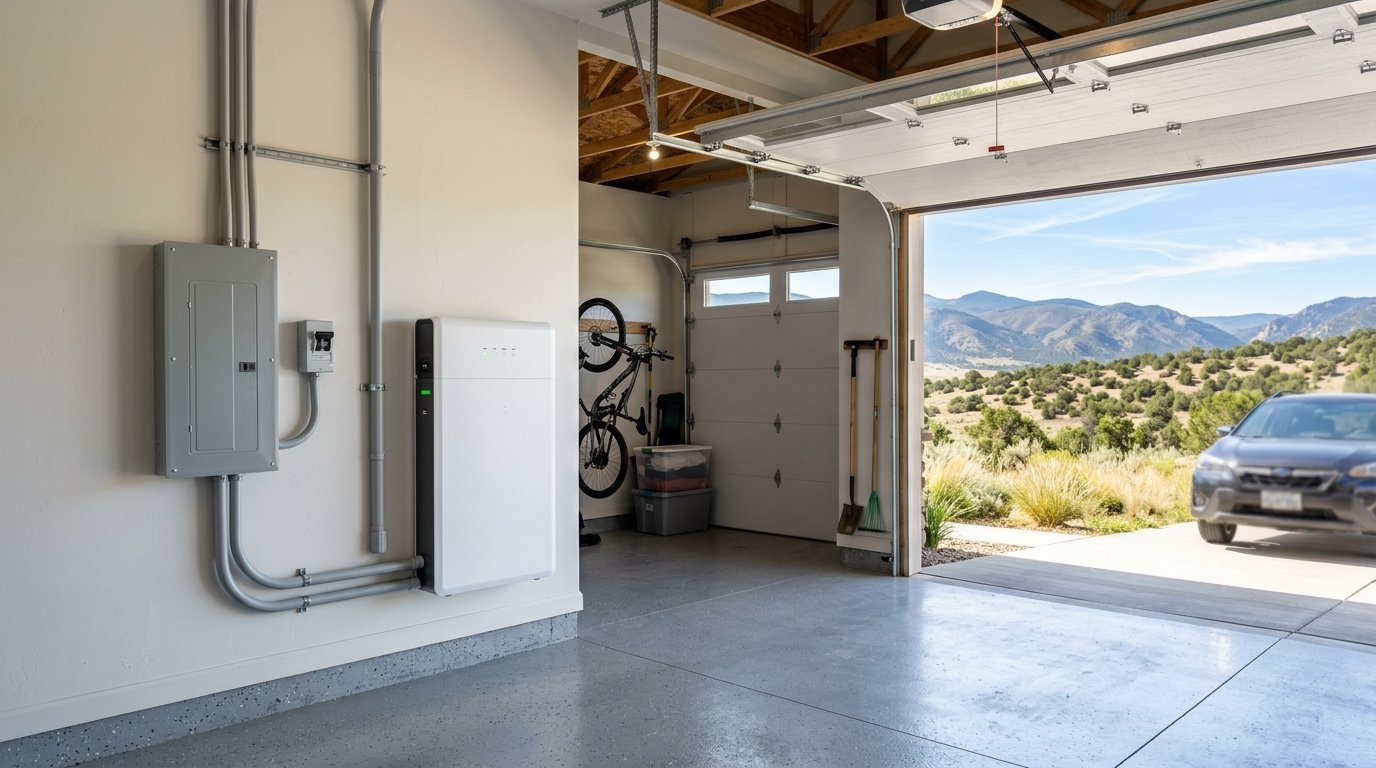
A virtual power plant in Colorado is a network of home batteries that a utility can call on during high demand, paying you to share a slice of your stored energy. Instead of sitting idle between outages, your battery joins thousands of others to act like one large, clean power plant. For homeowners on the Front Range and the Western Slope, that means a battery you already wanted for backup can also generate ongoing payments, often a few hundred dollars a year on top of the upfront rebate.
The idea is simple: utilities need extra capacity for a handful of stressful hours each year, usually summer evenings. Building a new gas peaker plant for those hours is expensive. Aggregating batteries that are already in homes is cheaper and faster, so utilities pay participants to make that capacity available. That payment is the heart of every virtual power plant program in the state.
How a virtual power plant works in Colorado
A virtual power plant, or VPP, ties together three things you already have when you install storage: a battery, an internet connection, and a utility account. You enroll your battery, the utility installs or activates monitoring, and from then on the utility can send a signal that tells your battery to discharge during a defined window. You keep enough reserve for your own backup needs, and the rest supports the grid.
There are two broad ways these programs compensate you. Some pay a fixed amount based on the size of your battery, measured in kilowatts of discharge power. Others pay an upfront incentive plus a smaller recurring credit. Many stack both. The common thread is that you are being paid for capacity and grid services, also called distribution flexibility, not just for the kilowatt-hours you happen to export.
What dispatch actually looks like
Dispatch is the moment the utility calls on your battery. In practice it is undramatic. On a hot July evening the utility sends a signal, your battery quietly discharges into your home and back to the grid during the peak window, and it recharges afterward from solar or off-peak grid power. You rarely notice. Most Colorado programs cap how often and how deeply they can dispatch, and they leave a backup reserve so you are not left empty if the grid goes down that same night.
If you want a fuller primer on how the hardware behaves day to day, our home battery storage guide walks through capacity, depth of discharge, and backup loads in plain terms.
The main Colorado VPP and battery programs
Colorado has become one of the more active states for utility battery programs. Each utility runs its own version, with its own pay structure and territory. Here are the ones most ProGreen customers ask about.
- Xcel Energy Renewable Battery Connect. Xcel pays an upfront incentive of 350 dollars per kilowatt of maximum continuous discharge power, up to 5,000 dollars per application, plus 100 dollars per year for five years. Income-qualified and disproportionately-impacted customers can receive 800 dollars per kilowatt, up to 75 percent of equipment cost. The program reopened on May 21, 2026 after an earlier budget closure. Funding runs in windows and can pause, so confirm current status before you count on it. See our full Xcel Renewable Battery Connect 2026 guide for the application details.
- Holy Cross Energy Power+FLEX. In the Vail, Aspen, and Eagle, Pitkin, and Garfield county areas, Holy Cross pays a monthly credit of 10.30 dollars per kilowatt of enrolled battery capacity for five years, plus an upfront incentive up to 500 dollars per kilowatt, capped at 12,500 dollars. We cover the program and the utility net metering picture in our Holy Cross Energy solar and battery guide.
- United Power battery pilot. United Power, the northern Front Range cooperative serving Brighton, Mead, and Firestone, runs a battery pilot that dispatches on weekday evenings, roughly 4 to 8 PM, at about a 70 percent depth of discharge.
- Platte River Power Authority programs. Platte River, the wholesale provider for Fort Collins, Loveland, Longmont, and Estes Park, coordinates distributed energy resource and VPP programs that the member city utilities deliver locally.
Because these are utility programs, the exact dollar figures and enrollment windows can change. Treat the numbers above as current to mid-2026 and confirm the live terms with your utility before signing up.
How much can your battery actually earn?
Earnings depend on your battery size and your utility. Think of it in two buckets. The first is the upfront incentive, which lowers what you pay for the battery in the first place. On a typical home battery, the Xcel 350 dollars per kilowatt incentive can knock several thousand dollars off the installed cost. The second bucket is ongoing income: the annual payments or monthly credits you receive for staying enrolled and letting the utility dispatch.
A few principles hold across the state:
- Bigger discharge power generally means a bigger payment, since most programs pay per kilowatt.
- Income-qualified households often qualify for substantially higher incentives.
- The recurring payments are modest on their own but real, and they accumulate over the multi-year enrollment term.
- The upfront rebate is usually the largest single piece of value, so timing your install to an open funding window matters.
For homeowners weighing whether the recurring VPP income changes the overall math, it pairs naturally with time-of-use strategy. Charging off-peak and discharging during the expensive evening peak can save money on your own bill even on days the utility never dispatches, which stacks on top of the program payments.
Will a VPP wear out your battery or void the warranty?
This is the most common worry we hear, and it is a fair one. Letting a utility cycle your battery does add use. The good news is that well-designed programs account for it. Dispatch events are limited in number and depth, and the battery management system protects against deep over-cycling. Many manufacturers explicitly support utility programs, and some utilities run their programs through the battery maker so the cycling stays inside warranty limits.
Still, you should confirm three things before enrolling:
- That your specific battery model is approved for the program you want.
- That participation does not reduce or void the manufacturer warranty.
- That the program leaves a backup reserve so a dispatch never strips your storage right before an outage.
ProGreen sizes and configures storage with these tradeoffs in mind so your system performs for daily use, backup, and grid programs without compromising one for another. We work across Xcel, Holy Cross, the cooperatives, and the Platte River cities, so we can match the right battery to the right program for your address.
Is a virtual power plant worth it for your home?
For most Colorado homeowners already buying a battery, joining a virtual power plant is close to free money: you take an incentive that lowers your cost and a recurring payment for capacity you were not otherwise using. The cases where it makes less sense are homes that want zero utility control over their storage, or batteries too small to clear a program minimum. Everyone else should at least price out enrollment.
The smart move is to design the battery and the program choice together from the start, rather than bolting a program onto a system that was not sized for it. If you are considering storage and want to know which Colorado VPP fits your utility and your goals, talk with ProGreen about residential solar and battery storage and we will lay out the numbers for your specific situation.
Frequently Asked Questions
What is a virtual power plant?
A virtual power plant is a network of home batteries that a utility can call on during periods of high demand. Each enrolled battery shares a portion of its stored energy with the grid during short, defined windows, and the homeowner is paid for making that capacity available. Together the batteries act like a single large, clean power plant.
Which Colorado utilities have battery or VPP programs?
As of mid-2026, Xcel Energy runs Renewable Battery Connect, Holy Cross Energy runs Power+FLEX in the Vail and Aspen area, United Power runs a battery pilot in the northern Front Range, and Platte River Power Authority coordinates programs for Fort Collins, Loveland, Longmont, and Estes Park. Terms change, so confirm current details with your utility.
How much does Xcel pay for enrolling my battery?
Xcel Renewable Battery Connect pays an upfront incentive of 350 dollars per kilowatt of maximum continuous discharge power, up to 5,000 dollars per application, plus 100 dollars per year for five years. Income-qualified and disproportionately-impacted customers can receive 800 dollars per kilowatt, up to 75 percent of equipment cost. Confirm the current funding window with Xcel before you apply.
Will joining a VPP void my battery warranty?
Not if the program is approved for your battery model. Well-designed programs limit how often and how deeply they dispatch, and many run through the battery manufacturer so cycling stays inside warranty limits. Before enrolling, confirm your model is eligible, that participation does not reduce the warranty, and that a backup reserve is preserved.
Can the utility drain my battery and leave me without backup?
No. Colorado VPP programs cap dispatch frequency and depth and keep a backup reserve so a dispatch never empties your storage. You keep enough charge for your own backup needs, and only the remaining capacity supports the grid.
Do I need solar to join a virtual power plant?
Most programs require a qualifying home battery rather than solar specifically, though solar makes recharging cheaper because the battery can refill from your own panels. Pairing solar and storage gives you bill savings, outage backup, and VPP income from one system.
Ready to Go Solar?
Get a free personalized quote from ProGreen Solar, Colorado's most trusted installer.
Get a Free Quote