


Pitkin County REMP and the Battery Storage Mandate for New Construction
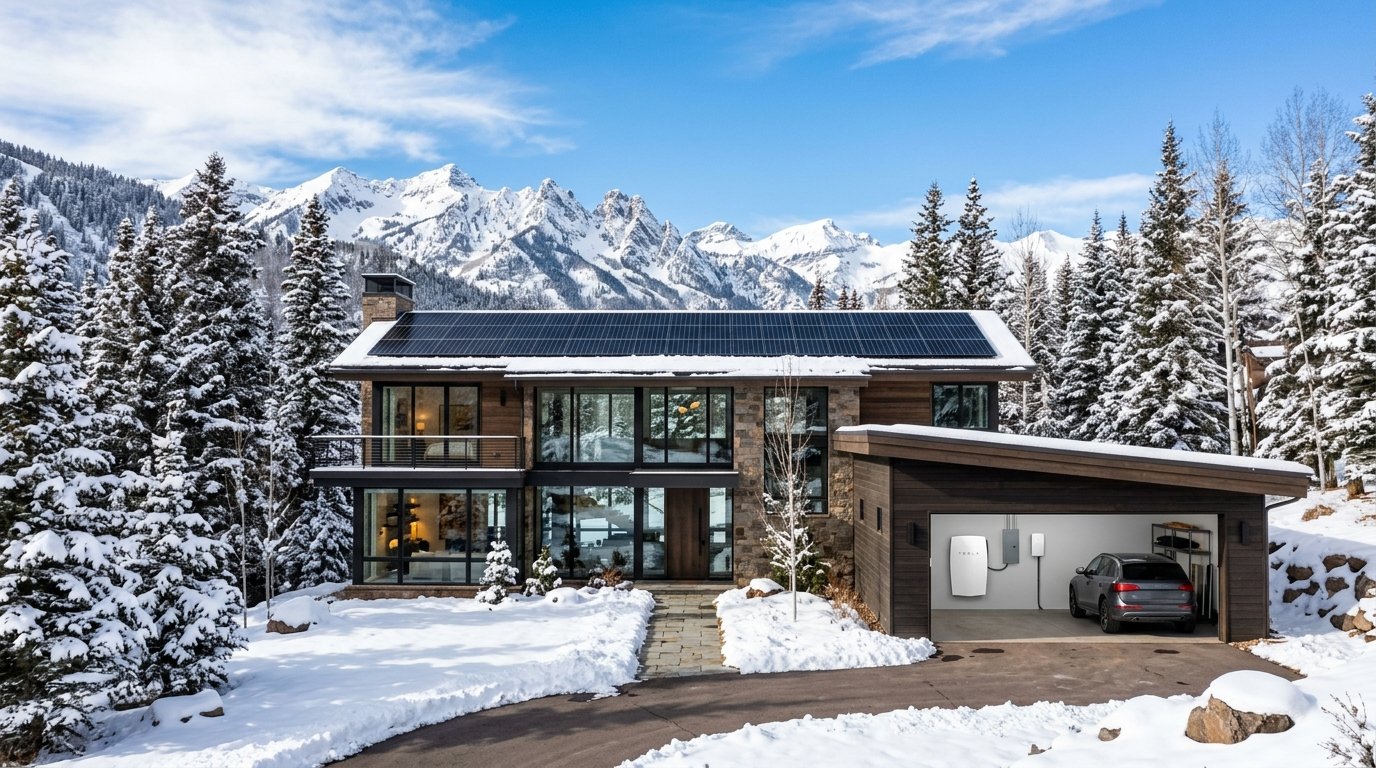
If you are building or remodeling near Aspen, Pitkin County REMP solar rules can quietly reshape your project. The Renewable Energy Mitigation Program, or REMP, ties large home energy budgets to a renewable energy requirement, and for new photovoltaic systems it goes a step further: a PV system producing 10 kWh or more is generally expected to pair with battery storage, at least 25 percent of the system or at least 5 kWh of capacity. In practice that means many Pitkin County homes adding solar are also adding a battery, not as an upgrade but as part of meeting the code. This guide explains how REMP works, why snowmelt and other large energy loads trigger it, and how the storage pairing and the Net-30 ERI energy-code path fit together.
What Pitkin County REMP is
The Renewable Energy Mitigation Program is Pitkin County's way of addressing the outsized energy use of large mountain homes. When a home includes high-consumption features, the energy code sets a budget, and exceeding that budget triggers a requirement to mitigate, either by installing on-site renewable energy or by paying into the REMP fund. The program has been a model for resort communities for years, precisely because Aspen-area homes tend to be large, all-electric or mixed-fuel, and packed with energy-hungry amenities.
The single biggest trigger is usually a snowmelt system. Heated driveways, walkways, and patios draw enormous amounts of energy through a Colorado winter, and a large snowmelt budget alone can push a home over its allowance. Other contributors include outdoor spas, large pools, expansive glazing, and second-home occupancy patterns. When the energy budget is exceeded, the renewable requirement kicks in, and on-site solar becomes the most common way owners choose to comply.
The Pitkin County REMP solar and battery pairing
Here is the part that surprises many homeowners and even some builders. Under the current rules, a new PV system that produces 10 kWh or more is expected to include battery storage sized to at least 25 percent of the system, or at least 5 kWh, whichever applies to your project. The intent is to keep solar energy useful on the local grid and in the home rather than simply exporting midday and pulling power back during the evening peak.
Because these thresholds and the way they are measured can change as the county updates its code, treat the figures above as approximate and confirm the current storage pairing requirements directly with Pitkin County Community Development before you design or order equipment. The mandate is real, but the exact numbers should come from the county, not from a blog post.
For most homeowners, the practical takeaway is simple: if you are installing meaningful solar in Pitkin County, plan for a battery from day one. Retrofitting storage later is more expensive and more disruptive than designing it in from the start. Our home battery storage guide walks through usable capacity, chemistry, and how to size a battery to both your home's needs and a requirement like this one.
Why the battery requirement makes sense at altitude
Pairing storage with solar is not just a compliance box. In the high country, a battery does real work:
- It captures midday solar production and shifts it to the evening, when mountain homes use the most power.
- It provides backup during the weather-related outages that mountain grids see in winter.
- It reduces strain on the local distribution system, which is part of why the county wants it.
- It positions your home for utility battery programs offered by the local provider.
That last point matters in this part of Colorado, where much of the county is served by Holy Cross Energy. Holy Cross runs incentives and a battery program of its own, and stacking a county requirement with a utility incentive can soften the cost of the storage you were going to need anyway. Our overview of Holy Cross Energy solar and battery programs covers those credits and how they apply across Eagle, Pitkin, and Garfield counties.
The Net-30 ERI energy-code path
Pitkin County offers a Net-30 ERI compliance path as one route through its energy code. ERI stands for Energy Rating Index, a HERS-style score where a lower number means a more efficient building. A Net-30 target asks a home to reach a strong efficiency level on a net basis, which on-site solar can help achieve by offsetting the home's modeled energy use.
In plain terms, the ERI path lets a well-designed, efficient home use renewable generation to bring its net rating down to the required level. The details of how solar production and storage count toward that score are technical and subject to revision, so this is another place to confirm the current method with the county and your energy rater. The point to understand up front is that solar and storage are not bolted on at the end. They interact with the building's efficiency modeling, which is why coordinating the design early pays off.
What this means for your project budget and timeline
Because REMP, the storage pairing, and the ERI path all influence each other, the smartest move is to model them together before construction documents are finalized. A few principles help:
- Identify your energy budget triggers early, especially snowmelt, so you know whether mitigation applies at all.
- If solar is your compliance route, size the array and the required battery as one system from the start.
- Confirm the current REMP thresholds and ERI requirements with Pitkin County so your design targets the right numbers.
- Check Holy Cross Energy incentives so any storage you must install also earns available credits.
Designing the electrical and storage scope this way avoids the classic Aspen-area surprise, where a homeowner learns late that a battery is required and has to rework the plan. As a Colorado licensed electrical contractor, ProGreen Solar handles the wiring, panel, and interconnection side so the system meets both the National Electrical Code and the specific equipment expectations a county requirement depends on.
Designing solar for a Pitkin County mountain home
Aspen-area homes are not flatland installs. Steep roofs, metal roofing, deep snow load, and high winds all shape how panels and storage get mounted and protected. Battery placement has to account for cold, and equipment needs to be rated for the elevation it will operate at. These are exactly the design questions that separate a system that simply passes inspection from one that performs through a real mountain winter.
Our guide to mountain home solar in Colorado goes deeper on snow-load racking, wind zones, and off-grid versus grid-tied choices for high-altitude and second-home properties, all of which apply directly to homes in and around Pitkin County. For a luxury home with a large snowmelt system, the combination of an efficient envelope, a right-sized array, and code-compliant storage is what turns a REMP requirement into a genuinely high-performing home.
REMP is a high-value, low-competition topic for a reason: few installers truly understand how the energy budget, the storage mandate, and the ERI path connect. ProGreen Solar designs across the Front Range and the Western Slope and can coordinate the whole package for you. If you are planning a build or remodel near Aspen, see our residential solar services and reach out for a site-specific plan with current REMP and storage requirements confirmed for your address.
Frequently Asked Questions
Does Pitkin County require a battery with new solar?
Under the current REMP rules, a new photovoltaic system producing 10 kWh or more is generally expected to pair with battery storage, at least 25 percent of the system or at least 5 kWh of capacity. The thresholds can change, so confirm the current requirement directly with Pitkin County Community Development before designing your system.
What is REMP in Pitkin County?
REMP stands for the Renewable Energy Mitigation Program. When a large home exceeds its allowed energy budget, often because of a snowmelt system or other high-consumption features, the program requires the owner to mitigate by installing on-site renewable energy or paying into the REMP fund.
Why does a snowmelt system trigger REMP?
Heated driveways, walkways, and patios use a very large amount of energy through a Colorado winter. A big snowmelt budget alone can push a home over its energy allowance, which triggers the renewable energy requirement under REMP.
What is the Net-30 ERI path?
ERI stands for Energy Rating Index, a HERS-style efficiency score where lower is better. The Net-30 path lets an efficient home use on-site renewable generation to reach the required net rating. The exact way solar and storage count toward the score is technical and subject to revision, so confirm the current method with the county and your energy rater.
Who is the electric utility for Pitkin County solar?
Much of the Aspen and Pitkin County area is served by Holy Cross Energy, which serves Eagle, Pitkin, and Garfield counties. Holy Cross offers its own solar and battery incentives that can help offset the cost of storage that a county requirement makes necessary.
Should I plan for storage from the start of my project?
Yes. If you are installing meaningful solar in Pitkin County, designing the battery in from the beginning is far easier and cheaper than retrofitting it later. Sizing the array and the required storage together, and confirming the current thresholds with the county, avoids costly late-stage rework.
Disclaimer: Utility program details (incentives, caps, fees, and rates) change frequently by board or commission action. Verify current details directly with your utility before making decisions. Accurate as of June 24, 2026.
Ready to Go Solar?
Get a free personalized quote from ProGreen Solar, Colorado's most trusted installer.
Get a Free Quote