


Main Panel Upgrades for Solar: Line-Side vs. Load-Side Taps Explained
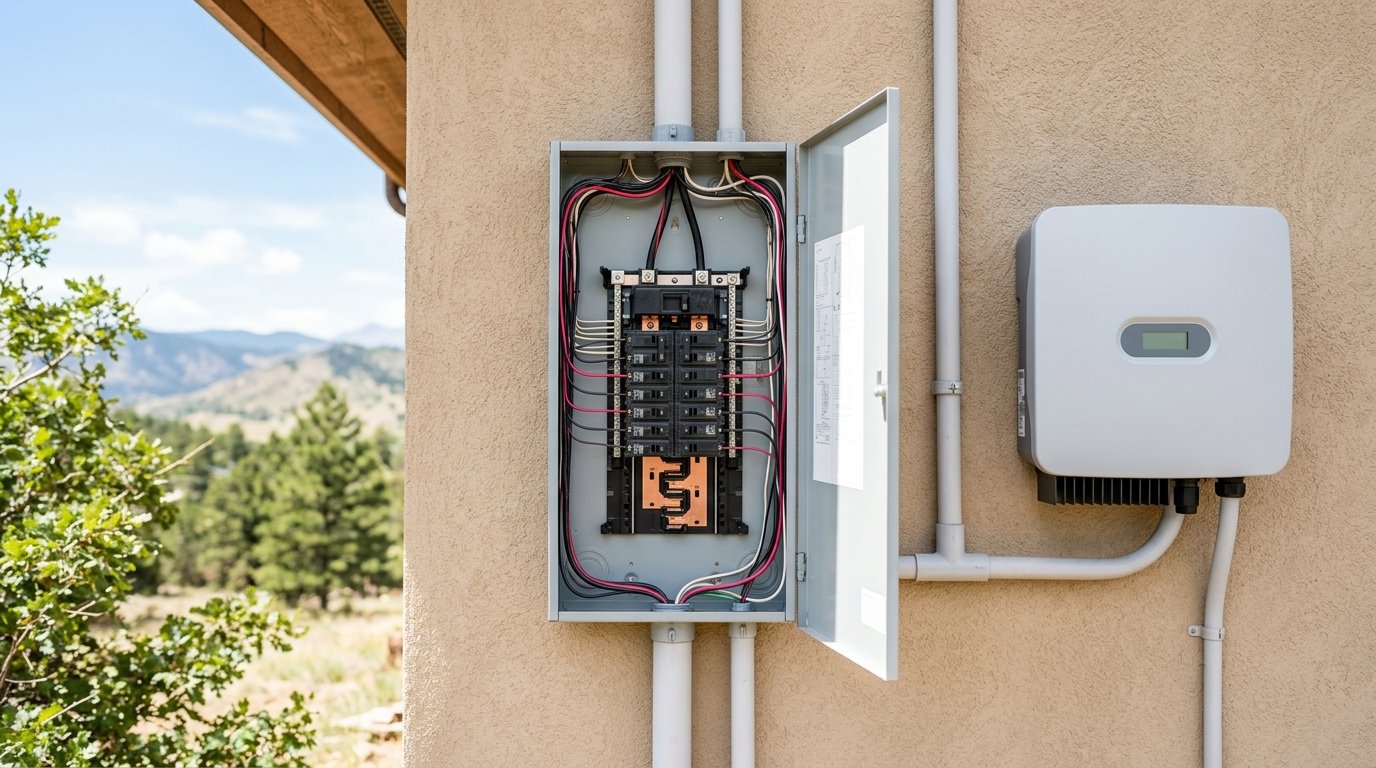
A main panel upgrade for solar is not always required, but it is one of the most common surprises homeowners run into when they get a solar proposal. The short answer: your solar system has to connect to your electrical panel somewhere, and the National Electrical Code limits how much power you can push onto a panel busbar. When your existing panel cannot accept the backfeed safely, your installer has two options. Either tie in ahead of the panel with a line-side tap, or upgrade the panel (and sometimes the service) so a standard load-side connection fits the code.
Below we walk through how solar connects to your panel, what the 120% busbar rule actually means, the difference between a load-side tap and a line-side tap, and when a service upgrade becomes unavoidable. ProGreen Solar holds a Colorado electrical contractor license (EC.0101788), so this is the kind of detail our electricians sort out on every install across the Front Range and Western Slope.
How solar connects to your electrical panel
Your main panel takes power from the utility through the main breaker and distributes it to your home through branch-circuit breakers. Solar adds a new source of current into that same panel. There are two general places to make that connection.
- Load-side connection (back-feed breaker): The solar output lands on a breaker inside your existing panel, just like a large appliance circuit. This is the simplest, lowest-cost method and is what most homes use.
- Line-side connection (supply-side tap): The solar ties in between the utility meter and the main breaker, ahead of the panel entirely. This sidesteps the busbar limit because the solar current never flows through the busbar.
Which one your installer chooses comes down to one calculation: whether your panel busbar can legally accept the back-fed solar current.
The 120% busbar rule for a main panel upgrade and solar
NEC 705.12 sets the ceiling. In plain terms, the sum of the main breaker rating plus the solar back-feed breaker cannot exceed 120% of the busbar rating. The busbar is the metal bar inside the panel that all the breakers clip onto, and it has a stamped amperage rating.
Here is the math with a very common setup:
- A 200 amp busbar can carry up to 240 amps under the 120% allowance (200 times 1.2).
- If you have a 200 amp main breaker, that already uses 200 of those amps.
- That leaves 40 amps of headroom for the solar back-feed breaker.
- A 40 amp back-feed breaker supports roughly 7.6 kW of inverter output on a 240 volt system. Larger systems will not fit.
If your planned system needs a bigger back-feed breaker than the headroom allows, you have a few paths: reduce system size, do a line-side tap, derate or replace the main breaker, or upgrade the panel. A good proposal will spell out which path applies to your home, and if it does not, our guide on how to read a solar proposal shows you where to look.
The main breaker derate trick
Sometimes the cleanest fix is not a full upgrade. If your home does not actually draw a full 200 amps, an electrician can swap the 200 amp main breaker for a smaller one, say 175 amps, which frees up more busbar headroom for solar. This only works if your real electrical load supports the smaller main, and it is a load calculation our licensed electricians run before recommending it.
When a line-side tap makes sense
A line-side or supply-side tap connects the solar ahead of the main breaker, so the busbar rule no longer constrains the system size. This is the go-to solution when:
- The panel busbar simply cannot accept the back-feed even after a derate.
- The existing panel is in good condition and you would rather not replace it.
- You want to install a larger system than a load-side tap would allow.
Line-side taps are code compliant under NEC 705.11, but they require specific listed equipment, careful conductor sizing, and in many jurisdictions the utility has to approve the connection because it sits on their side of the main disconnect. Some Colorado utilities and inspectors prefer a load-side connection and will push back on line-side work, which is one more reason to use an installer who knows the local authorities having jurisdiction. We cover where this fits in the broader build in our overview of the solar installation process.
When a main panel or service upgrade is required
A panel or service upgrade is the right call in a handful of situations:
- Old or undersized panels. Many older homes have 100 amp service or panels with brands that are no longer considered safe to add load to. Solar is a natural time to modernize.
- No safe place for the connection. If neither a load-side breaker nor a line-side tap fits cleanly, a new panel with a larger busbar resolves it.
- Adding batteries, EV charging, or heat pumps. Electrification stacks more load and more sources onto the panel. Sizing up now avoids a second upgrade later.
- Damaged or unsafe equipment. Corrosion, double-tapped breakers, or no main disconnect all warrant replacement regardless of solar.
A service upgrade goes further than a panel swap: it can involve new service-entrance conductors, a new meter socket, and utility coordination to bring more capacity to the home. If you are also planning storage, the panel work and the battery wiring are closely related, and the equipment has to meet NEC 2023 Article 706 for energy storage systems. We break that down in our guide to NEC 2023 battery storage requirements.
Rapid shutdown and the carport exemption
One code point that often comes up alongside panel work is rapid shutdown. NEC 690.12 requires most rooftop solar to have a way to quickly de-energize the array for firefighter safety, typically using module-level electronics. This is a system-design requirement rather than a panel requirement, but it factors into your equipment list and your inspection.
Worth knowing: ground-mounted arrays and many solar carports and canopies are exempt from the 690.12 rapid-shutdown requirement under the 2023 code, because the firefighter-access concern that drives the rule applies to rooftops. That can simplify the electrical design on ground-mount and carport projects.
What this means for your project and budget
Here is how to think about it before you commit:
- A load-side connection that fits the 120% rule adds little or no extra electrical cost.
- A main breaker derate is inexpensive when your load supports it.
- A line-side tap costs more in labor and listed equipment but avoids a full panel replacement.
- A panel or service upgrade is the largest line item, and it is the right investment if your panel is old or you plan to electrify.
The key is to find out which path your home needs before you sign anything. A thorough installer performs a load calculation, reads the busbar rating, checks utility and AHJ rules, and writes the chosen method into the proposal. If you are weighing a system that may push the limits of your current panel, talk to us through our residential solar page. Our licensed electricians will tell you straight whether a simple back-feed breaker will do or whether an upgrade is the smarter long-term move for your Colorado home.
Frequently Asked Questions
Do I always need a main panel upgrade to install solar?
No. Many homes connect solar with a simple back-feed breaker that fits within the NEC 120% busbar rule. An upgrade is only needed when the busbar cannot safely accept the solar back-feed, when the panel is old or undersized, or when you are adding significant new load like batteries, EV charging, or heat pumps.
What is the 120% busbar rule?
NEC 705.12 limits the combined rating of your main breaker plus the solar back-feed breaker to 120% of the busbar rating. On a 200 amp busbar that allows up to 240 amps. A 200 amp main breaker leaves about 40 amps of headroom for solar, which supports roughly 7.6 kW of inverter output.
What is the difference between a line-side tap and a load-side tap?
A load-side tap connects the solar to a breaker inside your existing panel and is subject to the 120% busbar rule. A line-side tap connects the solar ahead of the main breaker, between the meter and the panel, so the busbar limit no longer applies. Line-side taps allow larger systems but need listed equipment and often utility approval.
Can I avoid a panel upgrade by changing my main breaker?
Sometimes. If your home does not draw the full rated current, an electrician can swap your main breaker for a smaller one, which frees up busbar headroom for solar. This requires a load calculation to confirm the smaller main can serve your home safely.
Does ProGreen Solar handle the electrical panel work?
Yes. ProGreen Solar is a licensed Colorado electrical contractor (EC.0101788). Our electricians run the load calculation, determine whether a load-side or line-side connection fits, and perform any panel or service upgrade your project needs across the Front Range and Western Slope.
Will a panel upgrade also help with batteries or EV charging?
Often, yes. If you plan to add a home battery, EV charger, or heat pump, upgrading the panel during your solar install gives you the capacity for all of it at once and avoids paying for a second upgrade later. Battery installations also have to meet NEC 2023 Article 706 requirements.
Ready to Go Solar?
Get a free personalized quote from ProGreen Solar, Colorado's most trusted installer.
Get a Free Quote