


Denver Green Buildings Ordinance: When Commercial Roofs Must Add Solar
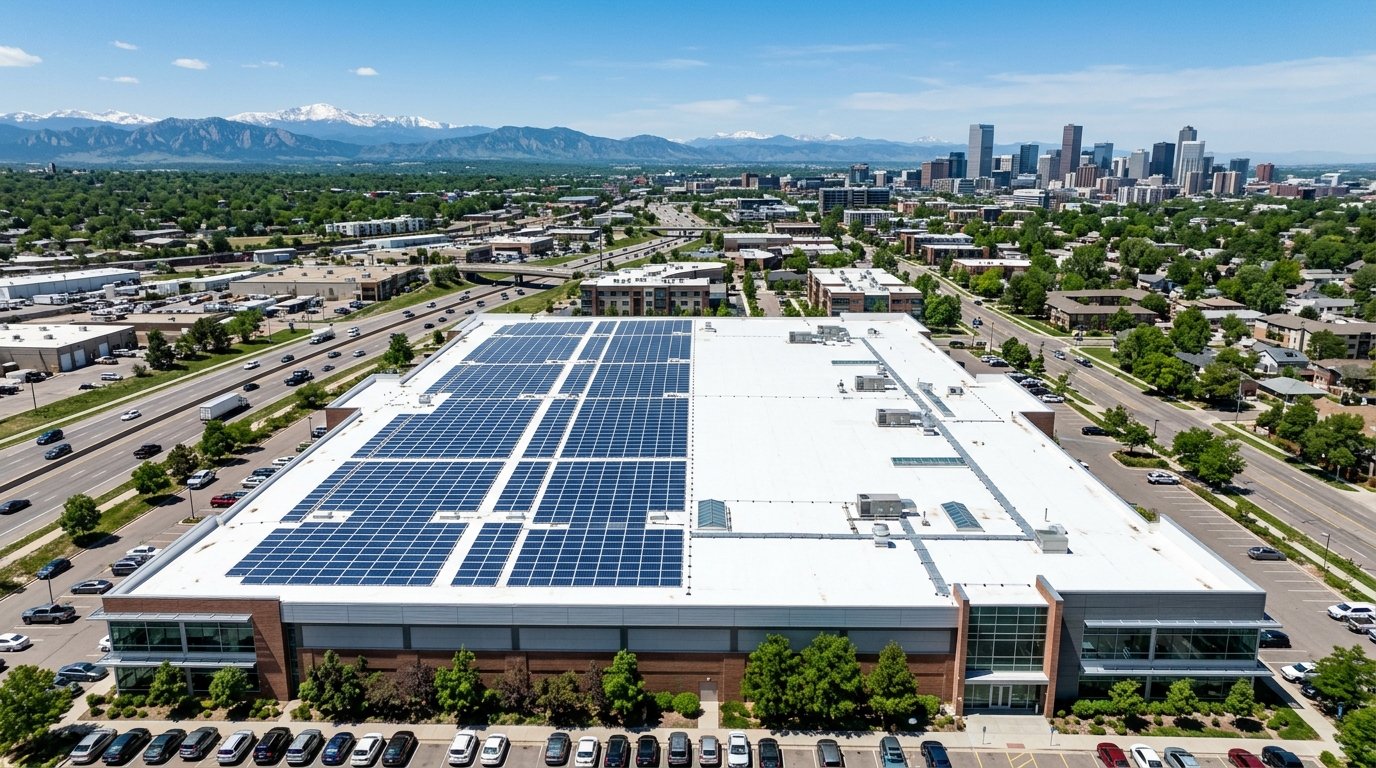
If you own or manage a large commercial building in Denver, the Denver Green Buildings Ordinance solar requirement can turn an ordinary re-roof into a renewable energy decision. The short version: buildings of 25,000 square feet or more that re-roof or undergo a covered renovation must meet a green roof standard, and adding rooftop solar is one of the headline ways to comply. Knowing this before you sign a roofing contract can save you money, scheduling headaches, and a failed inspection.
ProGreen Solar works with commercial property owners across the Front Range and the Western Slope, so we field this question often. Below is a plain-English walk through of how the ordinance treats solar, what your compliance options look like, and how to plan a project so the code requirement becomes an asset rather than a surprise cost.
What the Denver Green Buildings Ordinance Requires
Denver voters approved a green roof initiative in 2017, and the city later replaced the original ballot language with the Green Buildings Ordinance, a more flexible version developed with building owners and industry. The core idea stayed the same: large buildings should contribute to cooler, cleaner, more efficient development. Solar is a central part of that.
The ordinance generally applies to buildings with a gross floor area of 25,000 square feet or more. The requirement is triggered not by the calendar but by activity on the building. In practice that means a full roof replacement, and certain renovations, bring the property into scope. New construction at that size is covered as well. If your roof is simply being patched or maintained, you usually are not triggering the standard, but a true re-roof down to the deck is a different matter.
When the requirement is triggered
- A new building of 25,000 square feet or more.
- A re-roof of an existing covered building, where the roof membrane is replaced rather than just repaired.
- Covered renovation work as defined by the city.
Because the trigger is the re-roof, timing matters. The smart move is to evaluate compliance during roof planning, not after the old membrane is already in a dumpster.
The Denver Green Buildings Ordinance Solar Compliance Options
The ordinance does not force every building into one solution. It offers a menu, and you pick the path that fits your roof, your budget, and your goals. The options fall into solar, cool roof, green space, and efficiency-style approaches. For owners focused on solar, three figures are worth committing to memory. You can comply by installing on-site solar that covers any one of the following:
- Solar across at least 42 percent of the available roof area.
- A solar system sized to at least 5 percent of the building floor area.
- A solar system sized to offset 100 percent of the building load.
Those are alternative thresholds, not a stack. You only need to satisfy one of them to use solar as your compliance route. Which one is easiest to hit depends on your building. A warehouse with a huge roof and a modest electrical load may find the 100 percent of load path surprisingly achievable, while a building with a smaller footprint relative to its energy use may lean toward the roof-area or floor-area math.
The ordinance also recognizes cool roofs, vegetated green space, and combinations of measures. Many owners pair a reflective cool roof membrane with a partial solar array, which can satisfy the standard while improving the building envelope at the same time. The right blend is a building-by-building question, and it is one we are glad to model with you.
How to choose between the three solar thresholds
- Start with your roof area and subtract space lost to HVAC units, skylights, setbacks, and fire access pathways. That tells you what a 42 percent coverage figure really looks like on your roof.
- Pull a year of utility bills to understand your annual load. If your consumption is modest relative to roof size, the 100 percent of load path may use far fewer panels.
- Compare the floor-area math, since a 5 percent of floor area system is a fixed target that is easy to size.
Running all three calculations side by side almost always reveals one path that is materially cheaper to build. For a deeper look at how commercial systems get sized and financed in our state, see our guide to commercial solar in Colorado.
Why Re-Roof Timing Is Everything
The most expensive way to comply with this ordinance is to install solar, then discover the roof underneath has only a few years of life left. Removing and reinstalling an array for a future roof replacement adds real cost. Because the ordinance is triggered at re-roof, you have a natural opportunity to do both at once: replace the roof and add a solar system engineered for that fresh membrane.
Coordinating roof and solar in a single project also simplifies the structural and waterproofing details. Mounting hardware, flashing, and load paths are all planned around the new roof assembly instead of being retrofitted onto an aging one. ProGreen Solar handles commercial solar, and our sister company GreenPoint Roofing handles the roofing side, so the two scopes can be sequenced cleanly under one coordinated plan rather than two contractors pointing at each other.
What Counts as Available Roof Area
Owners are sometimes surprised that their full roof footprint is not all usable. Several factors reduce the area a solar array can occupy:
- Rooftop mechanical equipment, including HVAC units and their service clearances.
- Skylights, smoke vents, and drains.
- Required fire access pathways and setbacks under the building code.
- Shading from parapets, penthouses, or adjacent taller structures.
This is why the 42 percent coverage threshold is calculated against available roof area rather than total roof area. A professional layout accounts for all of it. If your roof is tight on usable space, a solar canopy over your parking can add generation capacity without crowding the roof, and it pairs well with EV charging for tenants and fleets. Our overview of solar carports and canopies for Colorado businesses explains how that works.
How This Differs From Residential Solar in Denver
The Green Buildings Ordinance is a commercial code requirement tied to large buildings. It is not the same conversation a homeowner has when deciding whether to add panels. Denver homeowners are driven by incentives, utility rates, and payback, not by a square-footage trigger. If you landed here as a homeowner, our page on solar for Denver homes is the better starting point. For commercial owners, the ordinance is a compliance obligation first, but it is also a chance to lock in long-term energy savings while you already have crews on the roof.
Planning Your Compliance Path
The cleanest projects start with a few questions answered early: Is your building 25,000 square feet or more? Is a full re-roof or covered renovation on the horizon? And which of the three solar thresholds is cheapest to hit given your roof and load? Answer those, and the rest becomes an engineering and scheduling exercise rather than a scramble.
Because city ordinances and code interpretations can change over time, always confirm the current applicability thresholds and compliance options with the Denver Department of Community Planning and Development for your specific building before finalizing a design. We help clients line up that verification as part of the planning process.
If you own or manage a large building in Denver and a re-roof is coming, now is the moment to model your options. ProGreen Solar can run the roof-area, floor-area, and building-load calculations, coordinate roofing through GreenPoint Roofing, and design a system that satisfies the ordinance while paying you back for decades. Reach out through our commercial solar team to get started.
Frequently Asked Questions
Does the Denver Green Buildings Ordinance apply to every commercial building?
No. It generally applies to buildings with a gross floor area of 25,000 square feet or more. Smaller buildings are typically not subject to the standard. Always confirm your building's status with the city, since thresholds and interpretations can change.
What triggers the requirement to add solar or a green roof?
The standard is triggered by activity on the building rather than a fixed date. A new building at the covered size, a full re-roof where the membrane is replaced, and certain covered renovations bring a property into scope. Routine roof repairs usually do not trigger it.
How much of my roof must be covered with solar to comply?
Solar is one compliance path with three alternative thresholds. You can satisfy it by covering at least 42 percent of available roof area, by sizing a system to at least 5 percent of building floor area, or by sizing a system to offset 100 percent of the building load. You only need to meet one of the three.
Can I comply without using solar at all?
Yes. The ordinance offers a menu that also includes cool roofs, vegetated green space, and combinations of measures. Many owners pair a reflective cool roof with a partial solar array. The best mix depends on your specific roof, budget, and goals.
Why should I add solar at the same time as a re-roof?
Because the requirement is triggered at re-roof, doing both together avoids the cost of removing and reinstalling an array later, and it lets the roof and solar be engineered as one waterproof, structurally sound assembly. ProGreen Solar and its sister company GreenPoint Roofing can coordinate both scopes under one plan.
Is the full square footage of my roof usable for solar?
Usually not. HVAC units and their clearances, skylights, drains, required fire access pathways, and shading all reduce usable area, which is why the 42 percent coverage figure is measured against available roof area. If roof space is limited, a solar carport over parking can add capacity.
Ready to Go Solar?
Get a free personalized quote from ProGreen Solar, Colorado's most trusted installer.
Get a Free Quote