


EV Charging + Commercial Solar: Powering Fleets with the Sun (and the 30C Deadline)
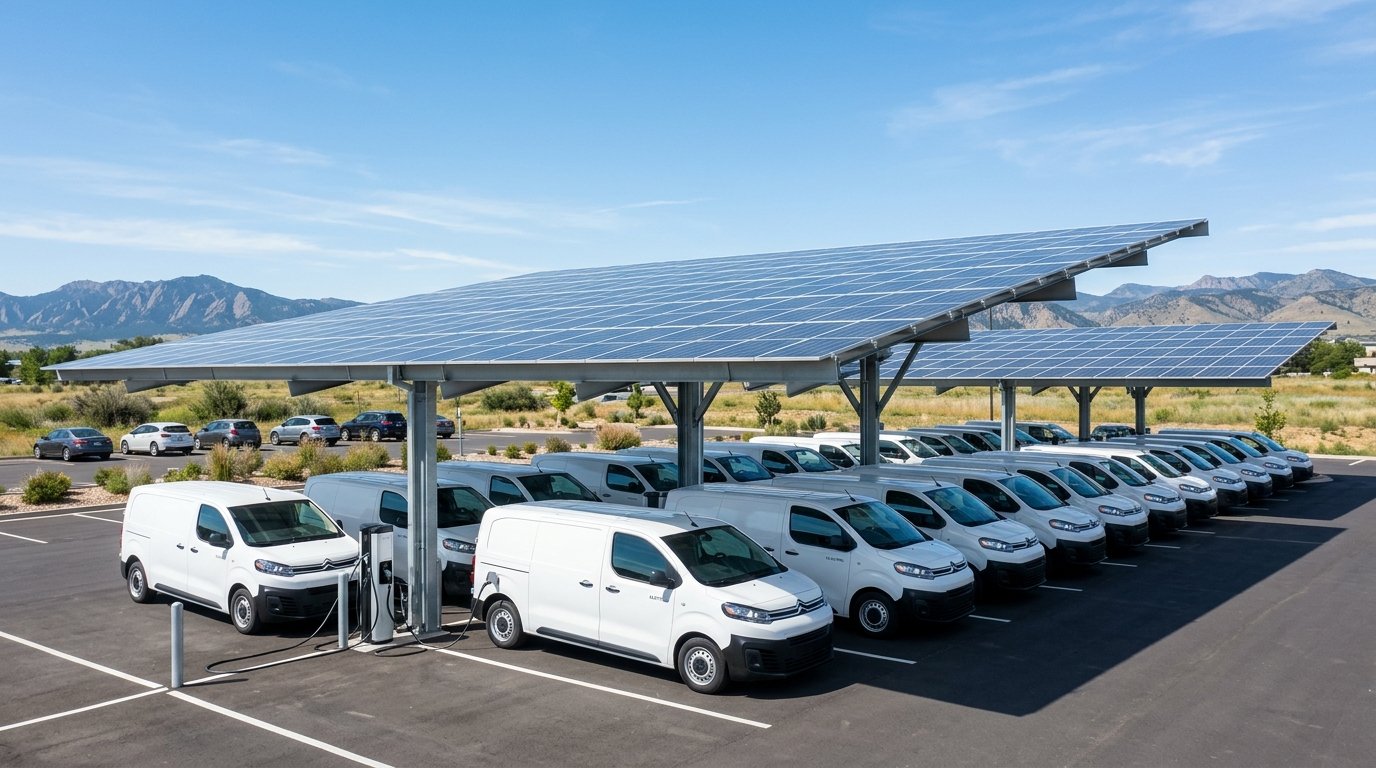
If your business runs a fleet, manages a parking lot, or wants to offer charging to employees and customers, pairing commercial solar EV charging is one of the cleanest ways to control fuel and energy costs at the same time. The basic idea is simple: your solar array generates electricity during the day, your electric vehicles and chargers draw it down, and you cut both your utility bill and your fuel spend with one coordinated investment. There is also a clock on part of the economics. The federal 30C charging credit terminates for property placed in service after June 30, 2026, so the window to capture it on this year's projects is short.
At ProGreen Solar we build commercial systems across Colorado, from Front Range distribution centers to Western Slope facilities, and we increasingly design solar and charging together rather than as two separate projects. This guide walks through how fleet EV solar works, what the 30C deadline means, and how to size a system that actually serves your vehicles.
Why commercial solar EV charging makes sense together
Solar and EV charging are natural partners because the costs they attack are different but complementary. Solar lowers the price of every kilowatt-hour you consume. EV charging is, for a fleet, a large and growing new load. Putting them on the same site and the same plan means the new demand from your vehicles is partly met by power you generate yourself rather than power you buy at retail.
For a Colorado business, the pairing delivers several advantages at once:
- Lower operating cost per mile. Charging a vehicle from your own solar generation is cheaper than gasoline or diesel, and cheaper than grid power alone.
- Demand-charge management. Many commercial accounts pay demand charges based on their highest 15-minute peak. Uncontrolled fleet charging can spike that peak badly. Solar generation and smart charging schedules help flatten it.
- Predictable energy budgeting. Solar locks in a large share of your energy cost for decades, which makes long-term fleet planning easier.
- Covered parking and resilience. When charging lives under a solar canopy, you also gain shaded parking and, if you add storage, the option to keep critical chargers running during an outage.
Workplace and customer charging follow the same logic. Offering chargers can attract and retain employees, support a green-fleet commitment, and bring visitors onto your property, while solar offsets the added consumption.
How this differs from home EV charging
If you have read about charging an EV at home, the commercial version is a different animal. A residence typically adds one or two Level 2 chargers and a modest rooftop array. A fleet depot might add a dozen or more chargers, a few DC fast chargers, and a load profile that the local transformer was never designed to handle. We cover the homeowner side separately in our guide to EV charging and solar for homes, but commercial projects bring extra layers: utility coordination on service capacity, demand-charge tariffs, charge-management software, and a much larger solar system to match.
The biggest practical differences are scale and timing. Fleets often charge overnight when the sun is down, which means solar alone does not directly power the vehicles unless you add battery storage to shift midday generation into the evening and early morning. Workplace and customer charging, by contrast, happens during daylight and lines up beautifully with solar production. The right design depends on which pattern your vehicles follow.
The 30C charging credit and the June 30, 2026 deadline
The federal incentive that makes the charging hardware itself cheaper is the 30C Alternative Fuel Vehicle Refueling Property Credit. For business property, it can be worth up to 30 percent of the cost of qualified charging equipment, capped at 100,000 dollars per item, when prevailing-wage and apprenticeship requirements are met. That is a meaningful offset on a multi-charger fleet installation.
The critical point for 2026 planning is the deadline. The 30C credit terminates for property placed in service after June 30, 2026. In other words, to claim it your charging equipment needs to be installed and operational, not merely ordered, by that date. Because these figures and rules can be revised, treat the percentages and caps here as a planning guide and confirm the current terms and your specific eligibility with a qualified tax advisor before relying on them.
A few things worth understanding about the credit:
- It applies to the charging and refueling property, which is separate from the credit that may apply to your solar array. The two incentives target different equipment.
- The 100,000 dollar cap is applied per item of property, so a project with multiple charging units may capture more than a single small installation.
- The full 30 percent rate generally depends on meeting labor standards, so the way the work is performed matters to the final credit value.
Because the placed-in-service date is what counts, timing is everything. Equipment that is delivered but not yet energized and commissioned by June 30, 2026 does not qualify. If charging is part of your plan this year, the schedule should be built backward from that date, with permitting, utility approval, and inspection time accounted for.
Stacking incentives on the solar side
While the 30C credit covers the chargers, the solar array has its own federal support through the commercial Investment Tax Credit. That is a distinct incentive with its own rules and its own begin-construction considerations, and it can be combined with depreciation benefits. The result is that a well-timed solar-plus-charging project can capture support on both the generation side and the charging side, though each follows its own eligibility test and deadline.
We go deeper on the Colorado commercial picture, including utility programs and local considerations, in our overview of commercial solar in Colorado. The key planning insight is that the solar credit and the 30C charging credit are not the same deadline or the same calculation, so a good project plan tracks both separately rather than assuming one timeline covers everything.
Workplace and customer charging: a daytime match for solar
Not every charging project is about a fleet of company-owned trucks. Many Colorado businesses are adding chargers for employees who drive electric to work and for customers who visit during the day. This use case is worth calling out on its own because its timing is nearly ideal for solar.
Workplace and customer charging happens in daylight hours, which is exactly when a solar array is producing. That means the power flowing into the cars can come straight from the panels overhead, with little or no need for battery storage to make the match work. The energy you generate is consumed on site, in real time, by the vehicles in your lot.
The business case extends beyond the electricity. Charging is increasingly something employees and customers expect, and offering it carries real value:
- Employee attraction and retention. Free or low-cost workplace charging is a tangible benefit that costs you less when solar is offsetting the load.
- Customer dwell time. For retail, hospitality, and service businesses, a charging stall can bring EV drivers onto your property and keep them there longer.
- Visible sustainability. Solar canopies with chargers underneath are a clear, public signal of a company's energy commitment, which matters for brand and for tenant appeal in commercial real estate.
Because this load is smaller and more predictable than depot fleet charging, the solar system to serve it is usually simpler to size, and the project can often move faster from design to operation.
Solar carports and canopies: charging where you park
For many fleet and workplace sites, the most natural place to generate solar power is directly over the parking lot. A solar carport or canopy turns otherwise idle asphalt into a generation asset, provides shaded and weather-protected parking, and places the panels right above the vehicles that need charging. Running conduit from a canopy to the chargers beneath it is far simpler than wiring across a sprawling site.
Canopies cost more per watt than a simple rooftop array because they include the elevated steel structure, but they earn that cost back in several ways: covered parking is a tangible amenity, the structure can shelter the charging equipment, and the elevated design suits sites where the roof is unavailable, too small, or not strong enough. For a closer look at structure types, costs, and code considerations, see our guide to solar carports and canopies for Colorado businesses. For fleets in particular, a canopy over the charging yard is often the cleanest single design that solves generation, shade, and charging access in one structure.
Sizing solar to your charging load
The most common mistake we see is treating the solar array and the EV charging as if they were unrelated. They are not. The right system size depends on how much energy your vehicles actually consume and when they consume it.
A workable design process looks like this:
- Profile the fleet. Total the daily miles and energy use across your vehicles to estimate kilowatt-hours of charging per day.
- Map the timing. Determine whether charging happens overnight at a depot, midday at the workplace, or throughout the day for customers. This drives whether storage is needed.
- Right-size the array. Build the solar system to offset a meaningful share of both your existing building load and the new charging load, within the limits of your roof, parking, and utility interconnection rules.
- Add controls. Charge-management software staggers and schedules charging to avoid demand-charge spikes and to favor hours when solar is producing or rates are low.
- Consider storage. For overnight-charging fleets, a battery lets you capture midday solar and discharge it when the vehicles plug in, and it can shave demand peaks the chargers would otherwise create.
This is also where utility coordination matters. A large block of new charging load can require a service upgrade, and the local utility needs to confirm there is capacity at your transformer and on your feeder. Building that conversation into the project early prevents nasty surprises late, especially when a tax deadline is driving the schedule.
Practical steps for a 2026 project
If you are weighing fleet EV solar this year, a sensible sequence keeps the 30C deadline in reach:
- Start with a site and load assessment so the solar array and charging are designed as one system, not two.
- Confirm utility service capacity and interconnection requirements before committing to a charger count.
- Decide whether canopy, rooftop, or ground-mount solar best fits your parking and roof.
- Build the schedule backward from June 30, 2026, leaving room for permitting, utility approval, and commissioning if you intend to claim the 30C credit.
- Coordinate the tax strategy, including labor-standard requirements, with a qualified advisor so the credit value you are counting on is actually achievable.
Done well, the payoff is a site that fuels its own vehicles from sunlight, smooths its demand charges, and offers covered, charged parking to employees and customers, all while capturing the incentives available on both the solar and the charging.
ProGreen Solar designs and installs commercial solar and EV charging together across the Colorado Front Range and Western Slope, and we plan projects around the deadlines that matter to your tax position. If you operate a fleet, manage a workplace lot, or want charging available before the 30C window closes, talk to our commercial solar team about a coordinated solar and charging design for your site.
Frequently Asked Questions
What is the 30C charging credit and when does it end?
The 30C Alternative Fuel Vehicle Refueling Property Credit is a federal incentive for charging and refueling equipment. For business property it can be worth up to 30 percent of the cost, capped at 100,000 dollars per item, when prevailing-wage and apprenticeship requirements are met. It terminates for property placed in service after June 30, 2026. Confirm current terms and your eligibility with a qualified tax advisor.
Does the 30C credit cover my solar panels too?
No. The 30C credit applies to the charging and refueling equipment. The solar array has its own separate federal Investment Tax Credit with different rules and deadlines. A solar-plus-charging project can capture support on both sides, but each incentive is calculated and timed independently.
Can solar power my fleet if the vehicles charge overnight?
Not directly, because solar produces during the day and overnight charging happens after dark. To use your own solar generation for overnight charging, you add battery storage to capture midday production and discharge it when the vehicles plug in. Workplace and customer charging that happens during daylight lines up with solar production without storage.
Will fleet charging increase my demand charges?
It can, because many commercial accounts are billed on their highest short-interval peak, and uncontrolled charging can spike that peak. Solar generation, charge-management software that staggers charging, and battery storage all help flatten the peak and limit demand charges.
Is a solar carport a good fit for EV charging?
Often, yes. A solar carport or canopy generates power directly over the parking lot, provides shaded and weather-protected parking, and sits right above the vehicles that need charging, which simplifies the wiring. Canopies cost more per watt than rooftop arrays because of the steel structure, but they suit sites where the roof is unavailable or too small.
What is the deadline to install charging if I want the 30C credit?
The equipment must be placed in service, meaning installed and operational, by June 30, 2026. Equipment that is ordered or delivered but not yet energized and commissioned does not qualify. Because permitting, utility approval, and inspection take time, the project schedule should be built backward from that date.
Disclaimer: This article is general information, not tax or legal advice. Tax credits, deadlines, and IRS guidance change frequently and depend on your specific situation. Consult a qualified tax advisor or attorney before acting. Accurate as of June 24, 2026.
Ready to Go Solar?
Get a free personalized quote from ProGreen Solar, Colorado's most trusted installer.
Get a Free Quote