


Commercial Battery Storage for Demand Charge Management and Peak Shaving
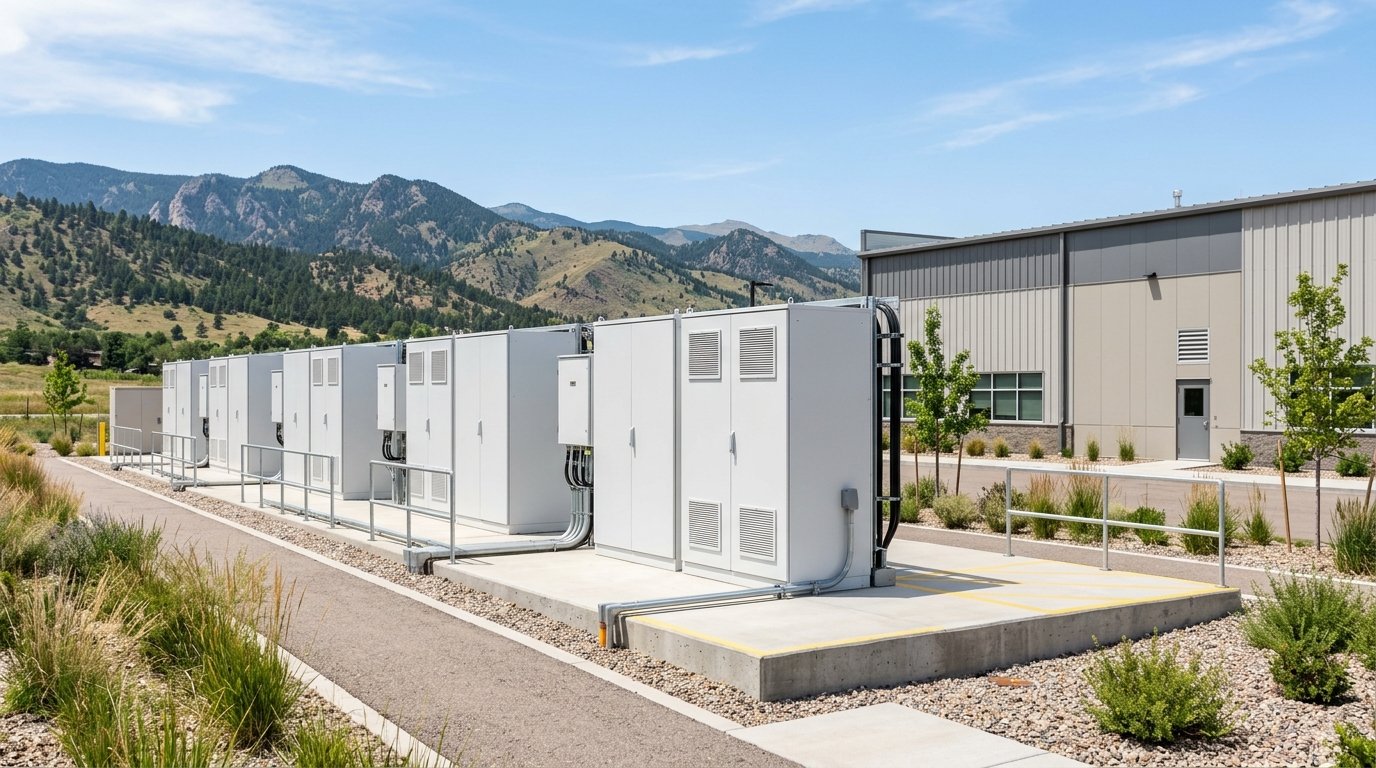
Commercial battery peak shaving is one of the most direct ways a Colorado business can lower its electric bill, because it attacks the part of the bill most owners overlook: the demand charge. A behind-the-meter battery sits between your utility meter and your loads, charges when power is cheap or plentiful, and discharges during the brief moments each month when your demand spikes. By covering those spikes from stored energy instead of the grid, demand charge management can shave thousands of dollars a year off a commercial account that runs heavy equipment, refrigeration, or fast EV charging.
This guide explains how commercial and industrial (C&I) energy storage works, why demand charges matter so much, how the federal tax credit now applies to standalone batteries, and how to think about return on investment. We install and service these systems across the Front Range and the Western Slope, so the examples here reflect how Colorado utility rate structures actually behave.
What a demand charge is and why peak shaving targets it
Most commercial electric bills have two main energy components. The first is the energy charge, billed per kilowatt-hour (kWh) for total consumption. The second is the demand charge, billed per kilowatt (kW) based on the single highest 15-minute or 30-minute interval of power draw during the billing period. You can use very little total energy and still get hit with a large demand charge if you have short, intense spikes.
Demand charges exist because the utility has to build and maintain enough capacity to serve your peak, even if that peak lasts only a few minutes. For a deeper walkthrough of how these line items are calculated and read on a statement, see our breakdown of understanding demand charges for business. The short version: if your facility pulls 200 kW for ten minutes one afternoon when a compressor, an HVAC bank, and an EV charger all run at once, you can be billed for that 200 kW peak across the entire month.
Peak shaving is the practice of clipping the top off those spikes. A battery monitors your real-time demand and automatically discharges the moment your draw approaches a set threshold, so the grid never sees the full peak. The metered demand is held down, and the demand charge drops with it.
Peak shaving versus load shifting
Two related strategies often get blended together, so it helps to separate them:
- Peak shaving targets the demand charge. The battery discharges in short bursts to cap your maximum kW draw, regardless of the time of day.
- Load shifting targets time-of-use (TOU) energy charges. The battery moves consumption out of expensive on-peak pricing windows and into cheaper off-peak hours.
A well-designed C&I energy storage system usually does both. It holds your demand peaks down all month and also discharges through the costly evening or late-afternoon TOU windows that several Colorado utilities now enforce. If TOU pricing is the bigger lever for your account, our companion article on battery time-of-use arbitrage shows the arithmetic in detail.
How a behind-the-meter battery actually operates
Behind-the-meter means the battery sits on your side of the utility meter, serving your loads directly rather than exporting to the grid for a credit. The control system is what makes it valuable. A good commercial battery controller does three things continuously:
- Forecasts and watches demand. It tracks your rolling power draw against the utility billing interval so it knows when a peak is forming.
- Dispatches at the right moment. It releases stored energy precisely when your draw climbs toward your target ceiling, then stops once the spike passes to conserve capacity for the next one.
- Recharges intelligently. It refills from solar, from the grid during off-peak hours, or both, so it is ready for the next billing period without creating a new peak while charging.
Sizing is the other half of the engineering. A peak-shaving battery is specified around two numbers: power (kW), which sets how much of a spike it can cover at once, and energy capacity (kWh), which sets how long it can sustain that coverage. A facility with frequent short spikes needs high power but modest duration. A facility that needs to ride through a long expensive TOU window needs more kWh. Getting this balance right is where a site-specific load analysis pays for itself, because an undersized battery misses peaks and an oversized one wastes capital.
The standalone 48E tax credit for storage
One of the biggest changes for commercial storage is that batteries now qualify for the federal Investment Tax Credit on their own. Energy storage no longer has to be charged by solar to be eligible. Under Section 48E, a standalone commercial battery can claim the credit as its own qualified facility, which materially improves the economics for businesses that want storage primarily for demand charge management rather than for solar self-supply.
The base credit is 30% when prevailing-wage and apprenticeship requirements are met, and there are stackable bonus adders for domestic content and energy community siting. Because the credit can change with project timing and compliance details, treat the figures here as the framework and confirm your specific situation with a tax professional. We cover the surrounding incentive landscape for businesses in our overview of commercial solar in Colorado, which pairs naturally with a storage project.
The practical takeaway: a standalone 48E credit can cover roughly a third of the installed cost of a qualifying commercial battery, which shortens payback considerably when stacked on top of the demand charge savings the battery generates each month.
What drives return on investment
The single most important variable in a peak-shaving battery's ROI is the magnitude of your demand charge. The math is straightforward: the more you pay per kW of peak demand, and the more kW the battery can reliably shave, the faster it pays back. A few factors decide whether a project pencils out:
- Demand charge rate. Accounts on rate schedules with high per-kW demand charges see the strongest returns. Low or flat demand charges weaken the case.
- Peak profile. Short, predictable, repeatable spikes are ideal for a battery. Long, sustained high draws require far more energy capacity and cost more to cover.
- TOU spread. A wide gap between on-peak and off-peak energy prices adds a second savings stream on top of demand shaving.
- Incentives. The standalone 48E ITC and any applicable utility storage programs reduce the net installed cost.
- Coincidence of loads. Facilities where several big loads tend to fire at the same time create the sharp peaks that batteries clip most profitably.
Strong candidates in Colorado include refrigerated warehouses, manufacturing and machine shops, grocery and cold storage, data and server rooms, car washes, and sites adding commercial EV charging, where a few simultaneous fast chargers can create a demand spike that dwarfs the rest of the building. If your operation has bursty, equipment-driven loads, peak shaving deserves a serious look.
Stacking value: demand savings plus grid programs
A commercial battery does not have to earn its keep from demand charges alone. The same asset can layer additional revenue when it participates in utility grid-services programs. By aggregating many batteries, utilities create a virtual power plant that pays participants to discharge during system peaks. A C&I battery that is already sized for peak shaving can often enroll for extra compensation, as long as the dispatch schedule does not conflict with your own demand-management needs. Our guide to the virtual power plant landscape in Colorado explains how those programs pay and what to watch for in the fine print.
The principle that makes all of this work, whether on a commercial roof or in a residential garage, is the same one we cover in our home battery storage guide: a battery is most valuable when it stacks several jobs at once. For a business, that usually means shaving demand, shifting energy off peak pricing, and, where it fits, earning grid-services payments.
What installation involves
A commercial storage project is a real electrical undertaking, and the details matter for both safety and code compliance. As a licensed Colorado electrical contractor (EC.0101788), we handle the full scope: the load study that sizes the system, the interconnection application with your utility, the switchgear and controls that tie the battery into your service, and the local permitting and inspections. Commercial energy storage also carries specific requirements around disconnects, working clearances, ventilation, and equipment listing, all of which we engineer in from the start rather than bolting on later.
Timelines vary with system size and utility interconnection queues, but most commercial battery projects move through design, permitting, procurement, installation, and commissioning over a span of weeks to a few months. A clear load profile from your utility bills, ideally 12 months of interval data, is the fastest way to get an accurate proposal and an honest payback estimate.
Is a peak-shaving battery right for your facility
If demand charges are a meaningful share of your monthly electric bill, commercial battery peak shaving can turn that expense into a predictable, capital-efficient savings stream, especially now that storage qualifies for the standalone 48E credit. The right answer depends on your rate schedule, your peak profile, and how much of your bill is demand versus energy, so the first step is always a look at your actual usage data.
ProGreen Solar designs, installs, and services C&I storage across the Front Range and the Western Slope. If you want to know what a battery would save at your site, reach out through our commercial solar and storage page and we will run the numbers against your real bills before recommending a single piece of equipment.
Frequently Asked Questions
What is the difference between peak shaving and load shifting?
Peak shaving uses a battery to clip short spikes in power demand so the utility never meters your full peak, which lowers the demand charge. Load shifting moves your energy use out of expensive time-of-use pricing windows into cheaper hours, which lowers energy charges. A well-designed commercial battery typically does both at the same time.
Do commercial batteries qualify for the federal tax credit on their own?
Yes. Under Section 48E, standalone energy storage qualifies for the Investment Tax Credit without needing to be charged by solar. The base credit is 30% when prevailing-wage and apprenticeship requirements are met, with possible bonus adders. Confirm your specific eligibility with a tax professional, since timing and compliance details affect the final amount.
How much can a battery reduce my demand charges?
It depends on how high your per-kilowatt demand charge is and how many kilowatts the battery can reliably shave from your peaks. Facilities with high demand charges and short, repeatable spikes see the largest savings. The only way to size the benefit accurately is to analyze your actual interval data and rate schedule.
What kinds of Colorado businesses benefit most from peak shaving?
Businesses with bursty, equipment-driven loads benefit most. That includes refrigerated and cold storage, manufacturing and machine shops, grocery, data and server rooms, car washes, and any site adding commercial EV charging, where simultaneous fast chargers can create a large demand spike.
Does my facility need solar to install a peak-shaving battery?
No. A behind-the-meter battery can charge from the grid during off-peak hours and discharge during peaks without any solar at all. Pairing the battery with solar can improve the economics, but storage on its own qualifies for the standalone 48E credit and can cut demand charges independently.
How long does a commercial battery installation take?
Most commercial storage projects move through design, permitting, procurement, installation, and commissioning over a span of weeks to a few months. The biggest variables are system size and the utility interconnection queue. Providing 12 months of interval data up front speeds up an accurate proposal.
Ready to Go Solar?
Get a free personalized quote from ProGreen Solar, Colorado's most trusted installer.
Get a Free Quote