


Agrivoltaics in Colorado: Solar Grazing and Dual-Use Farmland
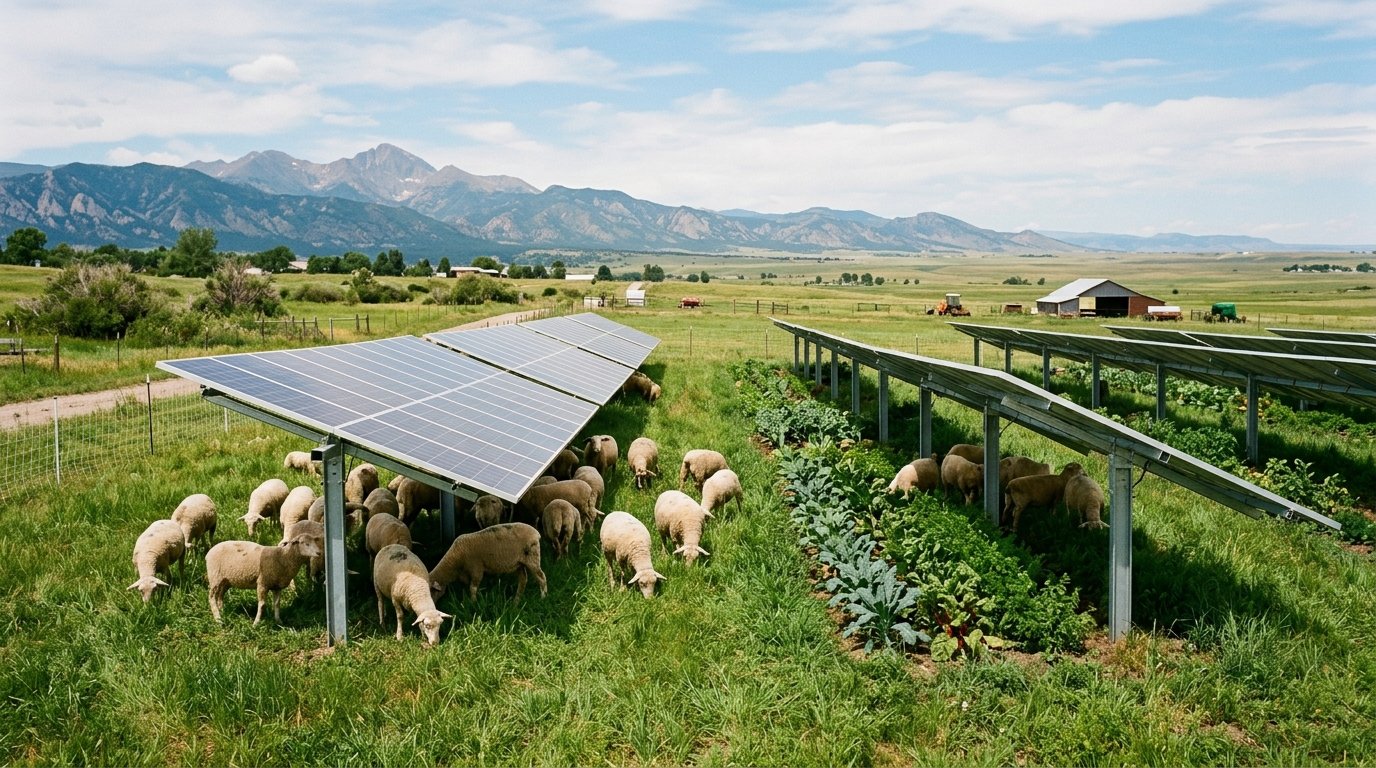
Agrivoltaics in Colorado is the practice of producing solar power and farming the same land at once, so a single acre earns money from both energy and agriculture. Instead of choosing between a crop and a solar array, growers and ranchers across the Front Range and Eastern Plains are raising panels high enough to graze sheep, grow shade tolerant crops, and seed pollinator habitat underneath. Colorado has become a national leader in this dual-use solar farming approach, and projects like Jack's Solar Garden in Longmont have shown that the model works in our climate.
This guide explains what agrivoltaics is, how solar grazing and shade crops fit our high plains conditions, the financial picture for a commercial project, and how a landowner can think through whether dual-use makes sense for their operation.
What agrivoltaics in Colorado actually means
Agrivoltaics combines solar generation with active agriculture on the same ground. Rather than clearing land and fencing it off as a conventional solar farm, an agrivoltaic system is designed so that farming continues around and beneath the panels. There are three common patterns that work well in Colorado:
- Solar grazing. Sheep are the most popular livestock for this because they keep vegetation trimmed without damaging equipment or wiring. The flock manages weeds and grass under the array while the land still produces meat or wool.
- Pollinator habitat. The ground between and under panels is seeded with native flowering plants that support bees and other pollinators. This builds soil health and can benefit neighboring crop fields.
- Shade crops. Certain vegetables and forage crops grow better with partial shade and the cooler, more humid microclimate the panels create, which matters in our dry, high altitude sun.
The shared idea is simple: the panels generate power, and the productive use of the land does not stop.
Why dual-use solar farming fits the high plains
Colorado gives agrivoltaics some real advantages. Our intense, high altitude sunlight means strong solar output, but that same sun stresses crops and soil. Panels cast partial shade that reduces evaporation, helps the ground hold water, and lowers heat stress on plants underneath. In a state where water is always the limiting factor, retaining soil moisture is a meaningful agricultural benefit, not a side note.
There is a benefit running the other direction too. Vegetation under and around an array keeps the local air and panel surfaces cooler than bare dirt or gravel. Solar panels lose efficiency as they heat up, so the cooler microclimate created by living ground cover can support steadier production through hot summer afternoons.
For the landowner, the headline benefit is dual income. The same acres can carry a grazing operation or a crop while also generating lease revenue or power value from the array. For farms and ranches working on thin margins, that second revenue stream can be the difference that keeps land in the family.
Where the opportunities are
Two parts of the state stand out. The Front Range has strong electricity demand, plenty of commercial and municipal load nearby, and a track record of successful dual-use projects. The Eastern Plains have large parcels, excellent sun, and existing agricultural operations that can layer solar on top of grazing and forage. Both regions are well suited to agricultural solar, and the right fit depends on parcel size, grid access, and the kind of farming already happening on the land.
The financial picture for a commercial agrivoltaic project
Agrivoltaic arrays of meaningful size are commercial solar projects, and they qualify for the federal clean electricity investment credit under Section 48E. That credit is a central part of the economics, and it stacks with the value of the energy produced and any continued agricultural income from the land. The result is a project that can pencil out across more than one revenue line at once.
Beyond the federal credit, the case for dual-use rests on three pillars:
- Energy value. Power offsetting on-site load or sold under contract, depending on how the project is structured.
- Agricultural income. Grazing fees, livestock or crop revenue, or a grazing partner who maintains the vegetation in exchange for forage.
- Land efficiency. One parcel doing two jobs, which can improve the return per acre compared with a single use.
Because the numbers depend heavily on parcel size, utility, interconnection, and how the agricultural side is managed, the right move is a site specific analysis rather than a rule of thumb. ProGreen Solar is a licensed Colorado electrical contractor with commercial experience across the Front Range and Western Slope, and we can model the energy side against your actual load and utility terms. You can read more about larger projects in our overview of commercial solar in Colorado.
Design choices that make dual-use work
An agrivoltaic array is not just a standard ground mount with animals nearby. A few design decisions separate a project that supports real farming from one that only looks the part:
- Panel height and row spacing. Raising the panels and widening the gaps between rows lets equipment, livestock, and sunlight reach the ground. This is the single biggest factor in whether crops or grazing actually thrive.
- Wiring and equipment protection. Cabling and components are routed and guarded so livestock cannot reach them. Sheep are favored partly because they rarely test these protections.
- Ground cover and water plan. The vegetation strategy, whether forage, pollinator mix, or crop, is chosen up front and matched to the shade pattern the panels create.
If your interest is more about covering parking, equipment yards, or building footprints than open farmland, a solar canopy may be the better structure. Our guide to solar carports and canopies in Colorado covers that approach, which shares the dual-use idea of stacking solar on top of land that already has a job.
The environmental case
Agrivoltaics is appealing partly because it avoids a tradeoff people worry about: taking farmland out of production to build clean energy. Dual-use keeps the land farming while displacing fossil generation, and it can improve soil health and pollinator habitat in the process. If you want the broader context on clean generation, our piece on solar versus fossil fuels and the environment walks through the comparison. The short version is that producing power and food on the same ground is about as efficient a use of an acre as you will find.
Is agrivoltaics right for your operation
Dual-use solar is not a fit for every parcel. It works best when you have open, reasonably level land, a real agricultural use to continue, decent grid access, and a long term horizon for the land. It tends not to fit small parcels with no room for both uses or sites far from interconnection. The honest answer for any given farm depends on the specifics, which is why a conversation beats a brochure.
If you own farmland or ranchland on the Front Range or Eastern Plains and want to know whether agrivoltaics could add a revenue stream without giving up your agricultural use, reach out through our commercial solar page. We will look at your land, your load, and your utility, and give you a straight read on whether dual-use solar makes sense for your operation.
Frequently Asked Questions
What is agrivoltaics?
Agrivoltaics is the practice of using the same land for both solar energy generation and active farming. Panels are raised and spaced so that grazing, crops, or pollinator habitat can continue underneath and between the rows, letting one parcel earn income from both energy and agriculture.
Why are sheep used for solar grazing?
Sheep are the preferred livestock for solar grazing because they keep grass and weeds trimmed without damaging panels, wiring, or supports. They are small enough to move comfortably under raised arrays and rarely chew on equipment, which makes them low risk for the system.
Does Colorado have successful agrivoltaic projects?
Yes. Colorado is considered a national leader in agrivoltaics, with well known dual-use installations such as Jack's Solar Garden in Longmont demonstrating that solar generation and farming can share the same land in our climate.
Can agrivoltaic projects qualify for the federal tax credit?
Commercial scale agrivoltaic arrays are eligible for the federal Section 48E clean electricity investment credit. The exact value depends on the project, so it is worth confirming current eligibility and details with your tax advisor as part of a site specific analysis.
Where in Colorado does agrivoltaics work best?
The Front Range and the Eastern Plains both offer strong opportunities. The Front Range pairs good sun with nearby electricity demand, while the Eastern Plains have large parcels, excellent sunlight, and existing grazing and forage operations that solar can layer on top of.
How does agrivoltaics help with water and crops?
Panels cast partial shade that reduces evaporation and helps the soil retain moisture, which is valuable in Colorado's dry, high altitude conditions. The cooler, more humid microclimate under the array can also reduce heat stress on certain shade tolerant crops.
Ready to Go Solar?
Get a free personalized quote from ProGreen Solar, Colorado's most trusted installer.
Get a Free Quote