


Third-Party Ownership After the 25D Credit: How Colorado Homeowners Still Get 30% via Lease/PPA
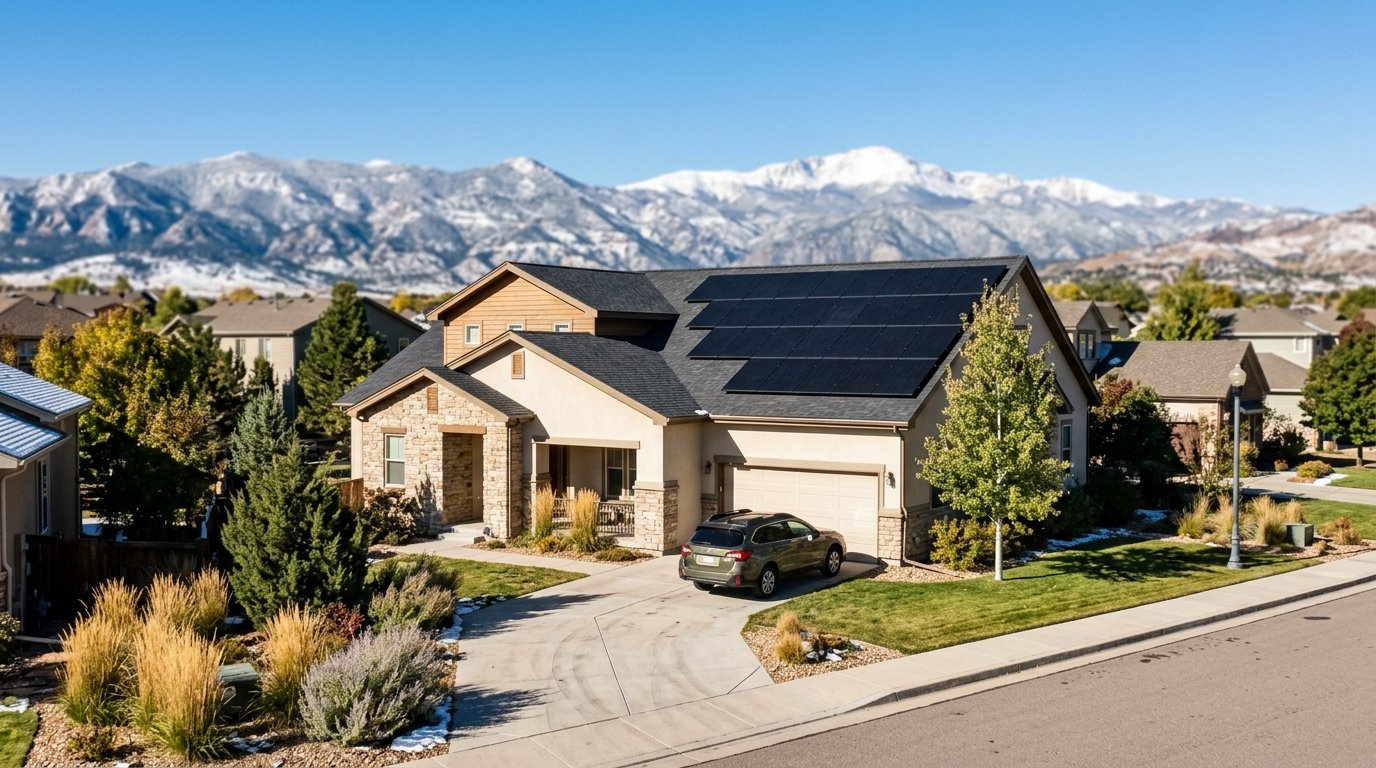
If you are a Colorado homeowner weighing solar in 2026, here is the headline: the federal residential tax credit you may have read about, the Section 25D credit, expired on December 31, 2025. But a solar lease or PPA in 2026 still lets many Colorado households capture a 30 percent class benefit indirectly. Under third-party ownership, a solar company owns the system on your roof, claims the commercial Section 48E credit itself, and passes the value to you through a lower price for the power. You do not own the panels, and you do not file for a credit, yet the savings still flow to your monthly bill.
This is a meaningful shift. For years, the cleanest path for a homeowner who wanted to own their system was a cash purchase or a solar loan, with the 25D credit returning 30 percent of the cost at tax time. With 25D gone for residential cash and loan purchases, third-party ownership has moved from a niche option to a central one for 2026. Below we explain how lease and PPA structures work, why the 48E credit still applies to the company that owns the system, the deadline that quietly governs all of this, and how to compare a 2026 lease or PPA against owning outright.
Why the 25D Credit Mattered, and Why It Is Gone
The federal solar Investment Tax Credit had two separate tracks. Section 25D was the residential track for homeowners who bought their own systems with cash or a loan. It returned 30 percent of the installed cost as a credit against your federal income taxes. Section 48E is the commercial track, the Clean Electricity Investment Credit, claimed by businesses that own energy property.
The residential 25D credit expired at the end of 2025. If you pay cash or finance a system you own in 2026, there is no longer a federal 30 percent credit waiting at tax time. That single change reshapes the math for a lot of households. We cover the broader picture of buying without that credit in our guide to going solar without the federal tax credit, which is worth reading alongside this one.
The commercial 48E credit, by contrast, did not expire at the end of 2025. It remains available to companies that own qualifying solar property, subject to a construction deadline we discuss below. That distinction is the whole reason third-party ownership still delivers value to homeowners in 2026: the solar company is a business, so it claims the credit that homeowners can no longer claim directly.
How a Solar Lease or PPA in 2026 Colorado Works
Third-party ownership, often shortened to TPO, means a company other than you owns the solar system installed on your home. There are three common flavors, and the differences matter.
Solar Lease
With a lease, you pay a fixed monthly amount to rent the solar system. The lease payment is set in your contract and typically escalates by a small percentage each year. You consume the solar electricity the system produces, which offsets what you would otherwise buy from the utility. The TPO company owns the equipment, maintains it, and keeps the tax benefits, including the 48E credit.
Power Purchase Agreement (PPA)
With a PPA, you do not rent the hardware. Instead, you agree to buy the electricity the system generates at a set price per kilowatt-hour, usually below your current utility rate. If the system produces more, you pay for more of that cheaper power. If it produces less, you pay for less. Like a lease, the PPA contract usually includes an annual escalator, and the TPO company owns the system and claims the credit.
Prepaid PPA
A prepaid PPA is a hybrid. You pay a single upfront sum at the start that covers the power for the full contract term, rather than month to month. This eliminates the monthly escalator and the long-term rate uncertainty, and it generally produces the lowest lifetime cost among TPO options because you are not financing the payments over time. It does require capital up front, so it suits homeowners who have cash available but want the company to handle ownership and credits.
Across all three, the homeowner avoids the upfront cost of buying a system and skips the tax-filing step entirely. The TPO company is responsible for performance and, in most contracts, for maintenance and monitoring. For a side-by-side of these options against owning, see our overview of solar loans versus leases versus PPAs.
How the 30 Percent Class Credit Reaches You
The key mechanism is simple to describe even if the tax accounting behind it is not. The TPO company owns the system, so it claims the Section 48E commercial credit, a base 30 percent of the eligible system cost when prevailing wage and apprenticeship requirements are met. Because that credit lowers the company's effective cost of the asset, a competitive TPO provider prices your lease or PPA to reflect part of that benefit. In practical terms, your monthly payment or your per-kilowatt-hour rate is lower than it could be if no credit existed.
You are not receiving a 30 percent check, and your contract will not say you got a tax credit. The benefit shows up as a better price for the solar power you use. This is why we describe it as a 30 percent class benefit passed through indirectly rather than a credit you claim. The size of the pass-through depends on the provider, the system, and market competition, so it is worth getting multiple quotes and comparing the all-in cost over the contract term, not just the first-year payment.
The July 4, 2026 Deadline Behind the Scenes
Here is the part many homeowners miss. The same construction deadline that governs commercial solar also governs your residential lease or PPA, because the company that owns your system is claiming the commercial 48E credit.
To keep the 30 percent Section 48E credit, a project must generally begin construction on or before July 4, 2026, or be placed in service by December 31, 2027. A 2026 begin-construction date generally preserves eligibility through a continuity window. What this means for you as a homeowner is that the favorable economics of a 2026 lease or PPA depend on your TPO provider meeting that timeline for your system. This is the same deadline driving commercial buyers right now, which we cover in our explainer on the July 4, 2026 solar safe harbor deadline.
The practical takeaway: if you want a lease or PPA structured to capture the full 48E benefit, do not wait until late in the year to start the conversation. Permitting, design, interconnection, and installation all take time, and your provider needs to begin construction within the window. The dates and credit mechanics described here come from current federal rules; tax law is detailed and subject to change, so confirm specifics with a qualified tax professional and your installer before signing.
Lease or PPA Versus Owning in 2026
Third-party ownership is not automatically the right answer for every Colorado household. It is the right answer for some, and a careful comparison beats a blanket rule.
- You have limited tax liability. Even when 25D existed, a homeowner with little federal tax owed could not fully use a credit. With 25D gone entirely, owning loses its biggest historical advantage for many buyers, which makes a TPO option that bakes in the commercial credit more attractive.
- You want predictable payments and no upfront cost. A lease or PPA can offer solar with little or nothing down, similar to other low-barrier paths we describe in our zero-down solar guide. The provider handles maintenance and monitoring.
- You plan to own the asset and its full value. If you have tax appetite, capital, and a long time horizon, buying still tends to win on lifetime economics because you keep all the production and any value the system adds. The tradeoff is that without 25D in 2026, the up-front cost is higher relative to recent years.
Things to scrutinize in any 2026 lease or PPA contract include the annual escalator rate, the total cost over the full term, the buyout or purchase options, what happens at the end of the agreement, the transfer terms if you sell your home, and who is responsible for maintenance, monitoring, and any roof penetrations. A low first-year payment with a steep escalator can cost more over twenty years than a flatter structure.
Colorado-Specific Considerations
Colorado layers its own incentives and utility rules on top of the federal picture, and those still apply regardless of whether you own or use TPO. State sales and use tax treatment, property tax exemptions for the added home value, and utility net metering or net billing all shape the economics. Under a lease or PPA, your TPO provider typically manages the interconnection and net metering paperwork with your utility, but you should confirm how export credits are handled in your specific contract, since the value of exported solar varies meaningfully between Xcel territory, the mountain co-ops, and the Front Range municipal utilities.
ProGreen Solar installs across the Front Range and the Western Slope, and we have walked Colorado homeowners through every financing path, from cash purchases to loans to third-party ownership. As a licensed Colorado electrical contractor, we handle the technical and code side of every installation in house, and we can model a 2026 lease, PPA, or purchase against your actual utility rates and roof so you can compare real numbers rather than averages.
Questions to Ask a TPO Provider Before You Sign
Because a lease or PPA is a long agreement, the contract terms deserve as much attention as the price. We encourage every homeowner to get clear written answers to the following before committing:
- What is the annual escalator, and what is the total amount I will pay over the full term at that escalator?
- Can I buy the system during the term or at the end, and how is the buyout price calculated?
- What happens to the agreement if I sell my home, and will a buyer be required to assume it?
- Who is responsible for maintenance, monitoring, inverter replacement, and any roof repairs related to the install?
- Is there a production guarantee, and what compensation applies if the system underproduces?
- How are utility export credits or net metering credits handled, and do they accrue to me or to the provider?
A reputable provider will answer these plainly and put the answers in writing. Vague responses on the escalator, the buyout, or the transfer terms are a sign to slow down and compare other offers.
How Roof Condition Factors In
One detail homeowners often overlook with TPO is the state of the roof. Because the system will sit on your roof for the full contract term, often twenty years or more, the roof underneath needs to be in good shape before installation. If your roof is near the end of its life, it is usually wiser to address that first, since removing and reinstalling a third-party owned system later adds cost and coordination. A reputable installer will inspect the roof and flag this before any agreement is signed, so you are not committing to decades of solar on a surface that needs replacement in a few years.
The Bottom Line for 2026
The expiration of the 25D credit did not close the door on a 30 percent benefit for Colorado homeowners. A solar lease or PPA in 2026 keeps that value in reach by letting the system owner claim the commercial 48E credit and pass the savings through to you in the price of your power. The structure you choose, lease, PPA, or prepaid PPA, should follow your cash situation, your tax appetite, and how long you plan to stay in the home. Just remember the quiet deadline driving the 48E credit, and start early enough that your provider can begin construction within the window.
If you want a clear, no-pressure comparison of owning versus a lease or PPA for your specific Colorado home, reach out through our residential solar page and we will run the numbers with you.
Frequently Asked Questions
Did the federal solar tax credit go away for homeowners in 2026?
The residential Section 25D credit expired on December 31, 2025, so homeowners who buy a system with cash or a loan in 2026 can no longer claim that 30 percent credit directly. The commercial Section 48E credit still exists, which is why a lease or PPA can pass a 30 percent class benefit to homeowners through third-party ownership.
How does a solar lease or PPA still give me a 30 percent benefit?
With third-party ownership, a solar company owns the system on your roof and claims the commercial 48E credit itself. A competitive provider prices your lease payment or PPA rate to reflect part of that credit, so the savings reach you through a lower price for the solar power rather than a check or a tax filing.
What is the difference between a solar lease, a PPA, and a prepaid PPA?
With a lease you pay a fixed monthly amount to rent the system and use its power. With a PPA you buy the electricity the system produces at a set price per kilowatt-hour, usually below your utility rate. A prepaid PPA is a single upfront payment for the full term, which removes the monthly escalator and usually produces the lowest lifetime cost.
Is there a deadline that affects my 2026 lease or PPA?
Yes. Because your provider claims the commercial 48E credit, the project must generally begin construction on or before July 4, 2026, or be placed in service by December 31, 2027, to keep the 30 percent credit. Start the conversation early so permitting, design, and installation fit within that window. Confirm details with your installer and a tax professional.
Is a lease or PPA better than buying solar outright in Colorado?
It depends. If you have limited federal tax liability or want little to nothing down, a lease or PPA that bakes in the commercial credit can be attractive. If you have tax appetite, capital, and a long time horizon, buying still tends to win on lifetime economics because you keep all the production and value. Compare total cost over the full term, not just the first-year payment.
Disclaimer: This article is general information, not tax or legal advice. Tax credits, deadlines, and IRS guidance change frequently and depend on your specific situation. Consult a qualified tax advisor or attorney before acting. Accurate as of June 24, 2026.
Ready to Go Solar?
Get a free personalized quote from ProGreen Solar, Colorado's most trusted installer.
Get a Free Quote