


Grand Valley Power Solar Guide: 10 kW Residential Cap and Local Generation Limits
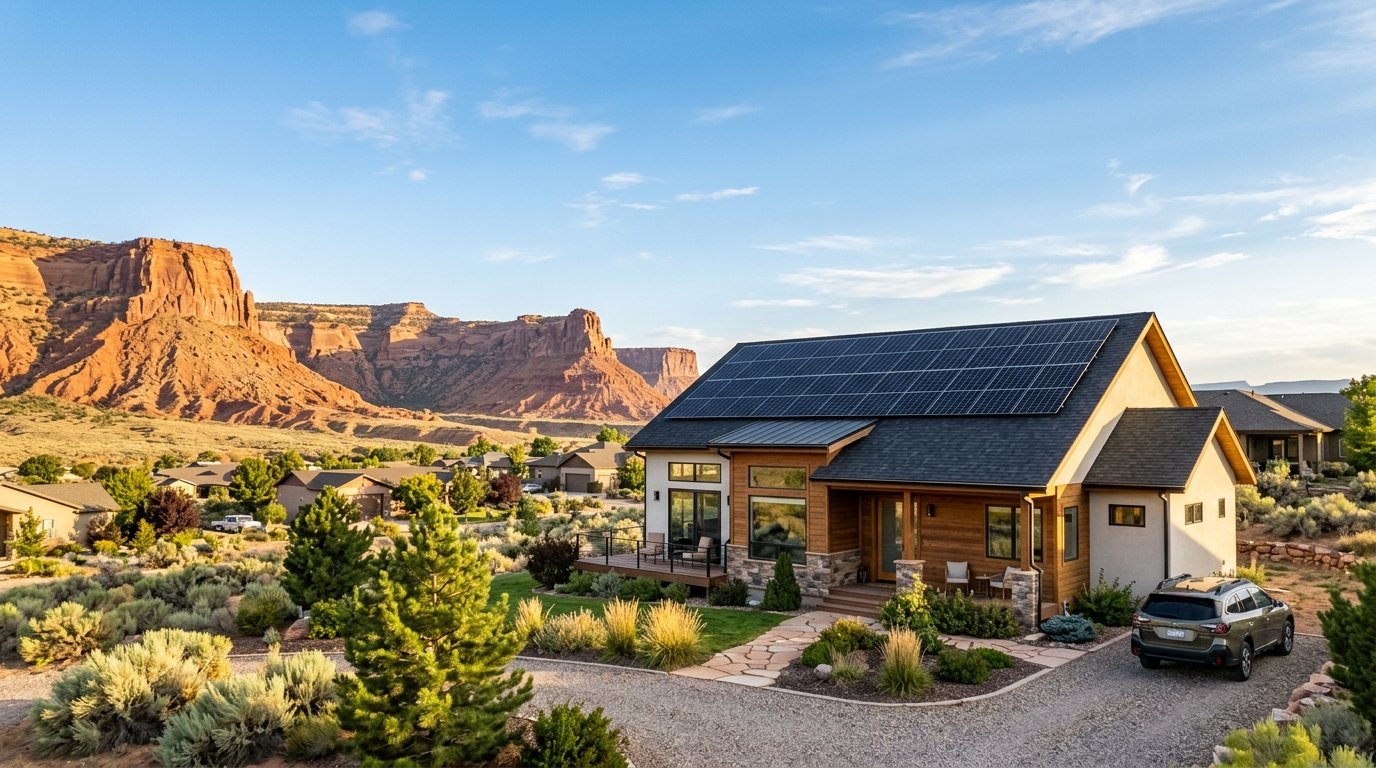
If you live in the Grand Junction area and want to go solar, the single most important number to know is this: Grand Valley Power solar interconnections for homes are capped at 10 kW DC. That cap shapes how big a system you can install, how much of your bill you can offset, and whether a battery makes sense for your situation. This guide walks Mesa County homeowners through the Grand Valley Power rules as we understand them, so you can plan a system that actually gets approved.
ProGreen Solar designs and installs across Colorado, from the Front Range to the Western Slope, so we work inside co-op rules like these regularly. Below we break down the residential cap, the commercial tiers, how buyback works, and why a saturated neighborhood can change your project before it starts.
How Grand Valley Power Solar Net Metering Works
Grand Valley Power (GVP) is the electric cooperative serving Grand Junction and the surrounding Mesa County communities. Like most Colorado co-ops, it offers net metering, which lets the energy your panels send to the grid offset the energy you pull back later. If you are new to the concept, our net metering explained guide covers the mechanics in plain language.
The headline rules for GVP residential solar are:
- Residential cap of 10 kW DC. Home systems are limited to 10 kilowatts of direct-current panel capacity. This is a hard ceiling, not a guideline, so a larger roof does not automatically mean a larger system.
- Commercial tiers. Non-residential members work within a tiered structure of 25 kW, 120 percent of historical usage, and 100 kW, depending on the account and load profile.
- April buyback at avoided cost. Excess generation that builds up over the year is reconciled in April and any remaining surplus is paid out at the utility avoided-cost rate, which is well below the retail rate you pay for power.
Because the annual surplus is bought back at avoided cost rather than full retail, the goal for most homeowners is to size the system to their own usage, not to overbuild and bank a large surplus that gets cashed out cheaply.
What the 10 kW Cap Means for Your Bill
A 10 kW DC array is a substantial system. For many Grand Valley Power homes it is enough to offset most or all of a typical electric bill. The cap becomes a real constraint mainly for larger or all-electric households: homes with electric heating, an EV or two, a heat pump, or a shop. If your usage is high, the 10 kW limit may leave a portion of your bill uncovered.
There are a few practical ways to work within the cap:
- Tighten usage first. Efficiency upgrades, smart thermostats, and shifting flexible loads can shrink the gap so a 10 kW system covers more of your year.
- Choose high-efficiency panels. If you are capped on kilowatts, getting more production per panel matters. Higher-output modules let you maximize generation within the 10 kW envelope.
- Consider a battery. A battery does not raise your generation cap, but it lets you store your own midday production and use it in the evening rather than exporting it and buying it back later. For high-usage homes near the cap, that self-consumption can be worth more than a small annual buyback check.
Commercial and Larger Systems
Businesses, farms, and larger properties in Grand Valley Power territory fall under the commercial tiers rather than the 10 kW residential cap. The structure references 25 kW, a 120 percent of historical usage allowance, and a 100 kW threshold. Which tier applies depends on the meter, the account class, and your annual consumption. If you operate a commercial account in Mesa County and want to understand which tier fits your load, it is worth getting a site-specific review before you commit to a design.
Local Generation Limits and the Hosting Capacity Map
Here is the part many homeowners miss: even if your system is under 10 kW, your specific neighborhood may not have room on the grid for it. Co-ops manage how much distributed solar a given circuit or substation can absorb. Areas that already have a lot of rooftop solar can become saturated, and new interconnections in those pockets may be restricted, delayed, or require additional study.
Grand Valley Power, like a growing number of Colorado utilities, points members toward a hosting-capacity map. This is a tool that shows how much additional generation each part of the distribution system can accept. Before you sign anything, it is smart to:
- Check the hosting-capacity map for your address, or have your installer check it for you.
- Confirm there are no local restrictions on your circuit that would limit or block a standard residential interconnection.
- Factor any required engineering review into your timeline, since a saturated area can add weeks to the approval process.
This is exactly the kind of legwork ProGreen handles as part of designing a system. We would rather flag a hosting-capacity issue up front than have a homeowner discover it after the contract is signed.
How GVP Compares to Nearby Western Slope Co-ops
The Western Slope is a patchwork of electric cooperatives, and the rules change as you cross territory lines. Grand Valley Power covers Grand Junction and Mesa County, while neighboring areas like Delta and Montrose fall under a different co-op with its own banking and buyback approach. If you are comparing options or you sit near a boundary, our guide to DMEA solar net metering shows how a nearby co-op handles kilowatt-hour banking and avoided-cost true-up. The takeaway: do not assume what is true for one Western Slope utility applies to the next. Sizing rules, caps, and fees genuinely differ.
Planning a Grand Valley Power Solar Project Step by Step
Once you understand the cap and the buyback structure, the actual path to a working system is fairly predictable. For most Grand Junction and Mesa County homeowners it looks like this:
- Pull twelve months of usage. Your past year of kilowatt-hours tells us how much offset a 10 kW system can realistically deliver for your home.
- Check hosting capacity. We verify your circuit can accept a new interconnection before designing anything, so there are no surprises late in the process.
- Design to the cap. We size the array to your usage within the 10 kW DC limit, choosing module wattage and inverter type to maximize production per available watt.
- Submit the interconnection application. Grand Valley Power reviews the application, and a saturated area may add engineering time.
- Permit, install, and inspect. Local permitting and a final utility approval come before the system is energized.
None of these steps are unusual, but each one has a co-op-specific wrinkle on the Western Slope. Knowing the 10 kW cap, the avoided-cost buyback, and the hosting-capacity check up front keeps your project from stalling halfway through.
Verify Before You Buy
Co-op solar programs change. Caps, fees, and buyback rates get revised as boards update tariffs, so treat the figures here as a planning starting point rather than a guarantee. Before you finalize a Grand Valley Power solar project, confirm the current residential cap, the latest interconnection fees, and the present avoided-cost buyback rate directly with Grand Valley Power. A reputable installer will pull the current tariff as part of your proposal, but it is your money, so it is fair to ask.
If you want help reading the fine print, sizing a system to the 10 kW cap, or checking hosting capacity for your address, ProGreen Solar can walk Grand Junction and Mesa County homeowners through the whole process. You can learn more about our home installations on our residential solar page, and we are happy to review your bill and your roof before you commit to anything.
Frequently Asked Questions
What is the residential solar cap for Grand Valley Power?
Grand Valley Power caps residential solar at 10 kW DC. That is a firm ceiling, so even with a large roof your home system cannot exceed 10 kilowatts of panel capacity. Confirm the current cap with GVP before you buy, since co-op rules can change.
Can a business install a larger solar system on Grand Valley Power?
Yes. Commercial accounts fall under tiered limits referencing 25 kW, 120 percent of historical usage, and 100 kW rather than the 10 kW residential cap. The tier that applies depends on your meter, account class, and annual usage, so a site-specific review is recommended.
How does Grand Valley Power pay for extra solar energy?
Excess generation is reconciled annually, with surplus paid out in April at the utility avoided-cost rate. That rate is below the retail price you pay for power, so most homeowners size their system to match their own usage rather than overbuild for a buyback.
Why might my neighborhood be restricted even under 10 kW?
Co-ops limit how much rooftop solar a given circuit can absorb. If your area is already saturated with distributed generation, a new interconnection may be restricted, delayed, or require extra study. Check the Grand Valley Power hosting-capacity map for your address before committing.
Should I add a battery if I am near the 10 kW cap?
A battery does not raise your generation cap, but it lets you store midday solar and use it in the evening instead of exporting it at a low buyback rate. For high-usage homes near the cap, that self-consumption can deliver more value than a small annual surplus check.
Are Grand Valley Power solar figures guaranteed?
No. Caps, fees, and buyback rates can be revised when the co-op updates its tariff. Treat the numbers here as a planning starting point and confirm the current cap, interconnection fees, and avoided-cost rate directly with Grand Valley Power before you finalize a project.
Disclaimer: Utility program details (incentives, caps, fees, and rates) change frequently by board or commission action. Verify current details directly with your utility before making decisions. Accurate as of June 24, 2026.
Ready to Go Solar?
Get a free personalized quote from ProGreen Solar, Colorado's most trusted installer.
Get a Free Quote