


Colorado's 10% Residential Battery Storage Tax Credit (Form DR-1307) Expires Dec 31, 2026
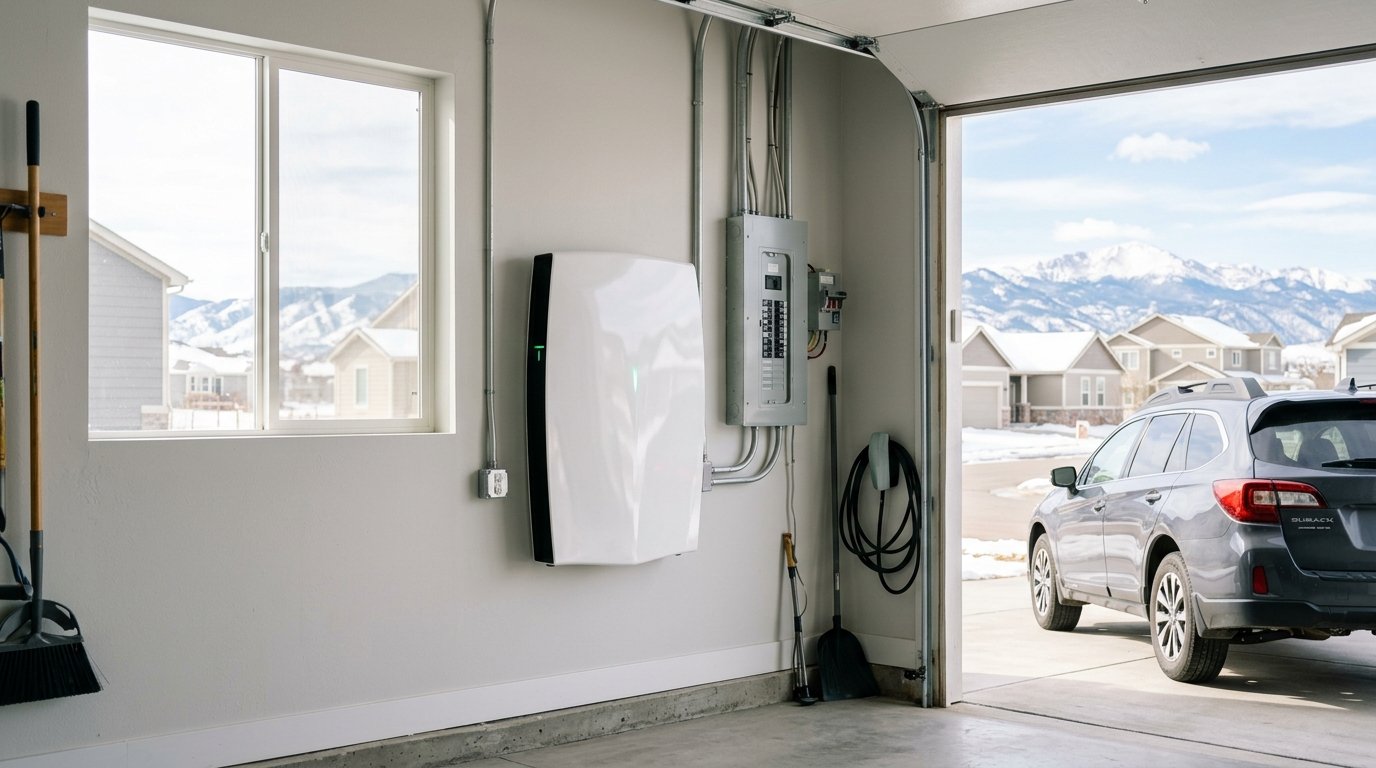
The Colorado battery storage tax credit gives homeowners a state income tax credit worth 10% of the cost of an eligible home battery, claimed on Colorado Form DR-1307. It is one of the most overlooked solar and storage incentives in the state, and it is on a clock: under current law the credit sunsets on December 31, 2026, with no announced extension. If you are weighing a battery for backup power or to ride out evening peak rates, this is the year to understand how the credit works and what it actually covers.
At ProGreen Solar we install battery systems across the Front Range and the Western Slope, and we walk every customer through the paperwork side as well as the hardware. Below is a plain-English breakdown of the Colorado battery storage tax credit, what qualifies, and the deadlines that matter.
What the Colorado battery storage tax credit is
This is a state-level residential storage credit, separate from any federal incentive. It equals 10% of your eligible battery costs and is reported on Colorado Department of Revenue Form DR-1307. It applies to batteries installed at a residence, and it is designed to lower the upfront sting of adding storage to a home, whether that battery is paired with solar or installed on its own.
Because it is a state credit, the Colorado battery storage tax credit stacks on top of utility battery rebates and any applicable federal storage credit. We cover how the broader incentive picture fits together in our guide to Colorado solar incentives for 2026, but the credit on this page is specifically about the battery itself.
What costs qualify
One of the strengths of this credit is that it is tied to real, documented costs rather than a flat dollar figure, so a larger or more capable battery generally produces a larger credit. The credit is calculated on the eligible costs of your storage system. Those generally include:
- The battery equipment itself
- Sales tax paid on the battery
- Freight and shipping charges to deliver the equipment
There is a minimum size requirement: the battery must have a usable capacity of at least 3 kilowatt-hours (kWh) to qualify. Most modern home batteries clear that threshold easily. A single common wall-mounted unit is typically in the 10 to 16 kWh range, well above the floor.
Two limits to keep in mind
The Colorado battery storage tax credit is non-refundable. That means it can reduce your Colorado income tax bill down to zero, but it will not generate a refund check beyond what you owe. It is also non-carryforward, so if the credit is larger than your state tax liability in the year you claim it, the unused portion is lost. It does not roll into future tax years.
For most households with a normal state tax bill, a 10% credit on a single home battery is comfortably absorbed. But if you have an unusually low Colorado tax liability for the year, talk to your tax preparer about timing before you assume you will capture the full value.
The December 31, 2026 deadline
This credit is time-sensitive. Under current Colorado law it expires at the end of 2026, and as of this writing there is no announced extension. That makes 2026 the practical window for homeowners who want a battery and want this credit.
Battery installations involve lead time: equipment ordering, utility interconnection paperwork, permitting, and the install itself. If you are targeting the credit, it is wise to start the conversation well before the end of the year rather than in December. A battery placed in service after the sunset date would not qualify under the current statute.
How to claim it on Form DR-1307
The mechanics are straightforward, but accuracy matters:
- Keep your full invoice, with the battery equipment, sales tax, and freight itemized so the eligible basis is clear.
- Confirm the usable capacity of your battery is at least 3 kWh (your installer or the spec sheet will list this).
- Complete Colorado Form DR-1307 to calculate the 10% credit.
- File it with your Colorado state income tax return for the year the battery was placed in service.
Hold onto your documentation. As with any tax credit, you want clean records in case the Department of Revenue ever asks you to substantiate the claim.
Why a battery makes sense in Colorado right now
Beyond the credit, the economics of home storage in Colorado have shifted in homeowners' favor. Many Colorado utilities have moved to time-of-use rates with expensive evening peak windows, which is exactly when a battery earns its keep by discharging stored energy instead of buying high-priced grid power. We break down that math in our piece on time-of-use arbitrage with batteries.
Storage also delivers backup power during outages, which matters for households on wildfire-prone or storm-exposed circuits. And if you are still deciding whether a battery is right for your situation at all, our home battery storage guide walks through sizing, chemistry, and whole-home versus partial backup.
Colorado's climate and grid conditions both push in the same direction. High-altitude solar production is strong here, but the evening hours when families come home and run appliances are also when grid power is most expensive and most strained. A battery lets you capture cheap or self-generated daytime energy and spend it in the evening, smoothing your bill and reducing how much you draw from the grid at the worst possible time. For homes that already have solar, adding storage is often the single biggest lever left for cutting the remaining utility bill.
Stacking the credit with other incentives
The Colorado battery storage tax credit is rarely the only money on the table. Depending on your utility, you may also have access to battery rebates and ongoing grid-services payments through programs that pay you to let the utility tap your battery during peak events. Combining a utility battery rebate, a federal storage credit where applicable, and this 10% state credit can meaningfully reduce your net cost. The exact combination depends on where you live and which utility serves you, so it is worth getting a system-specific breakdown rather than relying on a generic estimate.
Get a battery plan built around your home
The Colorado battery storage tax credit is a real, claimable benefit, but it is scheduled to disappear at the end of 2026. If storage has been on your list, this is the year to act on it. ProGreen Solar can size a battery for your home, handle the interconnection and permitting, and make sure your invoice is documented so claiming the credit is clean. Reach out through our residential solar and storage team to get a quote and a clear timeline. We will tell you honestly whether a battery pencils out for your specific rate plan and usage, and we will help you beat the deadline.
Frequently Asked Questions
How much is the Colorado battery storage tax credit worth?
It is a state income tax credit equal to 10% of your eligible battery costs, which include the battery equipment, sales tax, and freight. You claim it on Colorado Form DR-1307.
When does the Colorado battery storage tax credit expire?
Under current Colorado law the credit sunsets on December 31, 2026. There is no announced extension, so a battery generally needs to be placed in service on or before that date to qualify.
Is there a minimum battery size to qualify?
Yes. The battery must have a usable capacity of at least 3 kilowatt-hours. Most home batteries are well above that, typically in the 10 to 16 kilowatt-hour range.
Can I get a refund if the credit is larger than my tax bill?
No. The credit is non-refundable and non-carryforward. It can reduce your Colorado income tax to zero, but it will not produce a refund beyond what you owe, and any unused portion is not carried to future years.
Do I have to install solar to claim the battery credit?
No. The credit applies to eligible residential battery storage whether the battery is paired with solar or installed on its own, as long as it meets the requirements.
Can I combine this credit with utility rebates?
In most cases yes. The 10% state credit can stack with utility battery rebates and any applicable federal storage incentive. The exact mix depends on your utility, so confirm the details for your specific service area.
Disclaimer: This article is general information, not tax or legal advice. Tax credits, deadlines, and IRS guidance change frequently and depend on your specific situation. Consult a qualified tax advisor or attorney before acting. Accurate as of June 24, 2026.
Ready to Go Solar?
Get a free personalized quote from ProGreen Solar, Colorado's most trusted installer.
Get a Free Quote